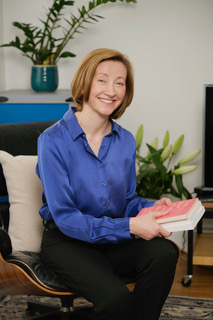
Celia Conrad is an online therapist
What attracted you to becoming a therapist?
I’ve always been drawn to people’s stories and how relationships shape our lives. I started out as a family lawyer, then worked supporting vulnerable clients in banking, and from there moved into divorce and break-up coaching, relationship coaching, grief education and energy healing.
Over time, I realised that combining advanced coaching skills with therapeutic tools was incredibly powerful — clients were able to make deep, lasting changes. Becoming a therapist felt like the natural next step in the work I was already doing.
Where did you train as a therapist?
I trained at the UK College of Hypnosis and Hypnotherapy (UKCHH), where I completed the Level 5 Higher Diploma in Cognitive Behavioural Hypnotherapy (Hypno-CBT®) — the highest-level qualification available in the UK. The training is very research-led, drawing from hypnosis, CBT and psychotherapy. I’m also a member of the GHR, NCIP and ACCPH.
Can you tell us about the type of therapy you practise?
I work with Hypno-CBT®, which is a unique blend of Cognitive Behavioural Therapy and evidence-based hypnosis techniques. It’s very practical and focused on the present — on what clients want to change and how to help them get there.
It’s usually short-term (often 4–8 sessions) and equips people with tools they can keep using long after therapy ends.
Because I’m trained in both coaching and therapy, I love that CBH sits right in the middle: it brings together psychological insight and real, behavioural change. Clients get the benefits of both worlds.
How does your therapy help with one of your specialist areas?
I support a lot of people who are going through relationship break-ups. It’s an emotional rollercoaster, and CBH can really help with the anxiety, overwhelm and rumination that often come with it. It helps clients regulate their emotions, get perspective and feel more grounded as they move through the transition.
What sort of people do you usually see?
I work with adults over 18 — individuals and couples — who are navigating relationship challenges, loss or life transitions.
CBH is also really helpful for anxiety, stress, confidence issues, emotional regulation, negative self-talk, sleep difficulties, phobias, performance worries and habit change.
Have you noticed any recent mental health trends?
Definitely. There’s much less stigma now and people are more open about seeking support. More conversations are happening around things like menopause and neurodiversity, which is great. I’m also seeing people reach out earlier, before things become overwhelming, which is a really positive shift.
What do you like about being a therapist?
Honestly, it’s the privilege of being invited into someone’s inner world. Watching clients grow, shift and step into who they want to be never stops feeling meaningful. Being part of that transformation is incredibly rewarding.
What is less pleasant?
Sometimes clients have to revisit painful emotions to be able to release them — and that can be tough. But it’s often the doorway to real healing.
How long have you been with Welldoing, and what do you think of us?
I’ve joined fairly recently, and I’ve been really impressed by how genuinely supportive the community is. It feels much more than a therapy directory — the CPD sessions, peer groups and resources are brilliant, and I’m looking forward to making the most of them.
What books have been important to you?
The Power Is Within You by Louise Hay and You Can Heal Your Heart by Louise Hay & David Kessler have both been influential for me, especially in my grief and loss work.
David Kessler’s Finding Meaning is also a beautiful companion for anyone dealing with loss.
I recently read Human Being by Ashkan Tashvir — a fascinating look at the qualities that shape our behaviour, really interesting from a cognitive-behavioural perspective. And Letting Go by David R. Hawkins is a classic I return to often. I do recommend books when they’re the right fit for a client.
What do you do for your own mental health?
Movement and creativity really help me. I love walking, Pilates and swimming, and I enjoy baking, sewing and going to the ballet, theatre, film and dance performances.
What can you share about seeing clients in South West & Central London?
I see a mix of people who live locally or work in London — often professionals and creatives going through relationship shifts or major life transitions.
What’s your consultation room like?
Calm, serene and welcoming — a quiet space where clients can breathe and settle. I also offer online sessions for convenience.
What do you wish people knew about therapy?
That therapy isn’t just for crisis moments. It can help you understand your thoughts and emotions, shift unhelpful patterns, and make changes that bring more of what you want into your life. It’s incredibly empowering.
What have you learned about yourself in therapy?
That self-compassion is as important as self-awareness. Therapy helped me understand the way I show up for myself and others, and taught me a lot about judgment, forgiveness and emotional honesty.