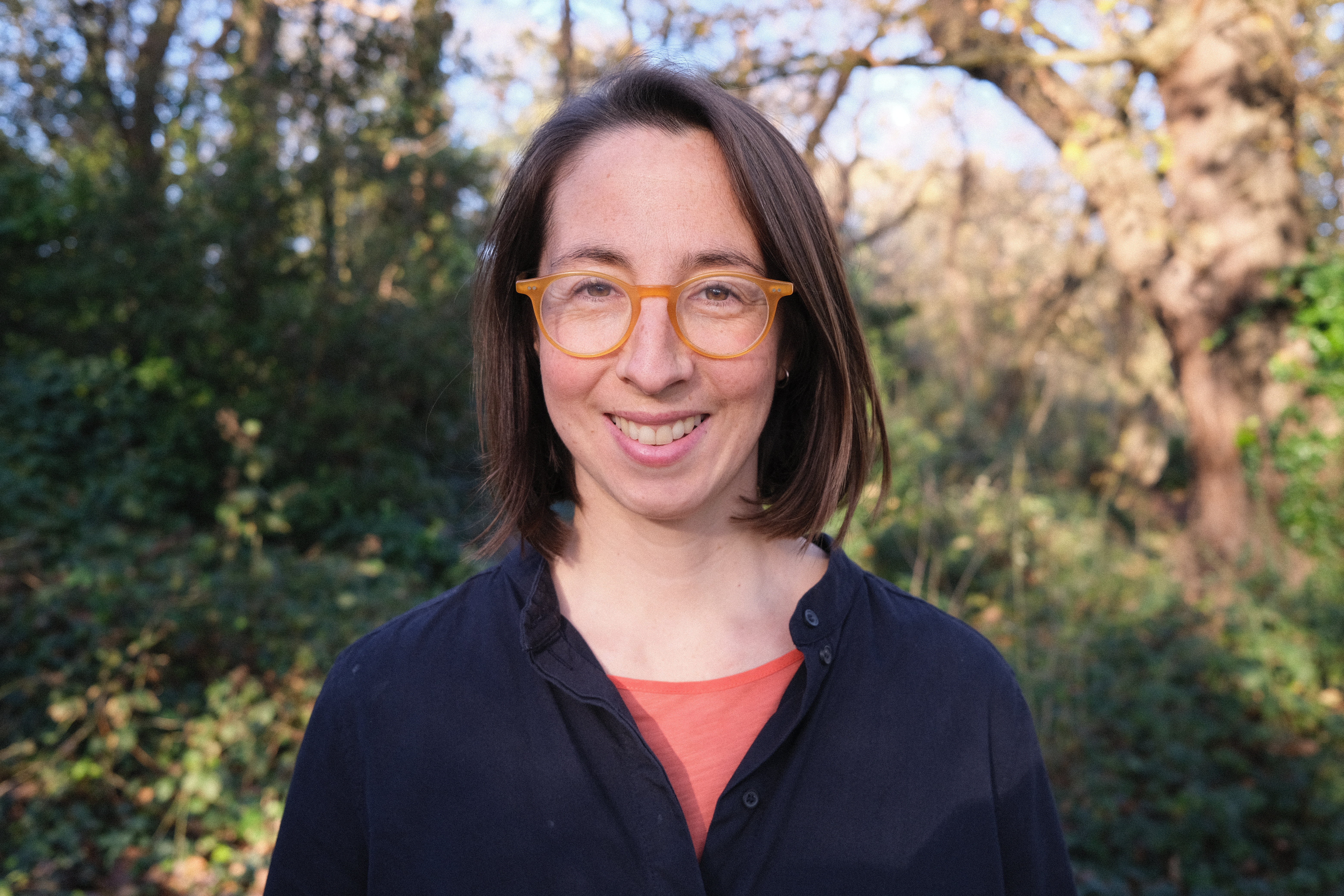
Helen Jack is a therapist in Beckenham and online
What attracted you to become a therapist?
Before becoming a therapist I worked for over a decade in the independent film industry, producing festivals, managing organisations and curating programmes. At the heart of it all was my love of stories and an endless fascination with people’s lives.
Eventually I began yearning for a new challenge. I’d long-harboured a quiet interest in the work therapists did, curious about what it meant to develop intense and deeply meaningful relationships with strangers. I realised I was looking for work that felt more intimate.
I began seeing a therapist and eventually took the plunge and signed up to a year-long introductory counselling course. Little did I know I would be engaged in therapy training for the next six years! It became one of the most significant chapters in my life.
Where did you train as a therapist?
I trained at The Minster Centre in London.
As well as being an academically rigorous training, what drew me was its focus on experiential learning. There’s a big emphasis on getting to know yourself on a very deep level, which can be extremely painful and difficult, as well as revelatory and life-changing (just like the process of therapy). Being engaged in such a prolonged and thorough training process felt endless and maddening at times, but I think it did really set me on solid ground for the work that I do.
Can you tell us about the type of therapy you practise?
I practise as an integrative psychotherapist because it instinctively felt right to remain open to different modalities and ways of working, rather than relying on a single model.
My approach is shaped primarily by psychodynamic, relational and somatic theories. I believe our lives are shaped by our relationships from the very beginning, and that our experiences are held not only in our minds but also in our bodies. In therapy, I therefore pay attention to what both the body and mind are communicating, while also considering what emerges between us in the therapeutic relationship.
I am also trained in Internal Family Systems (IFS), which understands the mind as made up of different "parts". I find it a compassionate and non-pathologising way of helping people develop a more curious and accepting relationship with themselves.
I also work with clients outdoors in nature, which I love. The outdoor environment can support the therapeutic process by offering a different way of being with our thoughts, feelings and bodies, while remaining grounded in the same relational, psychodynamic and somatic approach.
How does integrative psychotherapy help with symptoms of shame?
I have a particular clinical interest in working with shame. It often feels central to what brings people to therapy (including myself), and can often be buried beneath other feelings and issues such as anxiety, depression, addiction, relationship issues etc.
This sense that we are bad, wrong or worthless in some way can be one of the most painful feelings we experience as humans, and yet is something we all experience at some point. It’s hard-wired into us, protectively trying to keep us connected to others - “don’t be weird”, it tells us “if you are, you’ll be rejected”.
Feelings of shame take root in our relationships with others and the wider social and cultural environments we’re immersed in. It shows up in our bodies as tension, heat, sickness, an avoidance of eye contact.
Lasting change is rarely found through insight alone. It grows through the experience of being genuinely known by another person over time and discovering we can be met with understanding and compassion, hopefully then offering that to ourselves.
Working psychodynamically, relationally and somatically supports this process, with IFS helping us to get to know our parts that shame us and the parts that feel that shame.
What sort of people do you usually see?
I work with individual adults across quite a broad age range, from people in their early twenties through to those in their sixties. While clients come with many different concerns, a common thread is exploring their relationships with others and with themselves, and how these patterns continue to shape their lives.
Have you noticed any recent mental health trends or wider changes in attitude?
I work with quite a lot of cis-men, of varying sexualities, and my sense is that the number of men seeking out therapy has been steadily increasing over the past few years. The stigma of going to talk to someone about their emotions and their vulnerability has softened, opening up more opportunities for men to find the support they need.
What do you like about being a therapist?
It feels hugely rewarding to witness another person’s self-compassion grow. One of the things I most value as a therapist is seeing clients stay with the process over time, allowing themselves to be vulnerable, and discovering that they can move through difficult experiences while becoming more comfortable in their own skin. I think one of the things I love most about being a therapist is supporting people as they develop a deeper, more accepting relationship with themselves.
What is less pleasant?
The work can be hard, relationally. Being in contact with parts of a client that are suffering and necessarily protective can activate my own parts and this can be challenging. We can’t escape our own complexity and humanity as therapists. This is where my wonderful supervisor and peer supervision group are invaluable. They help me understand my own system, providing a place for thinking, feeling and sense-making so I am best able to support my clients.
How long have you been with Welldoing and what you think of us?
I've been with Welldoing for the past few months. Some of the CPD sessions on offer look really interesting and I hope to check some of them out.
What books have been important to you in terms of your professional and personal development? Do you ever recommend books to clients?
I don’t distinguish too much between books read for personal and professional reasons. I’m drawn towards reading anything that interests me, whether it’s a novel or a book on research (I’m currently working my way through Essential Research Findings in Counselling and Psychotherapy: The Facts are Friendly by Mick Cooper). All of it adds to my understanding of myself, other people, and the work I do.
Occasionally I’ll recommend a book to my clients. Some previous examples have been Tricia Hersey’s Rest is Resistance and Becky Barnicoat’s very funny graphic memoir Cry When the Baby Cries. They’re not “therapy books”, but I believe they have the potential to offer something valuable about the human experience.
What you do for your own mental health?
I spend as much time as I can with my family and friends. This brings me the most joy and pleasure in my life.
I love being amongst trees, plants, animals, water - life. Being in relationship with the natural world feels grounding and restorative.
I also intentionally make room in my life for spaciousness and slowing down. This allows my system to rest and build capacity for when I need it.
You are a therapist in Beckenham in South East London. What can you share with us about seeing clients in this area?
Living and working in a London suburb, I do find that I work with a number of young professionals and parents. However, as with many parts of London, there is a real diversity of people, backgrounds and life experiences, so it’s difficult to define my client base in any particular way.
As someone who also works outdoors, I feel fortunate to be based in London’s greenest borough, with access to a number of beautiful parks and natural spaces.
What’s your consultation room like?
I work out of two consultation rooms, and in both it’s important to me that clients have a view of trees, plants and the sky. I want to offer nature as a resource and something that clients can connect with, even when we’re indoors.
When I’m working outdoors, the park itself becomes the consultation space. Being in a public environment emphasises that we are sharing and exploring a space together. Clients can have more choice over the environment they spend time in — whether that’s walking through woodland or sitting near the lake. Being alongside the rhythms of everyday life, with other people and nature around us, can bring a sense of aliveness and connection to the work.
What do you wish people knew about therapy?
Therapy is not about me “doing something” to a client in order to fix something that is wrong with them. I don’t see people as broken or in need of fixing. Instead, therapy is about forming a relationship where we can begin to understand a client’s thoughts, feelings and experiences, and from that place help them develop greater compassion and acceptance towards themselves.
Many people come to therapy feeling that they are somehow strange, different or alone in what they’re experiencing. Yet I’m often struck by how much our fundamental vulnerabilities and struggles have in common. I think there is something deeply healing about being able to speak openly about these experiences and recognise the connections we share with one another.
What did you learn about yourself in therapy?
I learnt to become a much more loving companion to myself. I learnt that I need spaciousness in my life in order to feel less overwhelmed, and I became much quicker to notice when I’m striving or pushing myself from a place of needing to prove my worth. I now try to pause and listen to the different protective parts of me with more curiosity and compassion, rather than being driven by them. I can remind myself: it’s okay, we’re okay.