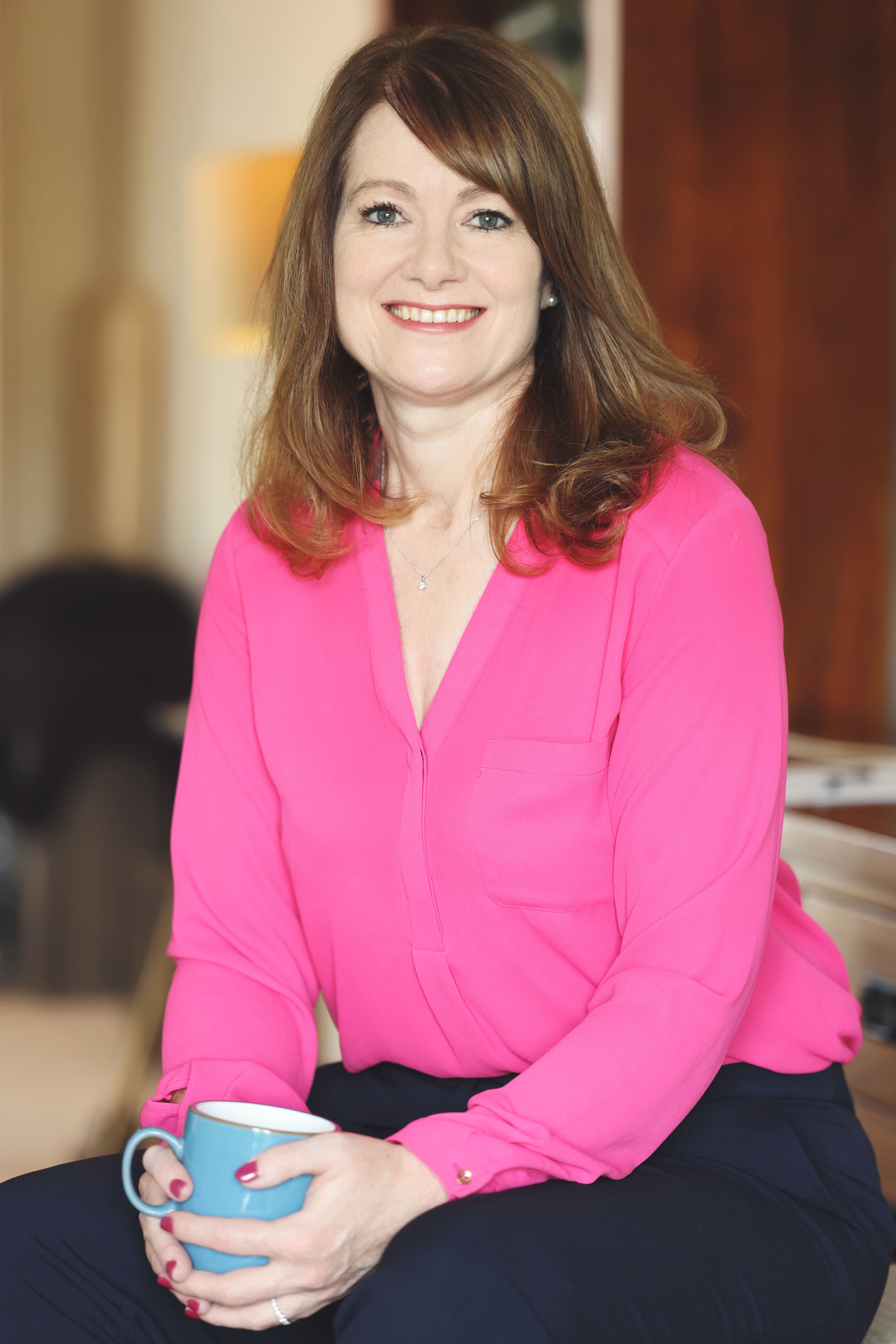
Sarah Cunliffe is an online therapist
What attracted you to become a therapist?
I had needed to have therapy myself about 17 years ago and happened upon an Emotional Therapeutic Counsellor at the time on my high street (she had the same training as I have now) and loved the work we did together and it changed my life for good. I just felt so grateful and knew I wanted others to know what was possible. I wanted to find a way so that other people did not have to go through pain and sadness or depression alone. Since training I have seen over 2,500 people.
Where did you train as a therapist?
The Foundation for Emotional Therapeutic Counselling, a registered charity and training school based in Cheltenham. I also trained in NLP with Anne Burton at The Royal Agricultural College, Cirencester and in Attachment Focussed EMDR with the world renowned expert and author in the United States Dr. Laurel Parnell.
Can you tell us about the type of therapy you practise?
My approach to therapy is holistic and integrative, designed to support the whole person — your health, work, relationships, friendships, leisure, personal development, sense of meaning and purpose, and your overall fulfilment and authenticity.
Over time, I’ve expanded my training and therapeutic toolkit to ensure I can address all aspects of life that matter to you, empowering you to move towards greater wholeness and satisfaction.
For those with neurodivergences like ADHD I’m also trained in understanding ADHD and its impact on work, home life, and relationships, which brings an added layer of support to help you achieve a more successful and fulfilling life.
The types of therapy I practise:
- Emotional Therapeutic Counselling (ETC): I help you explore and resolve the underlying emotional roots of your present difficulties — such as sadness, guilt, low self-worth, anxiety, and relationship challenges. This person-centred, creative approach fosters genuine self-awareness, emotional release, and long-lasting personal growth.
- EMDR (Eye Movement Desensitisation and Reprocessing): I work with you to process trauma, anxiety, and distressing experiences safely, so painful memories lose their overwhelming impact. EMDR is a powerful tool for finding calm, resilience, and freedom after adversity.
- NLP (Neuro-Linguistic Programming): Together, we use practical strategies to transform unhelpful thought and behaviour patterns, build confidence, set goals, and improve communication. NLP complements deeper therapeutic work with tools for empowerment in everyday life.
- Executive coaching: For professionals and leaders, I offer reflective space and targeted strategies to boost self-awareness, emotional intelligence, decision-making, and professional growth. This coaching is deeply supportive of both personal and work transitions.
- Gottman relationship counselling: I use research-based strategies to help couples build stronger emotional connections, improve communication, manage conflict, and rebuild intimacy and trust for healthier, more sustaining relationships. I am also able to support relationships where a partner or both partners have ADHD.
I see each client as an interconnected whole person, and my work is rooted in compassion, adaptability, and a genuine commitment to your unique potential. By integrating these approaches and where needed my training and understanding of neurodiversity, especially ADHD, I aim to help you achieve meaningful, lasting progress in all areas of life.
How does your type of therapy help with specific mental health concerns?
Through guided conversations and techniques such as imagery, creative exercises, and exploration of past experiences, clients are encouraged to connect with and safely express buried emotions. By recognising and processing these feelings, individuals can release emotional blocks, gain insight, and develop healthier patterns of thinking, feeling, and relating. This collapses the client’s depression from the inside once the feelings are released. The focus is on empowerment and self-awareness, enabling lasting personal growth.
Shame: Using a 1:1 12 Step programme for the self-shame addiction.
What sort of people do you usually see?
Common difficulties are depression, shame, anxiety the triad of feelings, those who on the surface have done very well in their careers but deep down may share they are over workers, perfectionists, over caregiving, people pleasing, don’t’ feel good enough, are very self-critical, self neglect, sometimes have body dysmorphic disorder or have imposter syndrome.
Couples who are struggling due to their perfectionism, long working ours, being controlling, feel co-dependent in their relationships or feel that they are responsible for others feelings and others feelings are more important than their own. Sometimes they have a little thought in the back of their mind that they are not truly sure who they are or what brings them joy.
I see individuals and couples and, with a parents consent, I also occasionally work with young people.
Have you noticed any recent mental health trends or wider changes in attitude?
There is a much higher level now of people with social anxiety especially since Covid and in the last 10 years there are more clients talking to me about feeling conflicted between time spent on quality self care, life balance yet feeling they should be doing more at work, as parents and be keeping fit, on a diet and all at the same time. I feel for them.
I am also hearing more from people whose partners are showing signs of narcissistic abuse and supporting them with learning about narcissistic personality disorder and how it can manifest. I am also debunking that labelling when its being overused and not accurate or correct.
A great deal of my clients have been diagnosed with ADHD as well. I have late diagnosed ADHD myself and have gone most of my life in the dark on it but it certainly helps me to know the ways to support clients with ADHD and I have done some excellent continual professional development training on it to understand and support my clients with it.
What do you like about being a therapist?
One of the greatest joys of this work is witnessing people’s lives change for the better — seeing them find relief from what has been hurting them and grow into a more fulfilled version of themselves. I love empowering clients to actually achieve their personal and career goals.
I also treasure those early moments of connection with a new client. There’s often some nervousness at first, but I get to watch that tension ease as they realise I’m a real, ordinary person who sincerely wants to help. In that moment, they begin to sense that I can walk alongside them and help them get where they want to go. I especially love asking clients what their wish list is. In that moment, I often see a glimmer of hope appear in their eyes — something they were not expecting to feel. Even if just for a brief moment, despite everything they may be carrying, they can imagine possibility again.
For me, the most rewarding part is recognising how fascinating, complex, and resilient people are. It’s an honour to support them on their journey back to wholeness, shifting roles along the way — detective at the start, rock steady counsellor in the middle, and coach as they complete their journey. This work fulfils my sense of meaning and purpose, and I feel privileged to do it.
What is less pleasant?
One of the less pleasant parts of counselling is when occasionally clients disengage — for example, avoiding their exercises, cancelling last minute, or using things like alcohol to block difficult feelings. While this can be frustrating, I see it as part of the process: avoidance often points to where the real pain is, and with patience and consistency, it can eventually lead to important breakthroughs.
How long have you been with Welldoing and what you think of us?
I am brand new to Welldoing this month. I love the idea of your matching clients to therapists service – that therapeutic relationship is so important and I bet it must be overwhelming for prospective clients choosing a therapist.
Welldoing has a dynamism in terms of being proactive and on a front foot in terms of getting therapists mobilised in CPD, peer groups and even an awards event. I approach the business running of my practice professionally seriously and I feel Welldoing has the same tone. This is not a hobby this is an important job that we do as therapists that carries a lot of responsibility and I feel aligned to Welldoing’s ethos. I look forward to getting more involved.
What books have been important to you in terms of your professional and personal development? Do you ever recommend books to clients?
Yes, I do recommend some of my favourite books to my clients but equally I do make it clear they don’t need to read them for their counselling. The therapist brings that knowledge so they can relax and focus on their feelings and thoughts.
Feel the Fear and Do It Anyway by Susan Jeffers
The 5 Love Languages by Gary Chapman
Healing your Aloneness by Erika Chopich
Homecoming by John Bradshaw
You Can Heal Your Life by Louise Hay
Rescuing the Inner Child by Penny Parks
Hack Your Hormones by Davinia Taylor
Power and Control by Sandra Horley
Life Leverage by Rob Moore
The Charge by Brendon Burchard
How to Win Friends and Influence People by Dale Carnegie
Why Marriages Succeed or Fail by John Gotmann
The Power of Now by Eckhart Tolle
Getting Things Done by David Allen
Traction by Gino Wickman
Key Person of Influence by Daniel Priestley
High Performance by Jake Humphrey and Professor Damian Hughes
Chill and Prosper by Denise Duffield Thomas
What you do for your own mental health?
I have a supervisor who I meet monthly who is there for me to talk about how I am feeling, I meditate often using Insight Timer app which is wonderful and the best meditation and self-care phone app available at the present time in my opinion.
I do yoga, I take holidays travelling abroad roughly every 90 days.
I enjoy an anti-inflammatory diet without any sugar that is great for your mind and I have a very clear and boundaried approach and understanding of my therapeutic role and responsibilities for my clients.
I have late diagnosed ADHD so I use meditation, ADHD tools and calming music for private use that really helps me.
You are an online therapist. What can you share with us about seeing clients online?
I am an online therapist and work with anyone in the world able to speak English. I used to work in a London Harley Street practice when I was less well-known and still keep a toe in there but during Covid-19 I found so many clients online who wanted to see me before their working day, during the day and also in the evenings and realised that they liked the flexibility and freedom of an online counsellor. It meant they could have a slot at a time that worked best for their time zone and location. I may return to the London practice in the future but this approach is working well for now.
I think clients who see me online tend to be a little younger than some as they are comfortable on Zoom and also fit our sessions around their work – they may work from home, do shift work or are those working in the professional services who actually log into into their counselling sessions from in their car, their office or even a coffee shop. They are busy, on the go and this is their special ‘me time' or self-care.
What’s your consultation room like?
My consultation room is viewed on Zoom but it is a real office with a real locked filing cabinet where I store my client’s confidential files. I have a printer and scanner, a huge Mother in Law’s Tongue plant and lots of therapy books and my desk of course. I keep it calming and simple. My virtual assistant who manages my diary and administration is a real person called Electra who is lovely, confidential, caring and she works remotely for me online.
What do you wish people knew about therapy?
Not all therapists have the same level of training, experience, or responsibility. It’s important for clients to find someone they feel truly safe with, someone who understands them, because the therapeutic relationship itself — the compassion and connection you experience — is often the key to healing.
I also wish people knew that a therapist’s own mental health matters. The healthy neural pathways we’ve developed through our own growth and resilience help clients develop new neural pathways in their own brains. Therapy isn’t about being told what to do; it’s about creating the space, support, and insight needed for clients to move forward in their own way.
Quality therapists also work within a strong professional framework. We’re required to meet rigorous regulations around client safety, supervision, and ongoing professional development every year. This ensures we’re always growing in our practice and staying accountable.
Above all, I wish people knew that good therapy can be truly life-changing. With the right therapist, clients can experience profound, lasting shifts — in some cases, even collapsing depression permanently. That possibility for transformation is what makes this work so powerful.
What did you learn about yourself in therapy?
How to be 100% authentic, have the courage to let others see who I am and feel at peace with myself. That I am enough and can have the life and love I deserve. To feel secure. I also learned that I could not always trust what I felt and that protecting yourself only keeps your life small. Running towards the things you fear keeps you in control.