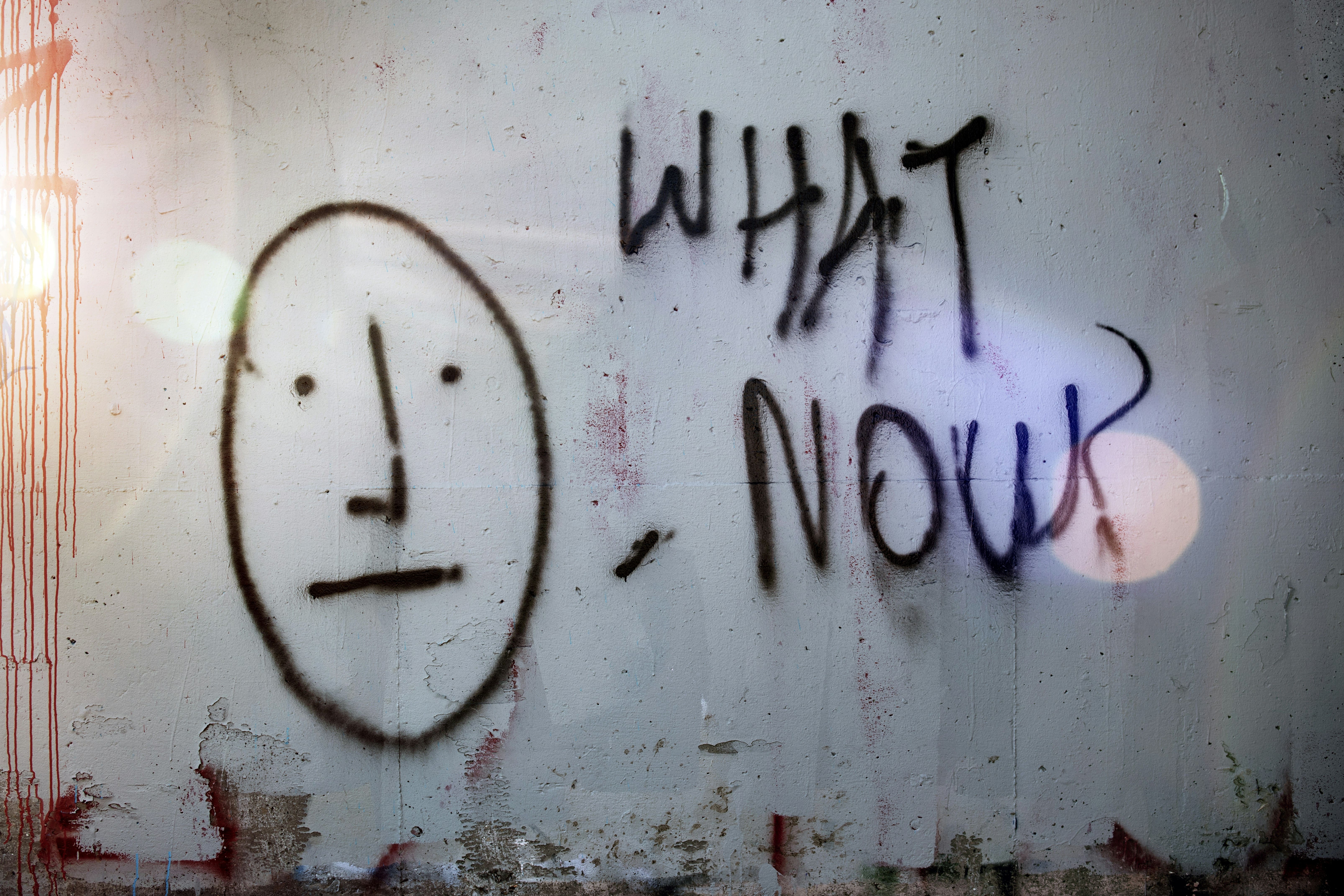
People come to therapy for a wide range of reasons, and during their 50-minute sessions, their focus will generally be on themselves and the minutiae of their feelings about life. But speaking to a range of Welldoing therapists this week, we are hearing that recent political events, such as the assassination of controversial right-wing political influencer Charlie Kirk in Utah, and 110,000 people joining the Unite the Kingdom march in London on Saturday, are resonating much more strongly in consulting rooms than in past periods.
Ondine Smulders said yesterday, “There's a definite and growing sense of anxiety about what's happening in the world. It started to creep in a few years ago with the invasion of Ukraine, then it got more intense with the events in Gaza, and finally for some of my clients today, it's just reached a point of total overwhelm since the shooting of Charlie Kirk.”
She continued, “I don't judge anything they share, even if it goes against what I personally believe. But I will challenge those moments when someone gets stuck in a really rigid, black-and-white way of thinking— that's often just a way to avoid the tough parts of living in a world that's so uncertain."
“A lot of this violence can also trigger a feeling of existential anxiety, that deep-down kind of dread about life itself. Instead of trying to make that feeling go away, I help clients really face it and sit with it.”
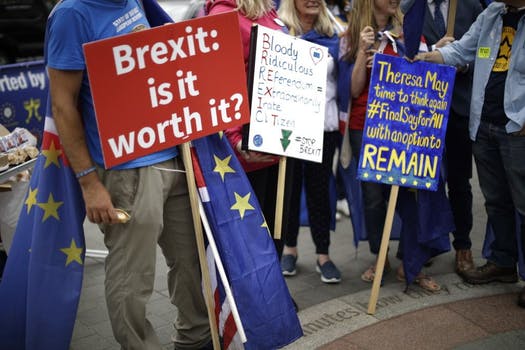
For Cora Hilton, the focus among her clients has been on the Tommy Robinson-allied Unite the Kingdom march in London. “I think a lot of people have found it shocking that so many managed to organise together, specifically, proudly, to declare abhorrent views. There are questions of what has changed in the world that means people can feel so safe to openly voice these opinions that invoke so much harm for others.”
“There is also fear about prejudice becoming mainstream in a way that will significantly impact people’s day-to-day lives. It adds into the picture of there being little to hope for in the future, with this news from our own country adding to that from Palestine, America, Ukraine, and the climate.”
Andre de Trichateau told me, “Several of my clients have expressed shock at the death of Charlie Kirk. There is a collective sense that the world is becoming ever more dangerous and divisive. This event has stirred up confusion about what is appropriate to say and what is not, heightening a general sense of polarisation: Should I speak up and stand by my beliefs or remain silent and suppress them?"
Another therapist told me, “The killing of this man, Charlie Kirk was abhorrent, he didn't deserve to die like that, no one does."
“What I know about what he professed was 'othering' people. Anybody that was different to him, he saw as less-than. He demeaned and dehumanised them and this is abhorrent as well."
“Remarks that I have heard being made after his death by his supporters, it seems are just a call to bring about more hate and division instead of using this as a vehicle that could begin to foster the beginning of a journey towards healing.”
This middle-aged black female practitioner asked that her comments appear anonymously. “As I am also seen as 'other' by some I do not want any backlash in any form coming my way.”
Welldoing advisor Alan Percy, formerly head of counselling at the University of Oxford, explained that with clients he acknowledged the reality of difficulties regarding politics, social life or identity. "This might be in a gently challenging way if the client was expressing rigid and polarised ideas, but doing it from their point of view and reference, not imposing my own views or feelings."
He also made the point that "purely validating clients' opinions, if they are political, even if that is in the area of identity politics, is more of an ideological intervention rather than a therapeutic intervention, which is not what clinical therapists or counsellors should do, as the therapeutic goal should be about exploration and questioning."
Another, in an online group for therapists, wrote of their feeling of vulnerability after listening to clients’ wide-ranging opinions and emotional responses to the Charlie Kirk assassination. Many in the comments agreed that it's occurrence in the US did not help quell their fears of what impact it could have across the West in terms of radicalisation.
Once the issue of political leanings is out in the open, some therapists are concerned that clients may want to know their own thoughts, which clashes with the idea (strict in some trainings) that the therapist is a blank screen for the client to project onto, and that taking into consideration the practitioner’s beliefs transgresses that.
One anonymous therapist, in her 30s, working in a part of London with lots of young people told me she suspected her left-leaning clients thought she was strongly left-wing too. “And while I am left-leaning, looking at some of the left today, I have to consider myself more centre-ground. I have considered whether I would point out our difference of opinion if they said something I really disagreed with, such as celebrating the death of someone whose politics they disagreed with.”
Cora Hilton, however, is not concerned. “As a millennial therapist who works with millennials and Gen Z, I am in a position of it being pretty known that I am on the same page as my clients. I think this helps establish a safety in discussing responses to these world events. Generally, I think people assume therapists are left-leaning and liberal, so perhaps this is even more pronounced in the case of younger therapists.”
Andre de Trichateau’s view differed: “From my theoretical background, I am curious about what it might mean for clients if they were to know my political thoughts. Until now, I have never felt under pressure to disclose them but I wonder if this might shift, as the world looks for certainty. If they know which side of the political fence you are on, so might my curiosity about the therapeutic implications of this shift.”
So, what do you think? Would you want your therapist to have the same views as you? What are the pros and cons of a relationship with someone that aligns with you on everything? Therapy is a unique and powerful relationship that offers opportunities of a different kind to those in our relationships outside, which can come as a huge relief and be an important part of the experience.Whatever it is you're looking for, we can help. Start your search for a therapist here.