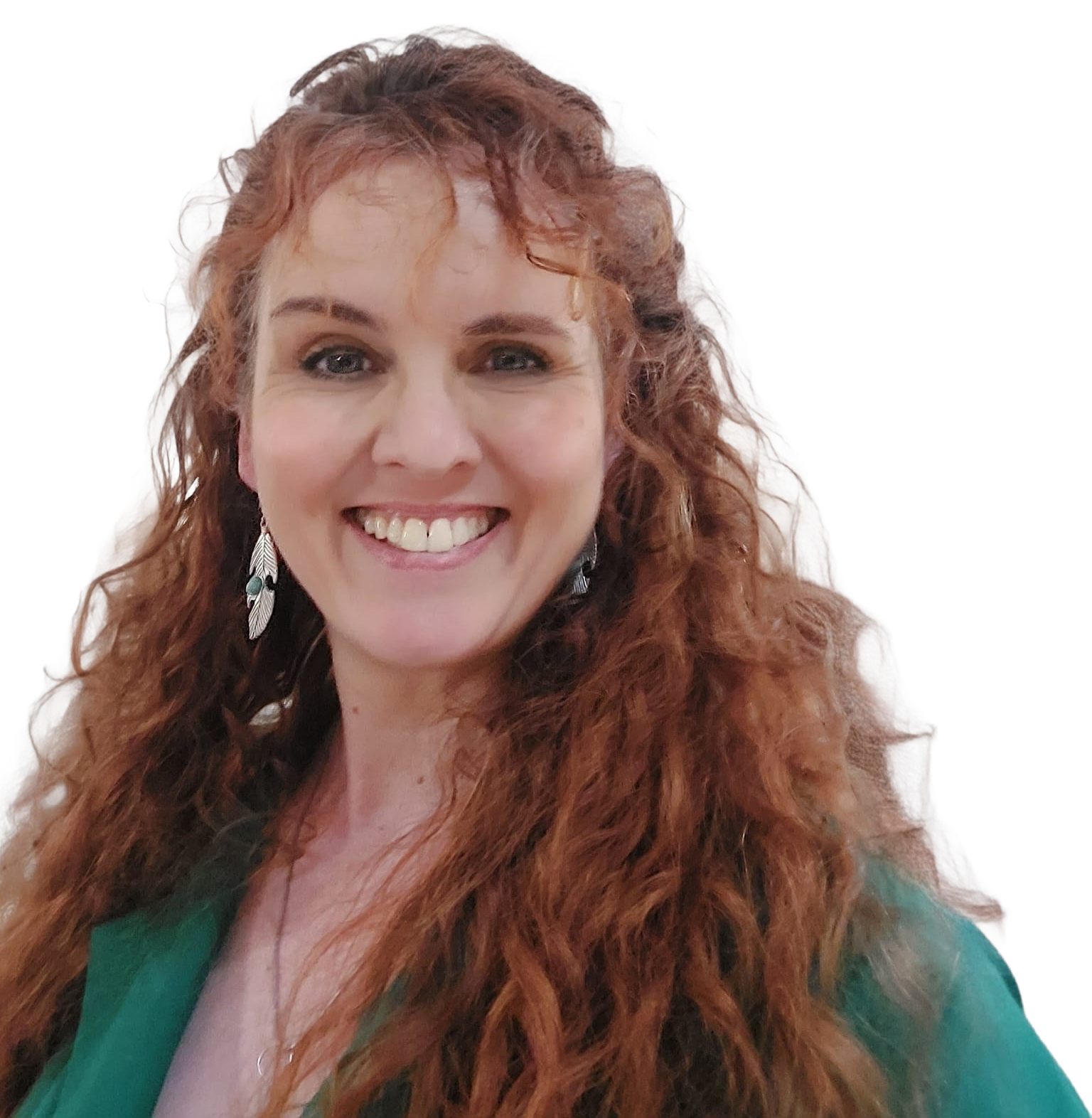
Vanessa Lorkins is a counsellor online
What attracted you to become a therapist?
I’ve always felt drawn to help others. At uni, I worried that I’d become too attached to my clients if I became a psychotherapist, so I moved into marketing - which also draws on psychology skills. My professional background is in client partnerships and digital strategy, particularly within arts and culture. Much of that work involves listening carefully, understanding what matters to people, and helping them make sense of complex situations.
Moving into counselling feels like a development of that interest in people, rather than a completely separate direction. I’m drawn to the questions underneath what we do: the expectations we carry, the roles we take on, and the ways we sometimes lose sight of ourselves while looking after everyone else.
I wanted to offer a different kind of space. One where people do not need to perform, have the answers, or be the person holding everything together.
Where did you train as a therapist?
I trained at Peter Symonds College, where I completed a Level 5 Foundation Degree in Humanistic Counselling based on Transactional Analysis, passing with distinction.
I’m now continuing my training towards becoming a Certified Transactional Analyst, as well as completing a Level 5 Diploma in Trauma Therapy. Qualifying was an important milestone, but I see it as the beginning of an ongoing process of learning and developing my practice.
Can you tell us about the type of therapy you practise?
I practise humanistic counselling based on Transactional Analysis (often shortened to TA). It gives us a way of exploring how we relate to ourselves and other people, including the messages we have absorbed, the roles we have learned to take on, and the patterns we find ourselves repeating.
For clients, that might mean exploring why saying no feels so difficult, why an inner critic has so much authority, or why being needed has become closely connected with feeling valued. We can look at how those patterns developed, but also at what is happening now and what the person wants to be different.
What appeals to me about TA is that it makes complex ideas accessible without reducing people to a label. I value its emphasis on understanding patterns and opening up possibilities for different choices. I want us to have a shared language for what we are exploring, rather than for therapy to feel like something I am doing to someone. I appreciate the framework for conceptualising psychological concepts, and I value the emphasis on cocreating a safe, relational space with my clients.
How does transactional analysis help with symptoms of people-pleasing and burnout?
People-pleasing can look like kindness or competence from the outside, while feeling exhausting on the inside. Someone might agree to things they do not have capacity for, feel responsible for other people’s reactions, or find it difficult to identify what they want. This can often lead to resentment or even burnout. Our bodies say no when our mouths can’t find the words.
TA gives us a framework for exploring the messages and expectations behind those responses. For example, we might investigate an internal rule such as, “I must keep other people happy to be acceptable.” TA’s exploration of early decisions and life scripts can help make these patterns more visible.
We would not assume that everyone’s people-pleasing has the same origin. The work is about understanding what it means for that person, what they fear might happen if they respond differently, and where there may be room for more choice. The aim is not to become less caring, but to make space for themselves within that care.
What sort of people do you usually see?
I work with adults individually, offering online counselling across the UK. I also provide counselling for residents and service users through a charity.
My interests include people-pleasing, over-functioning, anxiety, burnout, and recurring relationship patterns. I have experience and a particular interest in working with people who identify as neurodivergent. Through my trauma therapy training, I am learning how to provide ethical, effective support to people struggling with trauma, especially complex PTSD, and survivors of childhood abuse and neglect.
People do not need to identify with a particular label to come to counselling. They may simply feel overwhelmed, uncertain, or aware that the way they have been managing things is becoming difficult to sustain.
Have you noticed any recent mental health trends or wider changes in attitude?
I’m newly qualified, so I would be cautious about presenting my own experience as evidence of a wider trend.
There seems to be more public discussion about mental health, but greater visibility does not necessarily mean that seeking support feels easy. BACP’s public perceptions research continues to identify stigma around therapy, including among younger adults.
One question that interests me is the gap between appearing capable and feeling supported. We can be very good at recognising someone’s reliability without asking what it costs them to remain so reliable. I would like there to be more room for people to seek help before they reach a point where they can no longer keep going.
What do you like about being a therapist?
I value the opportunity to listen without rushing someone towards an answer. There is something important about making room for experiences that may not have had much space elsewhere.
I also appreciate the collaborative nature of the work. I do not need to know what someone’s life should look like. My role is to help them explore their experience and what matters to them.
I consider the work a privilege: I honour what my clients bring me and am moved by their trust, courage, and self-advocacy
What feels particularly meaningful is the possibility of someone beginning to take their own needs seriously, perhaps after a long time of putting themselves last.
What is less pleasant?
The practical limitations can be difficult. Working with a charity has brought home the gap between the need for support and the resources available to provide it.
I care about accessibility, but I also need to be realistic about what I can offer sustainably. Holding those two things together is not always comfortable. I’m learning to see clear boundaries as part of offering reliable care, rather than as the opposite of compassion.
How long have you been with Welldoing and what you think of us?
I joined Welldoing in September 2026, as I was establishing my counselling practice. I appreciate the attention Welldoing gives to helping people find a therapist who feels right for them. I have found the resources on the Welldoing website useful, both for me and for my clients - in fact, looking for answers during my training led me to the website in the first place! I value the CPD options and appreciate being able to keep my skills current with the the support of a wide range of perspectives and styles. The matching service and the opportunity to read about therapists’ approaches offer different ways into what can otherwise feel like a daunting search.
What books have been important to you in terms of your professional and personal development? Do you ever recommend books to clients?
Man’s Search for Meaning by Viktor Frankl is my most important reference book. I return to it as a guide to choosing how to be, even when we cannot choose our circumstances.
Big Magic by Elizabeth Gilbert is a wonderful exploration of being human and creating. I love its gentle promise that we all have magic within us, and its invitation to give that creativity space.
What Happened to You? by Oprah Winfrey and Bruce Perry has influenced how I think about the impact of trauma and the people we become. For me, it offers a compassionate reframing: moving away from judging ourselves towards understanding our experiences and responses. It has helped me think about how we can make our inner dialogue less pathologising and more curious.
There are many more. I love reading books and articles, listening to audiobooks and podcasts, and attending CPD. I’m always learning. I also recommend books, articles, and podcast episodes to clients when they connect with something we are exploring together.
What you do for your own mental health?
I walk my dogs in the woods where I live. I try to do this every day, and manage it most days each week, ideally for an hour or more. I love that time and treasure it.
I also try to get enough sleep and eat healthily, although I struggle with those things sometimes, like anyone else. Being a therapist does not mean I always get looking after myself right.
My favourite thing is to snuggle on the couch with my husband and watch a film together - or Bake Off! Those ordinary moments of connection and comfort mean a great deal to me.
You are a therapist in Alresford, near Winchester in Hampshire. What can you share with us about seeing clients in this area?
My private practice is online, and I work with adults across the UK. That means my client base is not defined by one particular town or neighbourhood.
I offer appointments early in the morning and in the evenings to help fit counselling around work, study, caring responsibilities, and other commitments.
I also work in person with residents and service users through a charity in Winchester - a beautiful, tranquil setting that is easily accessed by my clients and provides a welcoming environment - both for them and for me.
What’s your consultation room like?
My office at home is full of books and managed by a grumpy-looking cat who loves having people around. I love to include gentle scents to set the tone and calm my mind - sage and petrichor are particular favourites!
At the charity, the space is purpose-built to be therapeutic, including comfortable sofas and a useful coffee table. I add a small bowl of stones to support grounding and provide neurodivergent clients with ways to connect and fidget if needed. I also have a small box of gadgets and ornaments for this purposes, always open on the table if needed. A client gifted me a beautiful poster that I keep on the table, which reminds clients that, in this room, they are welcome, accepted, safe, loved, and OK. Like my office at home, I gently scent the air to bring a sense of calm without overwhelming t he senses. Behind my chair, clients look out onto a lovely waterland, often populated with deer and squirrels.
What do you wish people knew about therapy?
You do not need to arrive with everything neatly explained. You can be uncertain about what is wrong, unsure what you need, or worried that your difficulties are not “serious enough”.
I would also like people to know that therapy is not about being told who to become. It is a space to explore your experience, including the parts that feel contradictory or difficult to put into words.
You can ask questions, say when something does not feel right, and take time to decide whether working with a particular therapist feels right for you.
What did you learn about yourself in therapy?
I’m learning that I am anxious, and that’s OK. I used to be in denial about it, but I cannot work with something I do not know, or do not believe, is there. Acknowledging it has become an important part of understanding myself.
I’m also learning that I can say no. Sometimes, saying no feels at least as bad as I thought it would. That has been an important discovery: making a choice that is right for me does not necessarily mean it will feel comfortable, and that’s OK, too.
A core idea in transactional analysis is “I’m OK, you’re OK”. That feels revolutionary to me. I can be anxious, find boundaries difficult, and still be OK. So can you.