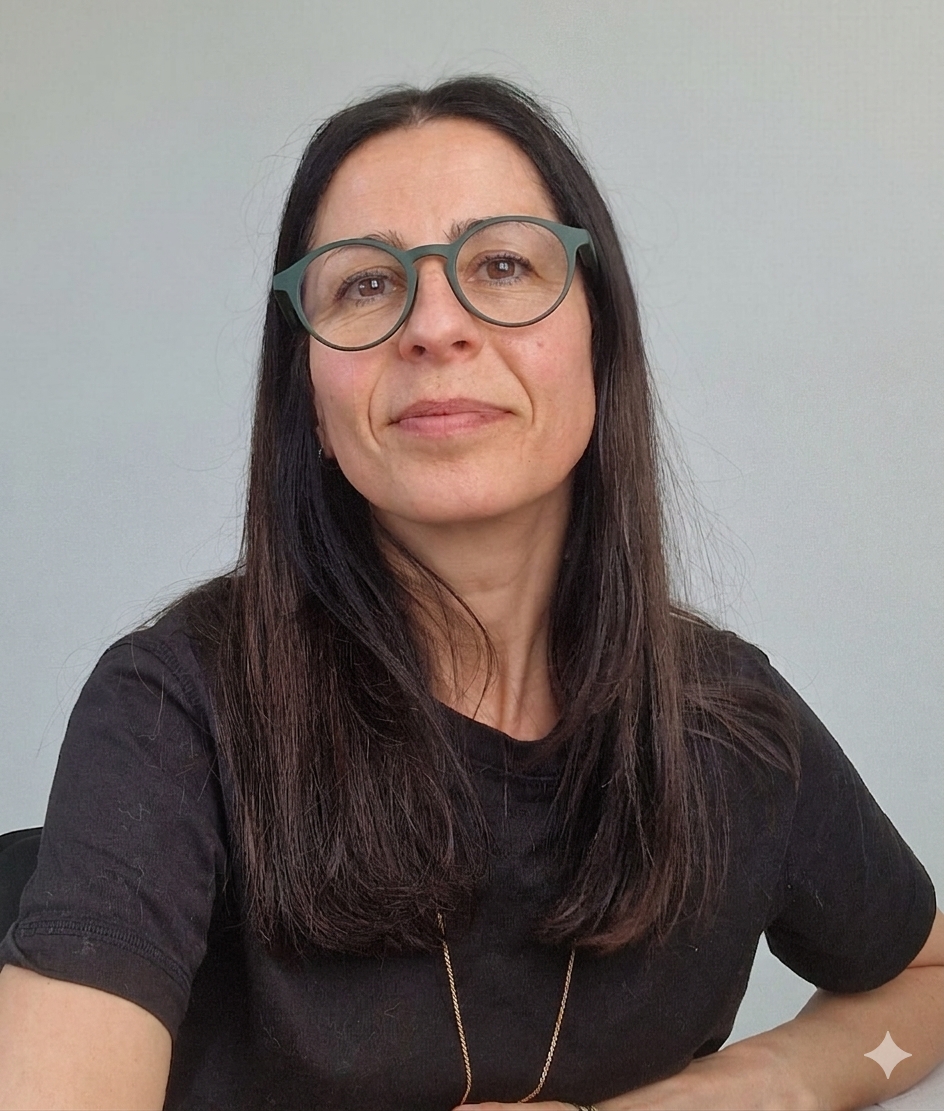
Katie Lister is a pyschotherapist in Leeds
What attracted you to become a therapist?
I've always been interested in people and read a lot of fiction. I also grew up with mental health difficulties close to me, which motivated me to understand mental health from early on. My mum was a college counsellor, so there were books about therapy and psychology around the house.
I studied French at university, drawn to understanding people from inside another language and culture. Gradually I came back to the idea of therapy. The job roles I was attracted to were in education and careers guidance, and I worked for the Psychology and Assessment Service in Leeds with young people and their families, where I learned more about human development and attachment. I had three years of my own therapy in my early thirties, which was transformative.
When I finally trained as a therapist, it felt like the obvious thing to do in retrospect. I found an old primary school project recently, one of those "all about me" books you make at seven or eight. I'd written that I wanted to be a psychotherapist. It had apparently always been the plan.
Where did you train as a therapist?
I trained at Leeds Beckett University, completing a postgraduate diploma in relational psychotherapy. Since then, I've added to my practice through CPD in Compassion Focused Therapy (CFT), Acceptance and Commitment Therapy (ACT) and mindfulness meditation, and I'm currently completing EMDR Europe-accredited training, qualifying this summer. I'm also part of a monthly CPD group with therapists I respect and learn a great deal from.
Can you tell us about the type of therapy you practise?
I work relationally and integratively, drawing most on Compassion Focused Therapy (CFT) and Acceptance and Commitment Therapy (ACT), and I'm adding EMDR for trauma work. What this means for clients is that sessions are tailored to them. I'm not applying a formula. CFT in particular I find very useful, because so many of the people I work with are living with a really harsh inner critic, and this approach helps them build a different, more understanding relationship with themselves.
How does your type of therapy help with anxiety?
Anxiety is often less about the anxiety itself and more about the relationship we've built with it. A lot of anxious patterns make total sense when you trace them back, they developed for good reasons, usually to keep us safe. In sessions, I'll help clients notice what anxiety is doing without being pulled into a struggle with it, and to work with the self-criticism that so frequently sits alongside anxiety. When people are very hard on themselves about being anxious, that adds another layer of suffering. Helping someone develop a warmer, more grounded response to their own distress can shift things quite significantly.
What sort of people do you usually see?
I work with adults, typically from their late twenties onwards. The common threads tend to be anxiety, low self-worth, and people-pleasing patterns that leave people feeling disconnected from themselves. Many of the people I see are managing well on the outside but feeling pretty miserable or anxious on the inside and have been their own harshest critic for a long time.
I also work a lot with women in their forties, fifties and sixties. Perimenopause and menopause can be destabilising in ways that catch people off guard. Mood changes, anxiety, a loss of the sense of self that felt solid before. Roles shift and questions about identity surface that may have been deferred for years. Therapy at this stage isn't just about managing symptoms. It can be an opportunity to understand yourself more clearly and make changes that matter.
Have you noticed any recent mental health trends or wider changes in attitude?
There's a fluency in psychotherapeutic concepts now, largely from social media, which I think can be genuinely useful. People come to therapy with more of a language for what they're experiencing than they used to.
I've also noticed that many clients use meditation apps, or have tried them. I think they can be valuable, but they're often used as a way to relax or switch off rather than to become more present in daily life, which would also be very helpful for people.
What do you like about being a therapist?
The moment when something shifts for someone and you can feel it. It's not usually dramatic, it's usually quite quiet, but there's something unmistakeable about it. I also really like people and find them interesting so it is a pleasure to work.
What is less pleasant?
The marketing, the scheduling and the paperwork are a very different set of demands than the therapeutic work and I don't love it!
How long have you been with Welldoing and what do you think of us?
I am new to Welldoing. So far, I value the quality of the content on the site and the sense that it was built with a genuine understanding of what clients need when they're looking for a therapist. It doesn't feel like just a directory in the flat, functional sense.
What books have been important to you?
Russ Harris's work on ACT, particularly The Happiness Trap. Yalom's books. And good literary fiction, which has done as much for my understanding of human motivation and relationships as most of the clinical texts.
What do you do for your own mental health?
I have my own therapy periodically. I run as often as I can, often with a friend, which does something useful for my head. I practice mindfulness meditation. I still read a lot of fiction. I enjoy walking and seeing friends for food. I keep in touch with other therapists too, the work can be quite isolating and a sense of community is important.
You are a therapist in North Leeds. What can you share about seeing clients in this area?
I'm based in Roundhay in North Leeds, and I also work online, which means I see clients across Leeds and beyond which I enjoy. The area has a particular character, parkland, a strong sense of community.
What's your consultation room like?
It's at Margaret House in Roundhay, a calm, private space.
What do you wish people knew about therapy?
That it's not primarily about being given advice or solutions. The most significant changes tend to come from something shifting in how you understand yourself and your patterns, and that usually happens over time, in relationship. People sometimes come expecting to be fixed, but it's more collaborative and more gradual than that and also more durable.
What did you learn about yourself in therapy?
That a lot of what I thought was just my personality was actually a set of adaptations to my environment growing up. That I had to help myself because nobody else was going to do that work for me. Recognising that was both unsettling and freeing.