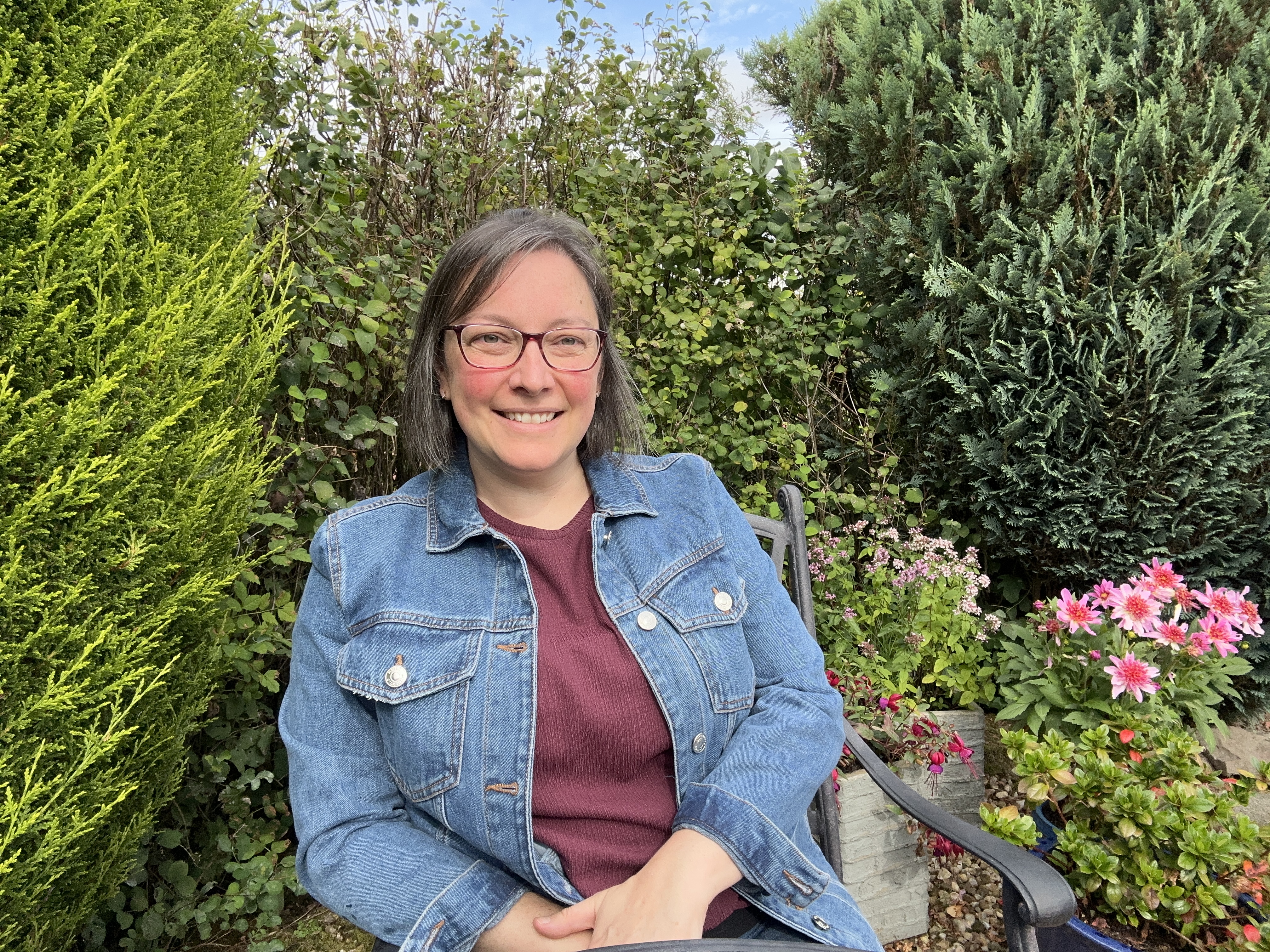
Claire Molnar is an online counsellor
What attracted you to become a therapist?
I’ve always been interested in people — in what helps them grow and find meaning. My background was in youth work, and I found those experiences of supporting young people through difficult transitions incredibly rewarding. I realised I wanted to deepen my understanding of what helps people develop emotionally, which naturally led me into counselling.
Where did you train?
I studied a Masters in Integrative Counselling, through Roehampton University in London, and I am a Registered Member of BACP. Since qualifying, I’ve continued to study in areas such as trauma-informed therapy, play therapy, and solution-focused therapy.
I’m committed to ongoing CPD and supervision to keep my practice responsive and up to date. I am really looking forward to an upcoming training course I have booked, for counsellors working with neurodiverse clients.
Can you tell us about the type of therapy you practise?
I work with an integrative approach, which means I draw on several therapeutic models — person-centred, CBT, systemic, and creative approaches such as play and reflective exercises. This flexibility allows me to tailor sessions to each person rather than expecting them to fit a single method.
For clients, this means therapy can feel more personal and collaborative — we can use different tools depending on what they need that day, whether that’s emotional exploration, practical coping strategies or creative expression.
How does an integrative approach help with symptoms of trauma?
Integrative therapy helps by meeting the person where they are. Often we start with grounding and stabilising techniques — learning how to regulate emotions, manage triggers and build a sense of safety. As confidence and trust grow, we can explore the underlying experiences and how they continue to affect life today. Because I draw on different approaches, I can combine talking therapy with body-based or creative techniques if needed, helping clients process their story in a safe, manageable way.
What sort of people do you usually see?
I mainly see adults and young people in my private practice but I used to counsel in primary schools which I really enjoyed. Many people come to me now with experiences of anxiety, relationship difficulties, loss, or life transitions.
I have a passion for supporting women, parents, and families who are trying to better understand themselves in order to improve family life and relationships. My practice is open to anyone who wants to understand themselves better and find new ways of moving forward.
Have you noticed any recent mental health trends or wider changes in attitude?
Since Covid, I’ve noticed more people are living with or adjusting to long-term health conditions, and that’s having a real impact on mental wellbeing. There’s a growing awareness of how physical and emotional health are interconnected, and more people are seeking support to manage both.
I’ve also seen a positive shift in openness — people are increasingly willing to talk about their mental health and reach out for help, which feels like a really hopeful change. I feel young people are spearheading this wave of openness, which is very impressive.
What do you like about being a therapist?
I feel privileged to witness people’s courage and resilience. Watching someone move from confusion or self-doubt to greater clarity and confidence is incredibly rewarding. No two people are the same, and that constant sense of learning and human connection keeps the work deeply meaningful. I am always blown away by people’s trust, often from the get-go and how much they are willing to give of themselves. Therapy can be quickly transformative for people with this kind of willingness.
What is less pleasant?
There are times when the emotional intensity of the work can be challenging — holding space for someone’s pain isn’t always easy. Self-care and supervision are essential so that I can remain grounded and present for my clients, and also grounded and present for my own family.
How long have you been with Welldoing and what you think of us?
I joined Welldoing around three months ago and I really value the platform. It’s a thoughtful, user-friendly space that helps clients find the right therapist for them — something that’s at the heart of good therapy.
I also appreciate the peer support groups and CPD opportunities, which encourage a sense of community and continuous learning among therapists.
What books have been important to you in terms of your professional and personal development? Do you ever recommend books to clients?
Several books have really shaped both my personal growth and professional development. The Happiness Trap by Russ Harris introduced me to Acceptance and Commitment Therapy and the idea of making space for difficult thoughts and feelings rather than fighting them.
The Book You Wish Your Parents Had Read by Philippa Perry offers such a compassionate look at relationships and how understanding ourselves can improve how we connect with others.
Emotional Agility by Susan David has influenced how I think about resilience and flexibility when life feels uncertain. And Permission to Feel by Marc Brackett is a wonderful exploration of emotional awareness — it reminds us that naming and understanding our feelings is a strength, not a weakness. I sometimes recommend these books to clients when they support what we’re exploring together, as they all encourage insight, kindness and practical growth.
What you do for your own mental health?
I try to practise what I encourage clients to do — reflection, connection and get creative. I get out in nature regularly, connect with friends as often as possible and I’ve recently taught myself how to play the ukulele. Just for fun! It’s a great way to allow the brain some rest and play. It felt very empowering; learning a new skill from scratch. I found myself thinking “if I can do this, I can do anything!”
You are a therapist online, based in Scotland. What can you share with us about seeing clients in this area?
I work online with people from all over the UK, which I really enjoy — it allows me to connect with clients from many different backgrounds and stages of life. That said, a lot of the people I see are Scottish, and as a Scot myself, it’s lovely to share that sense of familiarity and understanding of our culture and humour. Working online offers flexibility and accessibility, but it still feels personal and connected, no matter where someone is joining from.
What’s your consultation room like?
Even though I work online, my therapy room is still really important to me. It’s a calm, softly lit space that helps me feel grounded and focused, which in turn supports the atmosphere I want to create for clients. I keep it warm and uncluttered, with plants and comforting touches that bring a sense of calm. I think the environment we work from influences how we show up — and I aim to offer clients the same sense of safety and stillness as they would feel in person.
What do you wish people knew about therapy?
Therapy is about understanding yourself, building emotional awareness, and finding ways to live more fully. It’s a collaborative process — you don’t have to have everything figured out to start, you just need a willingness to explore.
And everyone can benefit from therapy. Everyone!
What did you learn about yourself in therapy?
Through my own therapy, I learned the importance of self-compassion. I realised how often we speak to ourselves in ways we would never speak to someone we care about. Learning to be kinder and more understanding toward myself has changed the way I respond to challenges — it’s helped me to let go of perfectionism and approach life with more patience and acceptance.
That experience also deepened how I work as a therapist; I see first-hand how powerful self-compassion can be in helping people heal, grow, and reconnect with themselves.