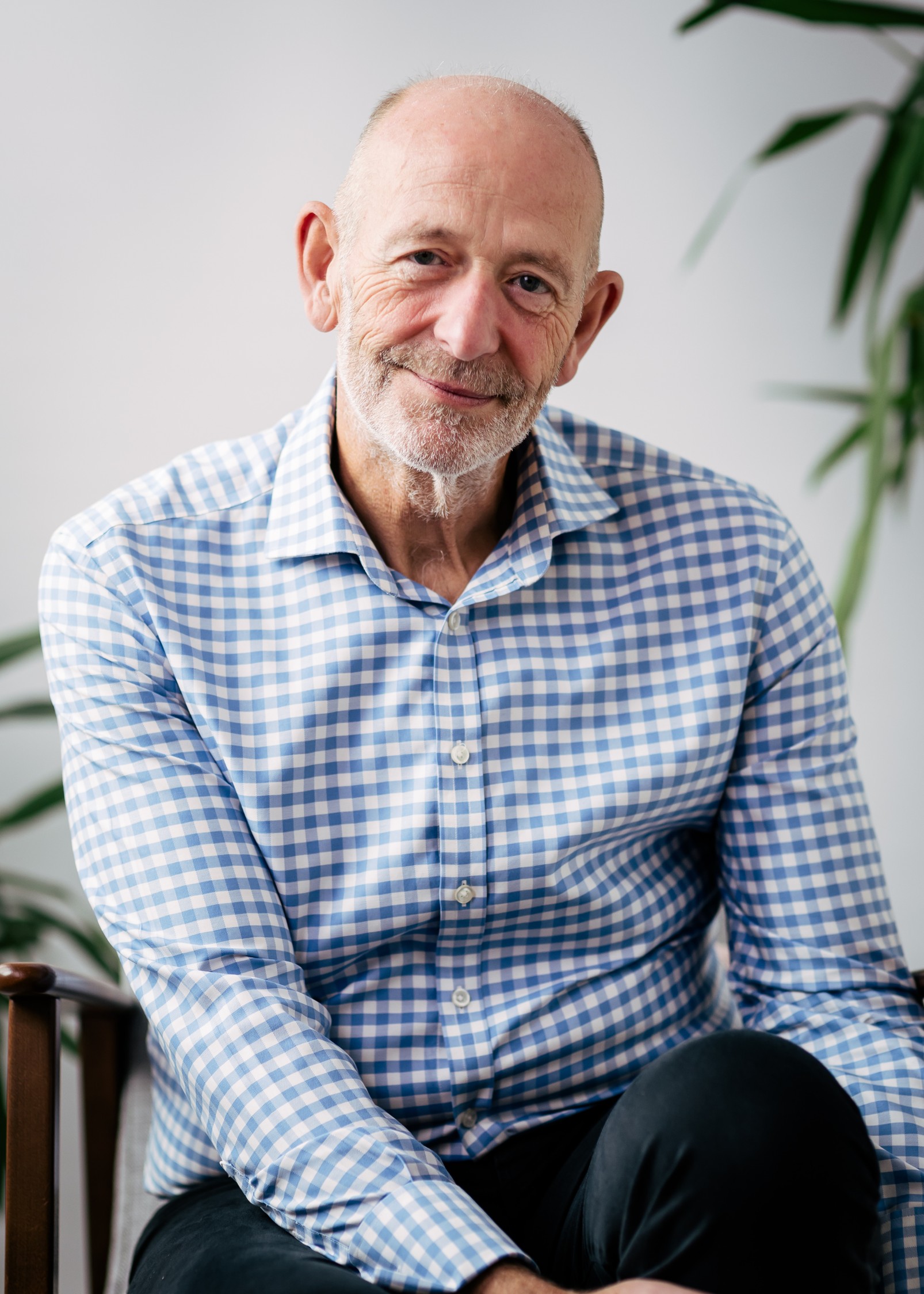
Paul Arnold is a psychotherapist in London
What attracted you to become a therapist?
Bit of a sad story. My mother was an alcoholic. I was too young/inexperienced to help. She could have lived a much happier and fulfilled life if she had received therapy.
Where did you train as a therapist?
I did five years training at the world-renowned Metanoia Institute (plus a year’s foundation). Before that I was a qualified Master Practitioner in NLP and did an MSc in Change Agent Skills & Strategy at Surrey University. My first degree (no surprise!) was in Psychology. I am also a trained coach and couples counsellor.
Can you tell us about the type of therapy you practise?
I trained as an integrative psychotherapist. What this means is you work with theories that feels authentic to who I am as a person. All the empirical evidence suggests that the quality of relationship between client and therapist is one of the two key influencers on the success of the therapy. Hence, I think it is critical to be authentic in the room and not ‘wear’ a theory or process. Thus, I am mot ‘locked’ into one theoretical approach but use a range for what I feel is appropriate for each client. Amongst the theories I most like include Object Relations, Self Psychology, Transactional Analysis and Internal Family systems.
How I am with my clients: I like to have relaxed easy going friendly relationships with my clients (I am not some ‘cold’ analyst who never responds). I want to create a warm safe place that clients feel seen, validated and understood. I hope they can say anything they need to say, be whoever they need to be without judgment.
People say I am an active therapist. I am deeply observant and pick up things (to misquote the Leonard Cohen song, “It’s the crack that lets the light in”). I notice the body language, the tonality (the window to the emotion), the patterns etc. As a coach, if invited, I will also be forward facing, helping to set clear goals and tasks. I have over 60 different ‘exercises’ I invite clients to fill in in their spare time (e.g. identifying their values, discussing with their partner their needs they have, or even writing their eulogy as a step towards defining their purpose etc).
How does integrative therapy help with interpersonal relationships?
For me relationships are everything. It gives us the greatest joys and also the greatest pains. Furthermore, most of the psychological damage inflicted on us comes from our relationships. Hence the therapy is usually through the relationship. Hence, I help people improve their quality of relationships (often by helping them identify their beliefs, patterns and triggers).
For me, the most important of all relationships we need to build is with ourselves, so I do a lot of work on helping people build their self-esteem and do parent themselves the way they may not have been parented themselves.
What sort of people do you usually see?
We often say we deal with three big topics in therapy: Mystery, Mastery and History. Mystery is “Who am I?”. Mastery is “How can I manage my anxiety, my anger, my relationships?”. History is “How can I make sense of what has happened to me?”.
I seem to have three groups of people. People in their 30’s who are struggling or questioning some of their choices in life (e.g. work, relationships, emotions etc.) and people in their 60’s often exploring who they are and what they want to achieve in this phase of their life.
Because I worked in corporate consulting and have been a coach for the past 17 years, I often help clients who have had work-related issues (e.g. burn-out/loss of direction/purpose, redundancy, pressure overload etc.)
The third group are of course couples who have been brave enough to recognise they need a third party to help them deal with their issues.
Have you noticed any recent mental health trends or wider changes in attitude?
I often say that emotions are contagious. We are living in highly anxious times – what with wars, economic sanctions, environmental seismic shifts, and AI disruption etc. No wonder so many people are feeling highly anxious and overwhelmed.
I also feel there is an increasing identity crisis that I notice a lot with men (but I am sure the same will be true for women). A common question is “What is it to be a man these days?” (A black man, a Sikh man, a Jewish man, a gay man, a disabled man, an old man, etc…). There are so many confusing messages.
What do you like about being a therapist?
I think it is such an honour to be invited into the deepest, often most fragile parts of another person – something I really respect that trust and try to never forget. To help a person in whatever way is such a gift back to me and I hope is of use for them.
What is less pleasant?
The admin drives me crazy (partly because I have A.D.D!). I really need an assistant to handle that all!
How long have you been with Welldoing and what you think of us?
I have only recently joined but really looking forward to the CPD sessions. We all need to do CPD so these will also be super useful. I have a love and a thirst for knowledge so just want to soak up as much as I can about the human ‘condition’.
What books have been important to you in terms of your professional and personal development? Do you ever recommend books to clients?
I think PsychEd is really useful for many of my clients so have a whole series of education sheets that I give out if we have discussed a topic (e.g. the Drama triangle, Attachment styles, Windows of tolerance etc.)
I am also forever recommending books. The classics include The Body Keeps the Score (Van Der Kolk), Games People Play (Berne), No Bad Parts (Schwartz) and Scattered Minds by Gabor Maté.
I have also recorded many videos as a self-help library for the general public to use and may occasionally reference them to my clients (e.g. my 60+ strategies on how to better manage anxiety and stress - My YouTube channel is @paularnold4002)
What you do for your own mental health?
I am a passionate oarsman. Being in a boat early in the morning with the mist sitting above the water, the geese flying in formation overhead and seeing the seal slip gracefully underwater is better than…! Furthermore, the intense concentration of remaining in time with your crewmates means you have no space in your brain to think about anything else. Added to that is the camaraderie, the community and all the general fitness, it is for me my second psychotherapy!
You are a therapist in London. What can you share with us about seeing clients in this area?
Because of my background in corporate consulting and coaching, I understand better than many the passions, pressures and politics of organisational life. Hence a lot of my clients are successful professionals with little spare time, so work a lot in the city or where they live which often seems to be West London.
What’s your consultation room like?
I tend to use a range of them in Token House and the Greenhouse rooms in West London. Most consulting rooms are similar. Comfy, small, and decorated in a pleasant, relaxing style. My private office at home is very different. I cannot pretend to be someone I am not, so it is full of my books, my rowing machine, my records etc! No-one has ever commented negatively. Personally (and I appreciate others may see it differently), if I am an authentic person, then surely seeing who I really am in a good thing for the relationship?
What do you wish people knew about therapy?
For me the big thing is coming to therapy is NOT a stigma that you are somehow deeply damaged. It is actually a sign of strength. If you do a sport, you would not think twice of having a coach. To become a better version of yourself. So why not have a life coach? None of us was given (or been educated at school) into how to cope with the massive increasing pressures we are all struggling with in these days of war/economic crisis/environmental seismic shifts/Post AI disruption/complex relationships etc.
What did you learn about yourself in therapy?
How much time do you have!!??
To use Winnicott’s words, That I am “good enough”.