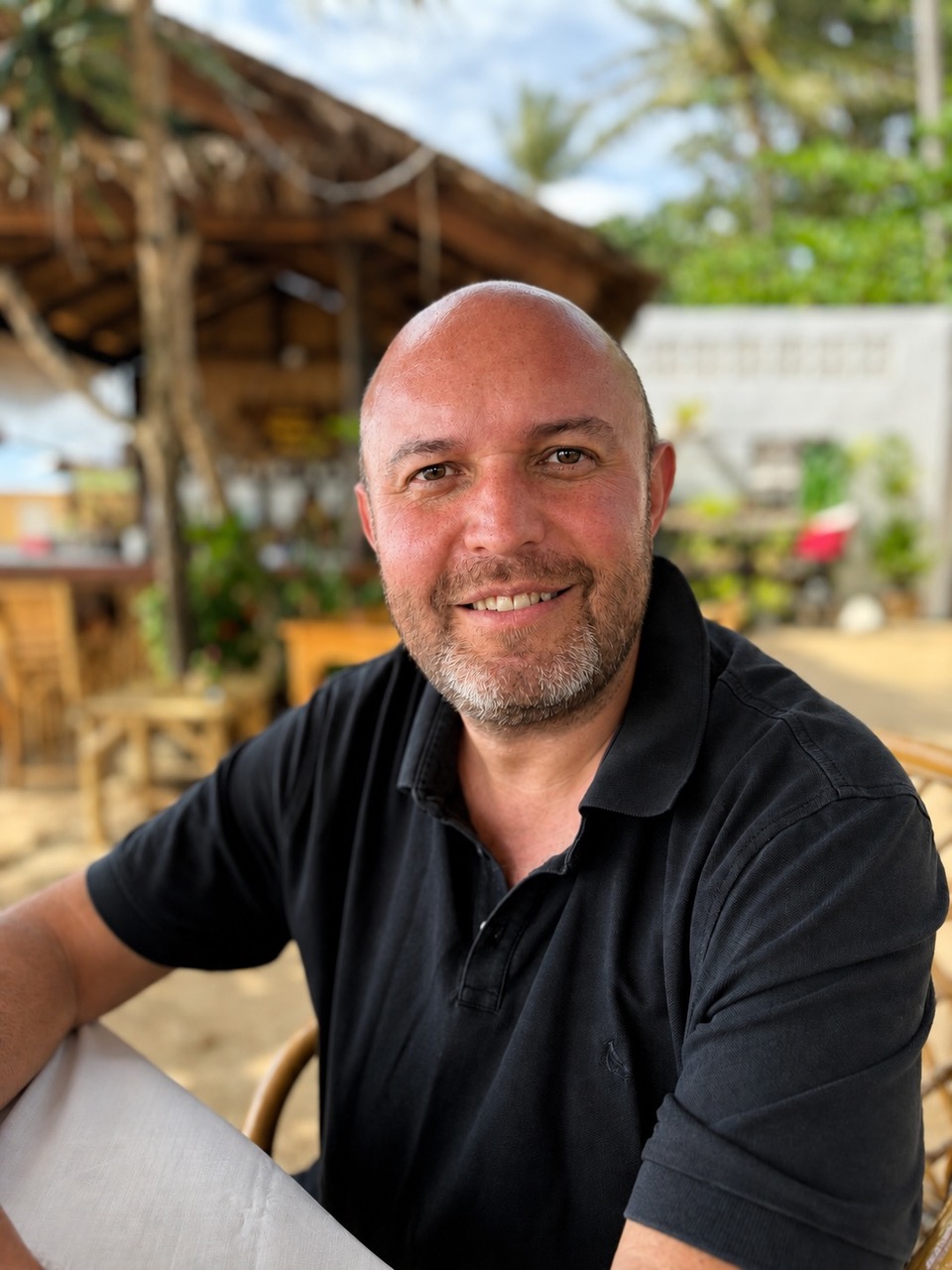
Mike Hirschkorn is a therapist in London and online
What attracted you to become a therapist?
I’ve retrained as a therapist later in life, after a long and varied career. I’ve been many different things, including a journalist, a small business owner and an ecommerce and marketing director, but none of them ever really felt like what I was supposed to be doing with my life. It was only when I ended up in therapy myself with depression brought on by a lifetime of wrong turns that I realised that the right career for me was staring me in the face. I’m endlessly fascinated by what makes people tick, and I love being able to make a difference in people’s lives.
Where did you train as a therapist?
I trained in Integrative Therapeutic Counselling at CPTA (The Counselling and Psychotherapy Training Academy) in London. I also have an Advanced Diploma in CBT/REBT from CCBT (College of Cognitive Behavioural Therapies) also in London, and I’m still studying with that college, working towards an Advanced Integrative Diploma. I also received advanced additional training in Contextual Behavioural approaches from the Power To Live Foundation, the charity where I did my student placement. That experience had such a profound impact on me that I now have a permanent role for that charity as their Client Care Manager.
Can you tell us about the type of therapy you practise?
My interest in the CBT family of therapies is easy to trace – CBT was the modality that worked for me during my battles with depression. But by luck rather than judgement, I did my placement with the Power To Live Foundation, which is one of the UK’s strongest advocates of Third Wave Behavioural Therapies including ACT, FAP and CFT. Like traditional CBT, these methods allow me to work with clients to help change behaviours and reframe thinking to move towards their goals. But they see the client as a whole person and a product of their environment, their upbringing and their relationships, rather than as a list of symptoms to be treated.
How do your types of therapy help with symptoms of depression and anxiety?
The types of therapy I specialise in (REBT, ACT and FAP) are transdiagnostic, so they work across a wide spectrum of emotional and mental health issues. I’ve worked with clients struggling with depression, anxiety, emotional regulation, OCD, relationship difficulties, complicated family dynamics, living with injury or chronic health problems, issues associated with neurodiversity, and more.
What sort of people do you usually see?
I work with individual clients, but I don’t have a “typical” client as such. I’ve worked with people from all backgrounds and walks of life: from students struggling to adapt to life away from home; young professionals faced with the challenges of workplaces, relationships and difficult thought patterns; older people adapting to life after their children have grown up; and everything in between.
Have you noticed any recent mental health trends or wider changes in attitude?
There are two things that spring to mind. First is the growing number of people coming to terms with neurodiversity – more young people are being diagnosed with ADHD and autism, and a lot of adults are discovering neurodivergent traits in themselves later in life. I help people see the strength and power in their diversity. Secondly, AI is having a massive impact on every aspect of our lives – not least how people think about mental health, and access mental health services. As a therapist community, I believe we need to embrace these changes and think about how we can work with, rather than against, changing technology.
What do you like about being a therapist?
The number one benefit is feeling like I’m making a genuine difference in people’s lives. That means I get to do work that lets me feel proud of myself, something that rarely happened in my previous careers. I’m also very happy to have found a job where I get to be myself – I don’t have to put on a front or pretend to be someone I’m not every day.
What is less pleasant?
It’s very difficult when a client is so stuck that you feel you can’t get through to them.
How long have you been with Welldoing and what you think of us?
I’ve only very recently joined Welldoing. So far the support has been excellent – they’re very hands on and treat me like a human being rather than a number on a spreadsheet. But I haven’t had the chance to benefit from their additional services yet.
What books have been important to you in terms of your professional and personal development? Do you ever recommend books to clients?
The book that made the biggest impact on me was ACT Made Simple by Russ Harris. It was recommended reading when I was training at my placement agency. It introduced me to the concepts of ACT and really got under my skin. It’s been instrumental in shaping the kind of therapist I want to be.
What you do for your own mental health?
My happiest place in the world is travelling at great speed down a snowy mountain. Sadly the cost of skiing holidays mean I don’t get to nearly as often as I’d like. When I’m at home, I go running 3 times a week. When I’m not running I walk the dog. When the dog’s too tired, I just take myself for a walk.
You are a therapist in North London. What can you share with us about seeing clients in this area?
I see private clients in Finchley and Golders Green in North London, and the charity I work for has a consulting room in the City of London. It will come as no surprise, with London being as diverse as it is, that my clients come from all backgrounds, walks of life and ethnicities. I also work online and have had clients from all across the UK.
What’s your consultation room like?
I see clients in multiple different consulting rooms, as well as online from my home office, and each setting is slightly different. My main goal is always to help my client to feel comfortable, relaxed, and safe.
What do you wish people knew about therapy?
I still hear a lot of people talking about the stigma of therapy – that it’s somehow shameful to need therapy, and even more shameful to admit it to friends and family. That’s especially the case among men. But I’m also pleased to report that that seems to be changing. People are gradually coming to realise that therapy can be great for helping you to maintain positive health, and that asking for help when you’re struggling is a strength, not a weakness.
What did you learn about yourself in therapy?
As I’ve said above, therapy was completely transformative for me. It allowed me to get in touch with my values and realise that the reason I had never found who I was meant to be was because I was looking in the wrong places.