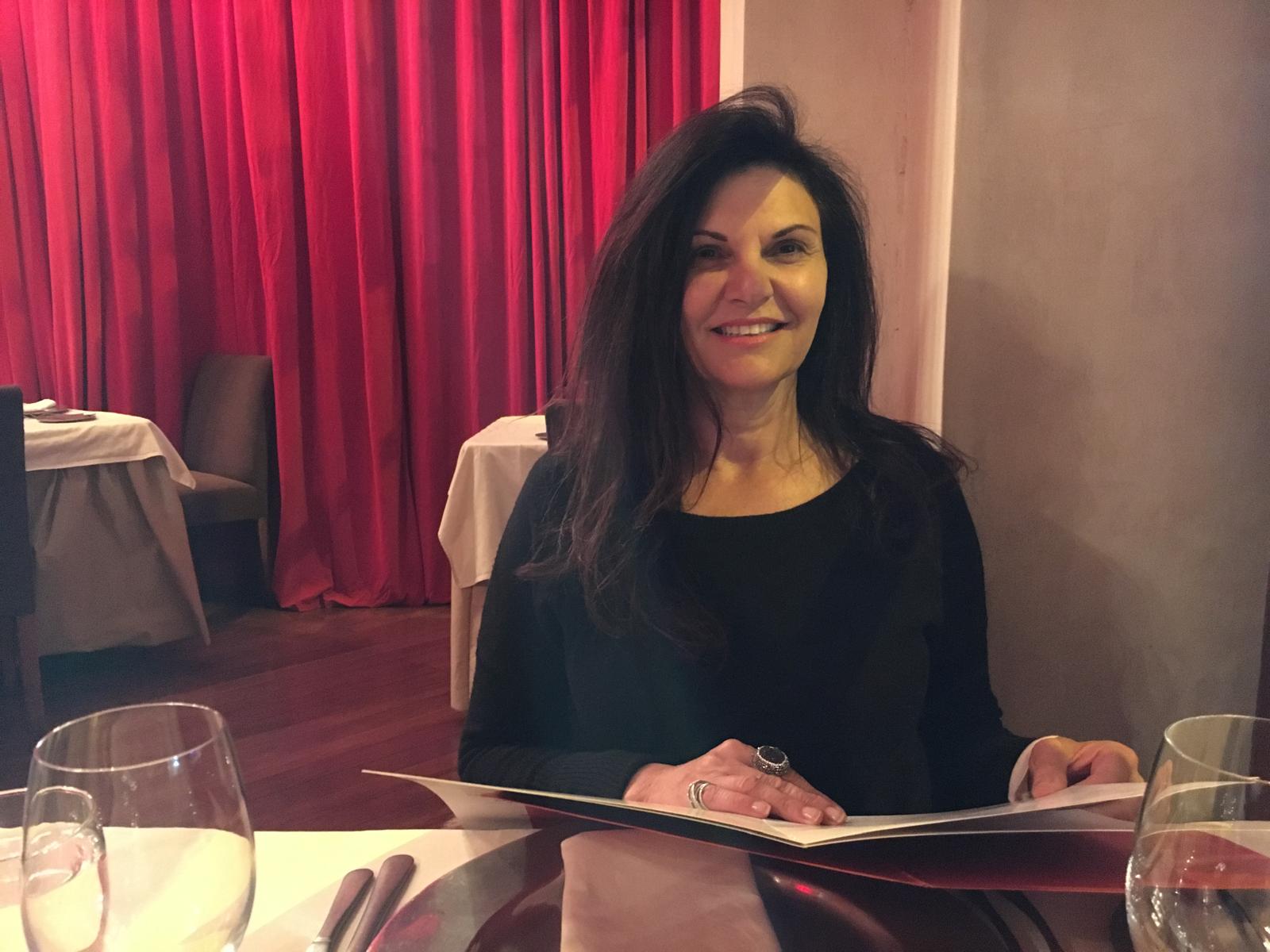
Debra Drukarz is a psychotherapist in London
What attracted you to become a therapist?
My own personal experience of therapy, both individually and as part of a couple, had a profound impact on my life. It helped me understand myself and my relationships more deeply, and to recognize how experiences from the past can continue to shape the way we think, feel and relate to others in the present .
Therapy gave me a new language for understanding both myself and others. The insight and self-awareness it brought enabled me to live in a more conscious and fulfilling way. I found the experience so transformative that, after working first as a solicitor and later as an Executive Director in the not-for-profit sector, I decided to change direction and retrain as a therapist, working with both individuals and couples.
I wanted to offer others the opportunity to experience the greater understanding , self-awareness and possibility for change that therapy had given me.
Where did you train as a therapist?
Over the years, I have trained in a number of therapeutic approaches, including psychosynthesis at Birkbeck College and integrative counselling at City Lit. My principal professional training and qualification is in psychodynamic therapy, which I completed at the Manor House Centre for Psychotherapy and Counselling.
I have also trained in Imago Relationship Therapy, an approach to couples therapy that uses structured dialogue and communication techniques to help couples better understand one another, deepen their connection and work towards emotional healing.
Can you tell us about the type of therapy you practise?
I chose to practice psychodynamic therapy because, from my own experience, I found it the most transformative of the approaches I encountered. It is a form of talking therapy that looks beyond what is happening on the surface, exploring how our early experiences, relationships and unconscious patterns can continue to influence the way we think, feel and relate to others today.
I believe that gaining insight into these influences can help us understand ourselves with greater compassion and clarity. It can also give us more freedom to question long-held patterns, make different choices and create meaningful and lasting change.
Alongside my work, with individuals, I practice Imago Relationship Therapy with couples. Imago provides a structured way of communicating that helps partners really listen to and understand one another, creating greater connection, trust and emotional safety. I also draw on my psychodynamic training in my couples work, helping partners explore the deeper feelings, needs and patterns that may be playing out within their relationship.
How does psychodynamic therapy help with symptoms of depression and anxiety?
Psychodynamic therapy can help with depression and anxiety by looking beyond the immediate symptoms and exploring what may be contributing to the distress beneath them. This might include difficult or unresolved experiences, patterns within relationships, feelings that have been hard to recognise or express, or ways of coping that may once have been protective but are no longer serving us.
Rather than simply asking “How can I stop feeling this way?” therapy gives us the space to become curious about “Why might I be feeling this way?” By beginning to understand where certain feelings and responses come from, clients can develop greater self-compassion and discover new ways of responding to themselves, their relationships and the challenges they face.
What sort of people do you usually see?
I work with couples of all ages, backgrounds and sexualities who may be experiencing difficulties with communication, trust, intimacy or conflict, or who are facing significant decisions about their future together. I help couples understand not only what is happening between them, but what may lie beneath it, so they can communicate more openly, reconnect and work through difficulties in a constructive and respectful way.
I also work with individuals aged 18 and over, who come to therapy with a wide range of concerns. These may include anxiety or low mood, relationship difficulties, questions around identity or direction, or periods of transition and change that prompt a desire for reflection.
No two clients are the same. Each person brings their own history, experiences and perspective, and I value the trust involved in being invited into their world and accompanying them as they develop a greater understanding of themselves.
Have you noticed any recent mental health trends or wider changes in attitude?
I have noticed a growing sense of uncertainty and anxiety about the world, with clients increasingly talking about personal safety, social division, prejudice and concerns about the future. Alongside this, I am hearing more existential questions about identity, purpose, belonging and what gives our lives meaning.
I also hear people describing a sense of loneliness or disconnection, sometimes even when they are surrounded by others or in relationships. The rapidly changing nature of technology, social media and increasingly, AI is influencing how we communicate and connect, and I think many of us are still trying to understand what this means for our relationships, our sense of self and emotional wellbeing.
At the same time, I have seen a positive shift in attitudes towards mental health. People seem more willing to talk openly about how they are feeling and to seek support. Therapy is increasingly seen not only as something we turn to in a crisis, but as an opportunity to understand ourselves better and improve the quality of our lives and relationships.
What do you like about being a therapist?
I feel immensely privileged to be trusted with people’s stories and to witness the changes that can take place through therapy. I love meeting such a wide variety of people and gaining an understanding of their individual experiences, cultures, relationships, challenges and ways of seeing the world.
I am continually struck by the courage people show in facing difficult and sometimes painful aspects of their lives, and by our capacity for growth, change and healing. The human connection that develops through this work is something I value enormously, and being invited into another person’s inner world is both humbling and deeply rewarding.
What is less pleasant?
The most difficult part of the work is witnessing people’s suffering and pain, particularly when there is no immediate way to alleviate it.
There are also some practical challenges. Therapy can be quite a sedentary profession, so I have to remind myself to get out of my chair and move! It can also be professionally isolating at times, which makes supervision and contact with other therapists particularly important.
As with any emotionally demanding work, I think it is important to be able to leave the work in the consulting rom as much as possible, maintaining healthy boundaries and a good balance between my professional and personal life.
How long have you been with Welldoing and what you think of us?
I have only recently joined Welldoing, and I am looking forward to becoming part of the community. I particularly value the emphasis on continuing professional development and am looking forward to taking part in the educational opportunities available. I also welcome the opportunity to connect with other therapists, exchange ideas and learn from one another.
What books have been important to you in terms of your professional and personal development? Do you ever recommend books to clients?
I am continually reading and engaging with books that contribute to both my professional and personal development. One book that has stayed with me since childhood is To Kill a Mocking Bird by Harper Lee, which I first read when I was around twelve. Its themes of empathy, injustice and the importance of seeing the world from another person’s perspective have remained meaningful to me throughout my life and resonate strongly with how I think about relationships and understanding others.
On reflection, I can see how those ideas have influenced both of my professional careers, first as a lawyer and now as a therapist. The idea of trying to understand what it is like to stand in another person’s shoes has stayed and continues to inform the way I approach both people and relationships.
Professionally, I find the work of Irvin D. Yolam immensely inspiring. I particularly value the way he explores some of life’s biggest questions, meaning, mortality, relationships and the human condition, with warmth, humanity, insight and a willingness to be personally vulnerable. His writing is a reminder that therapy is not simply about theory or technique, but the relationship between human beings.
One book I sometimes recommend is The Body Keeps the Score by Bessel van de Kolk, particularly for clients interested in understanding the relationship between traumatic experiences, the mind and the body. It can offer a useful perspective on how past experiences may continue to influence our physical and emotional wellbeing.
For couples, I often recommend Getting The Love You Want by Harville Hendrix and Helen La Kelly Hunt. It provides an accessible introduction to Imago Relationship Therapy and explains many of the ideas and communication techniques that underpin the approach.
What you do for your own mental health?
I have my own therapy and regular supervision, both of which gives me valuable space to reflect on my work and my own thoughts and feelings. I think it is important, as a therapist, to have the same opportunity for reflection, curiosity and self-understanding that I encourage in my clients.
Outside of work, I read, listen to music and spend time with family and friends. I love walking in the countryside, and painting is particularly important to me. I find the creative process both absorbing and restorative. It gives me a completely different way of exploring and expressing myself.
You are a therapist in North London. What can you share with us about seeing clients in this area?
I work with a diverse range of clients across North London, including individuals and couples from different cultural, religious and social backgrounds and at very different stages of life. Same sex and heterosexual couples, and people at very different stages of life.
I have particular experience of working with people navigating the pressures of professional life alongside relationships and family responsibilities, as well as significant periods of transition or change. I also see clients who are looking for a space to understand themselves and their patterns more deeply, rather than simply wanting to find a quick solution to a particular problem.
Having previously worked with charities providing low-cost mental health support, I have also had the opportunity in my professional career to work with people from a particularly broad range of backgrounds and circumstances.
I offer sessions on zoom, and this has expanded my practice, to include clients not just situated in North London, but also those living and/or working abroad or based further afield in the UK.
What’s your consultation room like?
I have two consulting rooms, one in Finchley and one in West Hampstead in London. Both are bright, comfortable and easily accessible by public transport. They are calm spaces that are welcoming and private, clients can feel at ease from the moment they arrive.
I also work on Zoom with a number of my clients, and offer a hybrid approach of zoom and in person work, to fit in with my clients schedules and geographic locations.
What do you wish people knew about therapy?
I wish more people understood that therapy isn’t simply about talking about what is wrong, nor do you have to be in crisis to benefit from it. You don’t need to arrive with answers, or even know exactly what the problem is. Sometimes a sense that something isn’t quite right or simply a desire to understand yourself better, is reason enough to begin. Therapy offers a safe and confidential space in which to explore your thoughts and feelings, become curious about yourself and begin to understand the experiences and patterns that may have shaped you.
I also think there is sometimes a misconception that a therapist will tell you what to do. But therapy is not about getting advice, it is about developing the insight and self-awareness to find your own answers and make choices that feel right for you.
Therapy can be hard. At times it can mean confronting painful feelings or aspects of ourselves that we would rather avoid. But it can also be enlightening, surprising and even joyful, as discoveries are made.
Understanding ourselves more deeply can be genuinely transformative, it can change not only how we feel internally, the benefits can extend far beyond the therapy room, influencing how we relate to partners, family, friends, work colleagues, and the wider world.
Meaningful change takes time and commitment to the process. Therapy is not a quick fix, it asks for curiosity, reflection, and ultimately action to effect change.
What did you learn about yourself in therapy?
For me therapy was revelatory, like opening a window and letting in the light. It gave me a new language with which to understand myself and helped me recognize how my early experiences had shaped the person I had become, and challenged my limiting beliefs about myself.
I began to understand the different parts of myself, the child I had been and the adult I had become, and how they continued to coexist and influence the way I thought, felt, acted and related to others. With that understanding came greater compassion for myself, and also a greater sense of choice about how I wanted to live my life.
Ultimately, therapy has been the greatest gift I have given myself, and its impact is a large part of what inspired me to become a therapist.