Emmy van Deurzen is something of a superstar in the world of therapy. Now in her mid-70s, she is an existential therapist, psychologist, philosopher, and author. Originally from the Netherlands and long-time resident in the UK, she has been a major force in developing existential therapy worldwide.
Having written around 20 books for professionals in the psychology and philosophy space, she has just published her first book for the general public, Beginning to Live: The Art of Existential Freedom. At 400+ pages it is no dip-in, quick fix self-help manual, yet we believe it could greatly help anyone looking for deeper meaning, and greater freedom in their life. We are delighted to call it the Welldoing Book of the Month for May 2026.
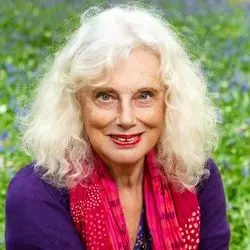
Van Deurzen joined a group of Welldoing therapists on a CPD session recently — you can see some of the conversation on the clip below. In a jewel-bright room near the South Coast, bedecked in purple and wearing red lipstick, she is a vibrant presence, and her language is rich with metaphors and examples from clinical work.
The book is structured around four key dimensions of human experience — physical, social, personal, and spiritual. Distilling the work of decades of training, reading, working, she is leading readers towards a view of life that involves choice, agency, and a deep search for meaning.
Here, for example, she is writing about whether taking work too seriously make us forget the need for balance. “Work can become all absorbing because it is about earning a living and survival. This may not leave as much room as you would like for playfulness, relaxation, creativity and human relationships. It is only too easy to disturb that natural balance between effort and rest.” This leads her to Heidegger and his criticism of technology’s ab ility to shut down our bodies and the physical world around us… “The will to mastery becomes all the more urgent the more technology threatens to slip from human control.”
But she is blessedly free of dictates and rules. Again and again she writes, we have choices. It is, after all, existential freedom that she is exhorting us to open ourselves to.
In The Guardian, journalist Sophie McBain interviewed van Deurzen about the book, but then she was offered a session of therapy with her. She described it as “one of the most profound encounters” of her life. “This optimism has persisted. I can see a new way out of my mental doom loops; it seems possible I may, with time and effort, learn a different relationship to risk and uncertainty. I relistened to my interview the day after therapy and when van Deurzen describes courage as “a lightening of the heart” I thought: “That’s it! That’s how this feels!”
Thoughtful, wise, empathetic, these are all words that indicate the type of book this is, not a quick fix, but not a stiff, jargon-filled plod either. Van Deurzen hasn’t finally got a publisher to take on a commercial book about existential therapy to blow it. Written with care but also dynamism and intellect, Beginning to Live is a book that we believe could make some readers look at what they want out of life differently, and with intent.