Bookshop shelves are rammed with self-help titles that dig into how we should deal with problems in our lives, such as anxiety. It is a very real problem. Research has found that between 2000 and 2019 the incidence of anxiety, depression and stress has boomed in the UK, with rates more than doubling among 16–24-year-olds.
Experts blame this growth on all sorts of factors: economic uncertainty, Brexit, Covid, social media and climate anxiety. Meanwhile people of all ages and backgrounds continue to find themselves badly affected by uncontrollable feelings of worry and stress. For some, anxiety makes their life almost unbearable. But, according to The Power of Anxiety, there is another side to anxiety that makes it easier to understand and live with.
Dr Sian Williams, well-known first as a broadcaster and TV celebrity, was drawn to study psychology by intellectual curiosity, and issues in her own life, such as life-long anxiety and arduous treatment for breast cancer. After years of intense study and clinical work, she is now a chartered counselling psychologist, counselling people living with anxiety, both in the NHS where she specialises in emergency workers and people affected by PTSD, as well as privately, with businesses and media organisations.
In this new book, The Power of Anxiety, she has put all her powers to work. This includes her education in psychology and human behaviour, as well as her experience in working with clients whose anxiety may have completely floored them. There is also her many decades of TV interviewing, often dealing with people who have had terrible, if newsworthy experiences.
At the centre of the book is the idea that many people with anxiety problems are often highly sensitive. While “dandelions” can exist whatever their environment, the more sensitive “orchids" need nurturing, and can wilt with neglect. We need to understand our sensitivity to anxiety, writes Williams. Rather that struggling to banish our anxiety, it is better to accept what it brings to you, and learn you can deal best with anxious feelings.
As she writes, “Anxiety is not a thing to fix, to fight. It’s not something we can hide from, ignore or avoid. It’s an essential part of who we are, it thrums within us. If we listen to its vibrations, feel them resonate in our body, hear what anxiety is saying to us and notice what it tells us to do, we can use it. This sensitivity can be a tool to protect us — a powerful, motivating force for good.”
Sometimes the anxiety levels are too high for comfort. “The body becomes tense as we prepare to to run, or fight, or play dead; the stress hormones course, the heart pumps faster, our immune system responds with inflammation to defend us from this unknown attacker… The difficulty of sitting with this means we might stop going to places, being with people, trusting ourselves. We may question our worth, and our reason for being.
“But anxiety isn’t our enemy; we can stop the struggle. In our tug-of-war battle with it, we can just drop the rope. And then, when we do, we can see that it’s not a thing to go into combat with. Because it lives inside us, trying to help, occasionally getting it wrong. We can learn to live better with it.”
Williams covers perfectionism, social anxiety, panic attacks, self-criticism and people-pleasing in the 382-page book. There are exercises, tips and bullet-point advice sections, plus interviews with well-known people, such as as Radiohead drummer Philip Selway and novelist and playwright Daisy Goodwin, telling their own anxiety stories,. But, probably most importantly, there is the kindly, empathetic, understanding voice in which this book is written. On the frightening subject of anxiety and how you can better deal with it, this book is a balm and an explanation, both of which could be just what you need.
Homepage
Welldoing Articles
Book of the Month: The Power of Anxiety – How to Ride the Worry Wave by Dr Sian Williams
Book of the Month: The Power of Anxiety – How to Ride the Worry Wave by Dr Sian Williams
Apr 20, 2026
Our Welldoing Book of the Month for April 2026 is The Power of Anxiety: How to Ride the Worry Wave by Dr Sian Williams

Sian Williams
Chartered counselling psychologist Dr Sian Williams is the author of a new book The Power of Anxiety: How to Ride the Worry Wave. She works primarily for the NHS helping people manage acute anxiety, stress, and trauma. She also continues her long-running media career, with BBC Radio 4 series, Life Changing, and the morning show on BBC3 Unwind.

Louise Chunn
Read further
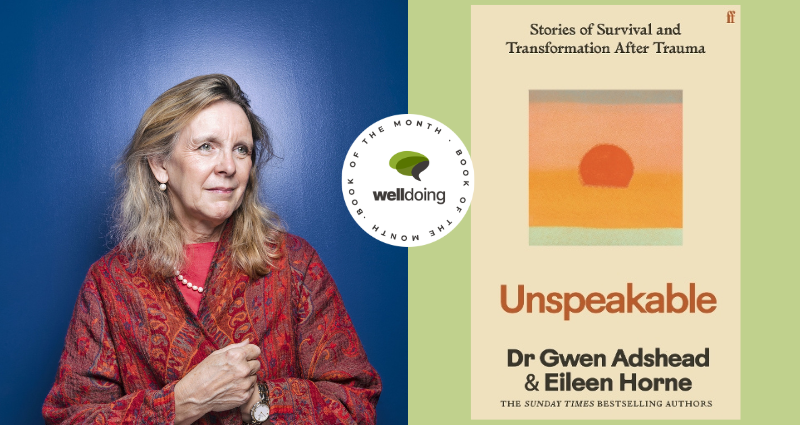
Book of the Month: Unspeakable – Stories of survival and transformation after trauma by Gwen Adshead and Eileen Horne
by Gwen Adshead

To My Client Who Has Anxiety
by Klara Sharples
Cancer Treatment and Menopause: Managing Anxiety
by Dani Binnington
Managing Anxiety in Times of Global Crisis
by Eleanor Marker
What is the Difference Between Fear and Anxiety?
by Ana Mootoosamy
The Anxiety Loop and How to Escape It
by Laurie Castelli-Gair
Connecting with Nature Helped Me Overcome Anxiety and OCD
by Hannah Bourne-Taylor
What Life-Long Anxiety Can Feel Like in Your 50s
by Louise Chunn