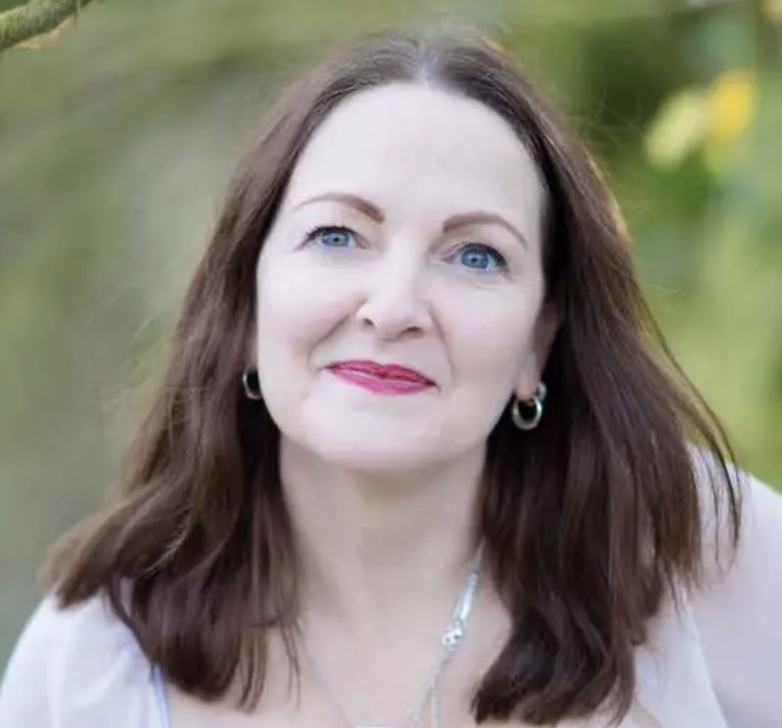
Sandra Hilton is a therapist in North London
What attracted you to become a therapist?
Like many of us, I come from a family where we didn’t talk about what’s really going on. That always felt counter-intuitive and inhibiting to me, so I chose therapy as way to unlock my own capability to talk about what matters first of all, and now I enjoy partnering and witnessing my clients as they discover their voices and stories.
Where did you train?
The Minster Centre
Can you tell us about the type of therapy you practise?
My main training is as an integrative therapist, followed by a number of Jungian trainings and work with a Jungian therapist. My practice now is a blend of Jungian, psychodynamic, embodied, relational and transpersonal.
The beauty of an integrative approach is that I can adapt how I work depending on my clients, but what runs through all my work is a focus on building a therapeutic relationship where my clients feel that they can explore whatever is most important to them, at the pace and in the way they wish.
My clients are at the centre of all our work, and I believe that the answers to whatever questions they’re asking come from within them, at a mind, body and spirit level. My job is to accompany a client back to themselves.
As well as talking therapy, we may do this through working with dreams, writing, journalling and other creative approaches. My work with clients tends to be long term and run deep emotionally and spiritually.
What sort of people do you usually see?
I especially love working with women across generations as they begin to question and explore their own relationship with the feminine and are curious about their inner life, which may look very different to what has been prescribed for them by others. People often come to me at an initiation stage in their life, whether that be in a relationship, in their working life, through illness, having children or menopause, or they may be experiencing anxiety and uncertainty about which path to follow.
A crisis point can often be a portal to a way of life that feels more authentic and embodied. Women are often disconnected from their true feelings and bodies as a way of surviving life in a patriarchal world. My work is part of supporting a reconnection
Uncovering our stories and finding our voice can be particularly challenging. From a young age, we find ourselves in a culture which denigrates, objectifies and sexualises us and disrespects the feminine. I work to help clients recognise that where they may perceive a personal failing, there is likely to be an engrained cultural projection, so that they can begin to reclaim their story, desire, longing, power, love, and appreciation for their precious self.
I don’t work exclusively with women however, I also work with men who are wondering what it means to be a man in this culture and want to integrate a healthy masculine and healthy feminine in their being.
As well as one to one work, I run women’s circles, Marion Woodman inspired book groups and teach online.
Have you noticed any recent mental health trends or wider changes in attitude?
More people are beginning to recognise that the personal is political and that the social and the cultural context inevitably impact people’s mental health. I’m finding that clients are more open to consider the systemic impact of the world that we live in, and their implication in it, whether from a point of privilege or oppression.
What do you like about being a therapist?
I always feel that it is such a privilege to be invited into people’s intimate lives and I love being witness to people as they become more intimate with themselves, find more compassion and love for themselves and more peace and joy in their lives and relationships.
What is less pleasant?
I also am witness to clients who suffer and struggle in some really difficult circumstances. It saddens me that people will often blame themselves first and find fault in themselves in situations where they have had no agency or power. The personal is political and the politics of the present day can be brutal.
How long have you been with Welldoing and what you think of us?
I’ve been with Welldoing for several years and like the range of resources available through the site for both therapists and clients. I write articles for the site occasionally.
What books have been important to you in terms of your professional and personal development? Do you ever recommend books to clients?
Trauma and the Soul by Donald Kalsched
Women Who Run with the Wolves by Dr Clarissa Pinkola Estes
The Pregnant Virgin by Marion Woodman
Addiction to Perfection by Marion Woodman
The Drama of the Gifted Child by Alice Miller
The Analyst’s Vulnerability by Karen Maroda
The Body Keeps the Score by Bessel van der Kolk
Currently reading Coming to Life in the Consulting Room by Thomas Ogden
What you do for your own mental health?
Therapy, journalling, yoga, meditation, walking,, reading and community circles
You are a therapist in North London. What can you share with us about seeing clients in this area?
I'm a therapist in Islington and North Finchley in London. My clients come from a diverse range of cultures and backgrounds.
What’s your consultation room like?
My room at Homa in Islington is bright with plenty of sunshine – a large room with two chairs and a sofa so there’s plenty of space to move in, with the possibility to lie down.
My room at Aashna in North Finchley is smaller and warm and cosy.
What do you wish people knew about therapy?
That the most important relationship in therapy is the one you develop with yourself.
What did you learn about yourself in therapy?
I learned to find a compassionate and loving voice in myself that can allow me to be just where I am in any given moment.