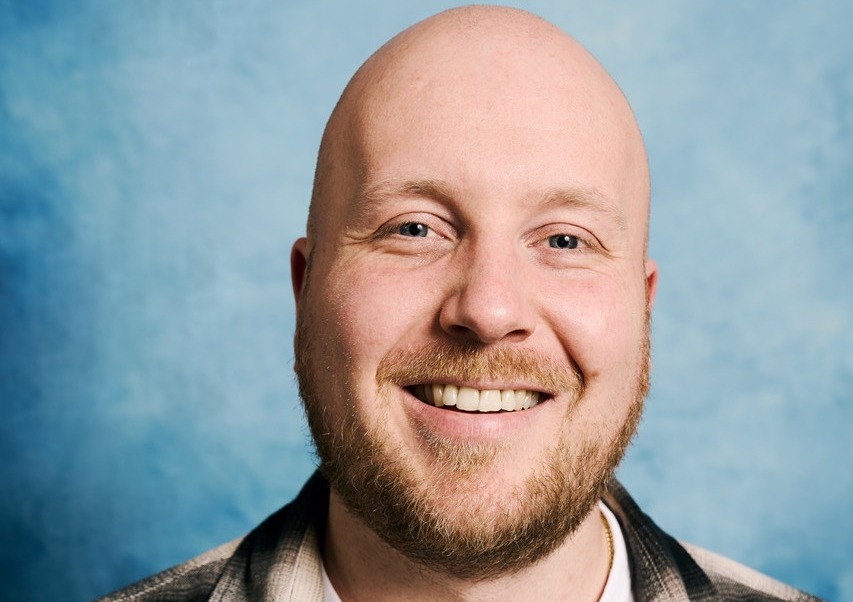
Neil MacVicar is a therapist in Hertford and Walthamstow, London
What attracted you to become a therapist?
I have always been fascinated by people, how they work and the stories we tell about ourselves. I was working in the mental health field already and after my own experience of therapy I could see the impact it could have on people’s lives. After the first year of my training, I fell in love with the therapy world and I haven’t looked back!
Where did you train?
At CPPD in North London, a small counselling school that specialises in humanistic integrative counselling.
I also completed two placements, both in Hackney, at Mind CHWF for one year and The Centre For Better Health for two years. I think learning by ‘doing’ is so valuable for me.
Can you tell us about the type of therapy you practise?
I am a humanistic integrative counsellor. The humanistic style means that I don’t have a typical doctor/patient relationship with people I work with. The way I work is about both of us putting our heads together and thinking about how you may live a better and more fulfilling life.
The humanistic stance observes that everyone has the capacity to ‘self-actualise’ and my role as the counsellor is to support them to do this. This means I also work in a relational way, with a heavy importance on creating a comfortable and safe space with those I am working with.
The integrative part of my training means that I have been trained in a few different modalities and can adapt to make the counselling fit those who I am supporting. This means that the counselling can be flexible to support the needs of my clients. After all aren’t human beings all so wildly and wonderfully different to each other? It’s my belief that a “one size fits all” approach doesn’t do us all justice and a more flexible approach is what people need.
How does humanistic integrative counselling help clients?
This style of counselling can be really helpful with people who want to change the way that they are currently living. This covers quite a wide range of issues, and I have worked with people with all sorts of problems and diagnosis, from anxiety and depression to OCD and personality disorders.
I also work a lot with people who haven’t had a diagnosis, and this is their first experience of therapy. I can often help people to ‘join the dots’, increase confidence, manage their mental health, work on relationships with others and change the way they see themselves.
What sort of people do you usually see?
I see all sorts of individual people 18+ years old. I have experience in working with lots of different communities, cultures, gender identities, diagnosis, identities, ages, races and religions. I always recommend a 10-15 minute chat before starting work together so we can both have a think about if the way I work and who I am seems right for those I will be working with.
Have you noticed any recent mental health trends or wider changes in attitude?
I have seen a big increase in diagnosis, especially within neurodivergence. I think it's really important to help those people find new ways of living that may be more beneficial for them and less dominated by how they think they need to live in order to fit in with societal pressures.
What do you like about being a therapist?
I love it! The creativity of counselling, helping people to understand themselves and how much this work teaches me about myself. I remember reading an Irvin Yalom quote in one of his books about a psychotherapist he knew running a group for 10+ years. When Yalom spoke to some members of the group they could all see so much change in themselves, however they thought the psychotherapist running the group was exactly the same as when they started. Yalom remarked how sad this was, and I hold the same thought for myself. Counselling is a journey for the person I work with and myself and it is a real privilege to be walking that path with them.
What is less pleasant?
Money. Especially with the way the world currently is, it can be a really tricky and uncomfortable topic and I hope that things get a bit easier in the UK for people financially.
How long have you been with Welldoing and what you think of us?
I joined quite recently, I hadn’t heard of Welldoing until a colleague recommended them. CPD is really important to me, as a counsellor not only do I learn from those I work with but from continued personal development. A big part of this career is recognising your blind spots and constantly striving to learn more. Welldoing are great at this, while other platforms aren’t as much, therefore I see this as a really supportive place for therapists as well as clients.
What books have been important to you in terms of your professional and personal development? Do you ever recommend books to clients?
I do sometimes recommend books to clients, it really depends on what may help them with what they are dealing with. I work a lot with confidence and how people treat themselves, and this seems to underpin a lot of different things that clients are dealing with. I also think it is important for clients to look to support themselves in whatever medium may be best (podcasts, books, audiobooks etc.)
A few to mention that can be found across these platforms are Brene Brown, Irvin Yalom and Dr David Hamilton. How Emotions are Made by Lisa Feldman Barrett has also been helpful for clients to understand themselves and I may recommend podcasts/books on confidence that I come across.
What you do for your own mental health?
Open water swimming, reading, walking, cooking relaxing and reflecting. Finding activities that are meditative to me like cooking or having a walk with music playing, giving my brain a chance to focus on one thing. The world can be quite stressful and it does us all some good to find ways that support us to be content.
You are a therapist in Walthamstow and Hertford. What can you share with us about seeing clients in this area?
I think they are both quite different areas. I trained, did my placements and lived in London for 11 years and I love working with people there. However, Hertford, while only being about 45 minutes away from London, is a little different and I really enjoy working in both spaces.
What’s your consultation room like?
I have two, one in London and one in Hertford. They are both calm, colourful, warm and have soft lighting, with some natural light too.
I have put a lot of thought into each space, making sure it feels right and supportive for people to feel comfortable.
What do you wish people knew about therapy?
That it isn’t as it is often portrayed on TV and films. Therapy can often seem to be very scary, uncomfortable and unpleasant through these mediums.
While counselling and therapy can sometimes be tough, it can also be a place to grow and understand yourself. Often people will come to a session and talk about having a really good week, and that can be so valuable.
Counselling doesn’t just have to just be about the tough times, when things are going well it can be so important to underline this and capture what has helped as a support through tough times in the future.
What did you learn about yourself in therapy?
How to treat myself with love and compassion, an invaluable skill to have that I feel isn’t really taught to people often.