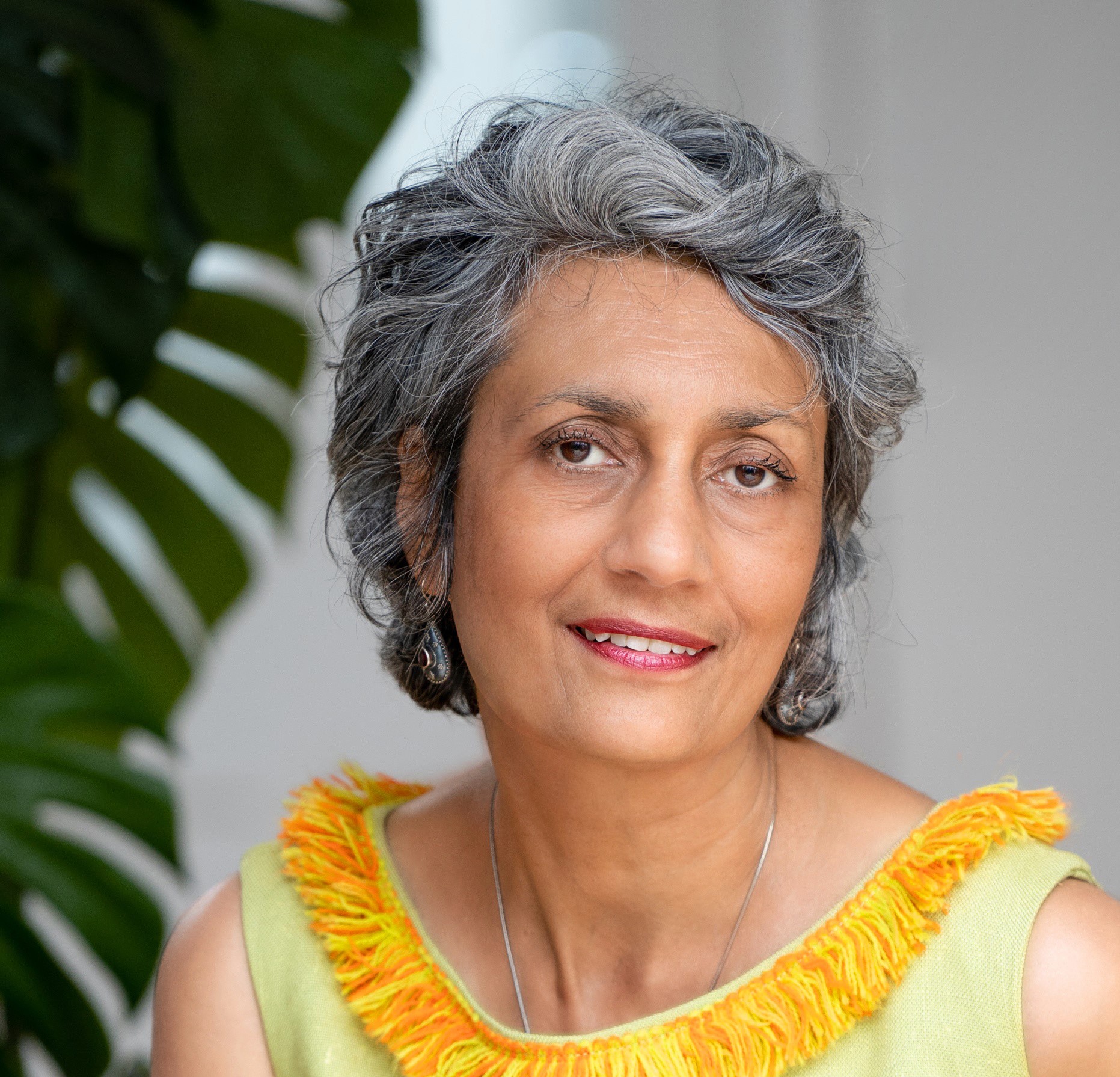
Indu Khurana is a therapist in Hertfordshire and online
What attracted you to become a therapist?
I started voluntary work at Childline (Esther Rantzen days) and almost immediately knew that I had found my niche in life. I loved the work as a telephone counsellor from day one.
Where did you train as a therapist?
My initial training was at Metanoia Institute and then my MA was at CCPE.
Can you tell us about the type of therapy you practise? (what it means for clients, why you chose it)
I work from a transpersonal integrative perspective. What this means for clients is that they do not have to fit into a particular theory or box. I can tailor the work to suit them. For me, this means we can work in a way that fits with the individuality of the person in front of me but also for their specific needs.
I didn’t so much choose this way of working, it chose me. I am passionate, and always have been, about seeing the individual in front of me. I don’t like pigeon holes and have no desire to put others into them either. So the transpersonal integrative approach enables me to tailor my way of working in a very holistic way. No two people get the same formulaic way of working.
How does transpersonal integrative therapy help with symptoms of fatigue?
My type of therapy is holistic and so we think together about the surface things like nutrition, vitamins etc but also the emotional. For example with fatigue, we may consider how different foods impact the person’s energy levels, as well as what their thoughts and feelings are when they experience a drop in energy levels.
What sort of people do you usually see?
I see all sorts of people! I currently have men and women clients – ranging in age from their 20s to their 60s. Some have health concerns, some have come for help with issues of anxiety, stress, relationships, low mood, lost connection with self, cultural issues and work issues. I tend to see individual adults although I have worked with couples in the past. I have over a 20 year history of working with young people.
Have you noticed any recent mental health trends or wider changes in attitude?
More people are bringing concerns about the state of the world which is impacting them and their mood / anxiety levels. More people are telling me that they have tried CBT alone and not found it helpful.
AI has not yet found its way into my consulting room in any significant way.
What do you like about being a therapist?
My absolute favourite thing about being a therapist is being able to see the results my clients gain from working with me.
What is less pleasant?
Marketing and keeping financial records have been less pleasant and therefore challenging in the past but I think I’ve got those under control now.
How long have you been with Welldoing and what you think of us?
I’ve only just joined Welldoing, so have not had time to sample other offerings as yet.
What books have been important to you in terms of your professional and personal development? Do you ever recommend books to clients?
Creative Visualisation by Shakti Gawain was pivotal for me. More recently, The Body Keeps the Score and Gabor Mate’s books have very much resonated with my own sense of things in my work.
What you do for your own mental health?
I journal, I read self-help books, from time to time, I have therapy. Supervision and peer supervision support my mental health too, as do friends.
You are a therapist in Hertfordshire and online. What can you share with us about seeing clients in this area?
Long-term health conditions are on the rise and therapy is not generally available to patients in a timely manner. They need support with these conditions in the effects these conditions have on their mental health as well as in their lives, the way they can function and their relationships. I provide therapy when they have received a diagnosis, when they have new symptoms, when they have relationship difficulties because of the health issues or when the relationships detrimentally impact their health conditions (relationships can be personal or work). I have an understanding of long-term health conditions in a way that few other people have; not only do I know the systems we live within, including the NHS, but I also know what it’s like to be a patient. But I have also been researching such conditions for other 20 years and know what has helped or not.
What’s your consultation room like?
Comfortable. Containing. Crammed with books.
What do you wish people knew about therapy?
That it does bite; it doesn’t leave you in a heap of mess. That it is not scary.
What did you learn about yourself in therapy?
So many things. Too many things.
I guess one thing I did learn that stands out was that I was fearful, where I have thought myself not fearful of anything.