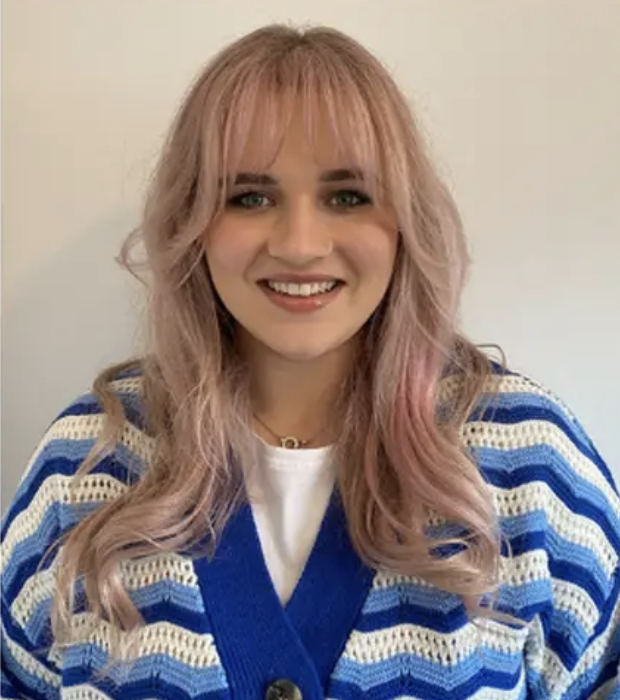
Emily Askew is an online counsellor based in Manchester
What attracted you to become a therapist?
I initially studied Fine Art and discovered the powerful impact of creative expression on mental health and wellbeing. Art has always been my way of expressing things that felt too difficult to put into words, and I began to realise that it can offer the same for others.
Art can take many forms: music, movement, mindfulness, materials, or play, and the potential for healing within that really drew me in.
Where did you train?
I completed my MA in Art Psychotherapy Practice at Sheffield Hallam University, following a PGCE in Primary Education and a BA in Fine Art.
Can you tell us about the type of therapy you practise?
I practise person-centred, trauma-informed art psychotherapy. This means that sessions are shaped by the needs and preferences of the client – there’s no pressure to make art at all. We can explore through talking, art, movement, or simply by sitting together with what’s present.
My creative approach is helpful when words feel too much or not quite enough. It's a gentle process, where the client sets the pace. I'm also attachment-informed, which supports deeper exploration of early experiences and relational patterns in a safe, contained space.
How does art therapy help with symptoms of trauma?
Art therapy offers a way to process trauma safely and gently. The act of creating can allow things to surface that may not yet have reached conscious awareness.
Working with images and symbols provides distance and containment, supporting clients to explore painful experiences at their own pace. It can bypass the overwhelm that sometimes comes with verbal recounting, especially with trauma, and allows us to stay connected to the body and nervous system in a grounded way.
What sort of people do you usually see?
I work with children, teens, young adults, and adults. I have experience in schools and SEMH settings, as well as working with adults in addiction recovery.
I also support women navigating identity, perfectionism, self-worth, ADHD, stress and anxiety. My private work, including webinars with fitness instructors, has allowed me to explore these themes in depth.
Have you noticed any recent mental health trends or wider changes in attitude?
There’s growing awareness that direct talking therapies aren’t always the right fit for everyone, especially for those with trauma or neurodivergent profiles. Increasing research highlights the power of creative therapies in regulating the nervous system, accessing deeper layers of the psyche, and promoting integration.
I’ve noticed more clients seeking alternative routes like art, movement, or mindfulness, to process and heal in a way that feels less pressured or exposing.
What do you like about being a therapist?
I genuinely love being alongside someone on their journey, witnessing them explore, reflect, and become more curious about themselves. Seeing a person take time to work on their mental health, often for the first time, is a privilege. In a world where we often prioritise physical health, this work feels even more vital.
What is less pleasant?
Seeing how stretched services are and how many people are left without the support they need can be frustrating.
It’s also tough knowing that the work we do is sometimes undervalued in wider systems.
How long have you been with Welldoing and what you think of us?
I’m newly signed up and really appreciate the professional support Welldoing offers. The opportunities for CPD, therapist connection, and being featured on platforms like this help build visibility and connection in meaningful ways.
What books have been important to you in terms of your professional and personal development? Do you ever recommend books to clients?
Books I’ve loved include The Boy Who Was Raised as a Dog by Dr Bruce Perry, Why Love Matters by Sue Gerhardt, Love’s Executioner by Irvin Yalom, and Art Psychotherapy and Innovation.
Shaun McNiff’s writing has also deeply inspired my creative practice. I often recommend books to clients if it feels right for their journey.
What you do for your own mental health?
I run, practise mindfulness, and create art. I also stay connected with loved ones and make sure I build in time for rest and curiosity.
I also attend regular supervision and ongoing CPD to keep growing and reflecting.
You are a therapist in Manchester/Stockport. What can you share with us about seeing clients in this area?
I work online, which allows me to support clients across the UK and beyond. It’s wonderful to be able to reach people who might not otherwise have access to creative therapy, especially in more rural or under-supported areas.
What’s your consultation room like?
I offer online therapy from a calm office space with white walls, a few plants, and some artwork dotted on the walls. It’s simple, grounded, and private, offering a safe container for therapeutic work.
What do you wish people knew about therapy?
That you don’t have to be “in crisis” to start. Just as we work out to care for our bodies, therapy is a way to care for our emotional wellbeing, especially in this busy, overwhelming world. It’s also okay to feel nervous or unsure; therapy is a space where you can just be yourself, however you arrive.
What did you learn about yourself in therapy?
That perfectionism can be a heavy weight to carry. Therapy helped me learn how to soften my inner voice, be more self-compassionate, and treat myself with the same kindness I offer others.