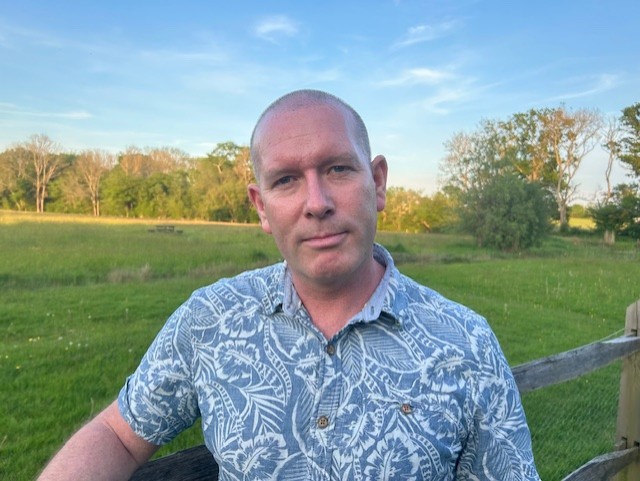
David Forsyth is a counsellor in Horsham
What attracted you to become a therapist?
Well, I lost some people close to me through a breakdown in their mental health. I want to help as many people as I can so that more people don’t have to go through that. When I did my first counselling course, just 12 weeks, the tutor told me to stick with it because I had a natural flair for counselling. Even though it was almost 5 years of training I think I was hooked from that very first course back in 2019.
Where did you train?
I attended the Counselling Foundation for my early courses (Introduction and Foundation Certificate). For my Diploma I studied for two years at Chrysalis. My placement was at St. Catherine’s Hospice in Crawley.
Can you tell us about the type of therapy you practise?
I am an integrative counsellor. This means that rather than just being trained in one modality I have been trained in many. So I can tailer make bespoke solutions to fit each individual client’s needs.
How does Integrative therapy help with symptoms of anxiety and low self-esteem?
So, for example, using CBT (cognitive behavioural therapy) to overcome anxiety is quite effective for short-term results. But without understanding why the client has anxiety and where it comes from, I don’t believe the results of CBT are long lasting. So, using psychodynamic techniques to go back into childhood experiences as well as CBT and a person-centred approach – I believe can be much more impactful in terms of an overall longer lasting set of results for the client.
What sort of people do you usually see?
I see people between the ages of 18 and 80 but more typically from 25-60 years old. Mainly individuals but I do see couples as well. I have a wide range of client types from anxiety, grief and bereavement to work stress, relationships, depression, abuse, addiction and divorce. I also have a focus on improving overall wellbeing in every client.
Have you noticed any recent mental health trends or wider changes in attitude?
I have noticed a lot of people are now very uncomfortable in social settings, since Covid. There is a lot of social anxiety, particularly in younger people in their teens, 20s and 30s. I also see a lot of people who have a low opinion of themselves, a negative view of themselves and general low mood/low self-worth. But the good news is that self-esteem, self-worth and self-confidence can all be rebuilt.
What do you like about being a therapist?
It's definitely the progress and results that clients experience that I love the most about being a therapist. I am genuinely amazed at how powerful and effective counselling is for people. Life-changing at times. It gives me a great feeling and sense of purpose.
What is less pleasant?
I guess I’m still adapting to the business side of private practice; I don’t particularly like the associated admin that comes with it. I much prefer spending my time delivering the counselling sessions with clients.
How long have you been with Welldoing and what you think of us?
I’m a very new Welldoinger! Only a couple of weeks but I have already enjoyed a couple of CPD sessions and think the website and dashboard are very user friendly. I’m hoping to get maximum benefit out of the CPD and hopefully meet new clients too.
What books have been important to you in terms of your professional and personal development? Do you ever recommend books to clients?
All of the course books were very helpful. Psychodynamic Counselling in Action by Jacobs, Counselling for Anxiety Problems by Sanders and Wills in particular. Plus a lot more throughout my five years of training.
I don’t particularly recommend books to clients. Although I have recommended The Anxious Generation by Jonathan Haidt to several people. I also found some fascinating insight in The Rational Optimist by Matt Ridley where he talks about ignoring the negative media that we currently have reported to us. In his words we are happier, healthier, wealthier and longer lived than at any point in history so we should try to appreciate that more. It’s a really nice positive energy book to read.
What you do for your own mental health?
I think in some ways I try to stay young! To not get caught up in the seriousness of modern life. I suppose over time I have developed a series of hobbies and interests that allow me to live a fulfilling and happy life. So I follow and play a variety of sports, including snowboarding which I love. I like to travel and socialise and read – plus I take the dogs out for walks in the forest and countryside.
You are a therapist in Horsham, West Sussex. What can you share with us about seeing clients in this area?
I think Horsham is a relatively affluent area full of hard working and ambitious people. Unfortunately that can bring with it a certain level of stress, burn out and anxiety – as well as all of the other problems that life throws at us.
Whilst there are a lot of counsellors around the area I think I am in the minority as a male counsellor. More and more now I have clients who are men wanting to talk to another man. But I also have a lot of female clients too. So I do feel very lucky that people from all age groups, diversities and backgrounds choose me as the person they put their trust in.
What’s your consultation room like?
Its quite quirky but I love it! My room is on the top floor of a three-story building which has multiple businesses on each floor. It can be a little chaotic getting up to my room but once there it is a wonderful, quiet little sanctuary. I’ve kept it quite minimalist – so just two chairs and a table with my desk and some pictures on the wall and a bookcase. The little window allows us to look over some of the side streets of Horsham. I think its perfect.
What do you wish people knew about therapy?
I wish people knew that its not a weakness to seek help, its actually a strength to identify it. That counselling isn’t a scary experience; we are not here to extract anything painful and there is no pressure or expectation on the client. It is a non-judgemental, safe environment for people to express their thoughts and feelings. And through that process the results can be incredible.
What did you learn about yourself in therapy?
In therapy I learned that being a counsellor was my calling in life. I learned to be comfortable in my own skin. To be genuinely me at all times and only then do you have the capacity to help others.
What I learned specifically about myself is that I am a compassionate, empathetic person with an ability to understand people. I have always been interested in people, their stories and what makes them tick – I just never knew I was developing a skillset that would eventually lead to helping others.