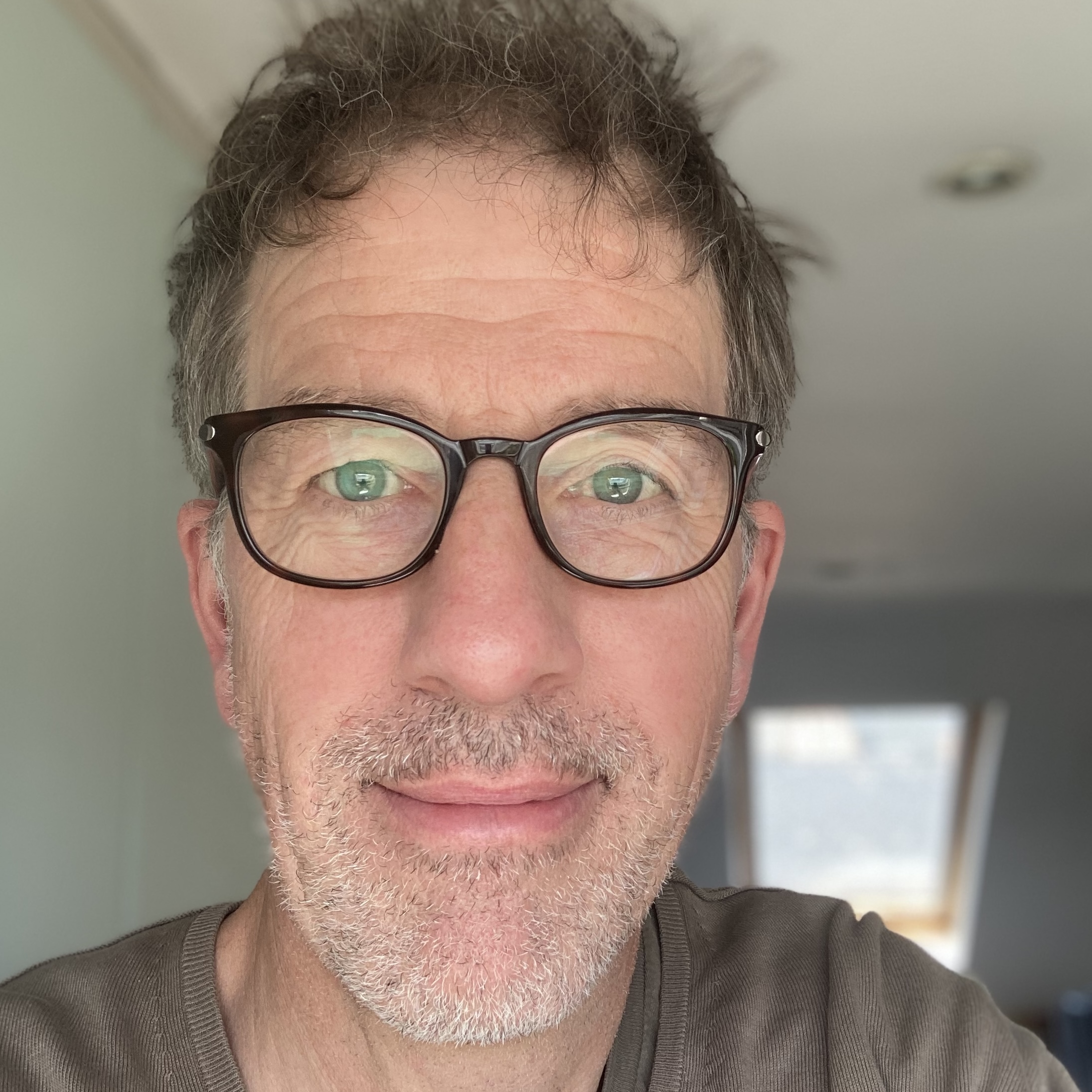
A few years ago I told my wife I thought I was worthless and wished I was dead. She sent me to a psychiatrist, and shortly after collecting my first pair of spectacles, I had myself admitted to hospital.
I forgot to pack a toothbrush. I did take a sketchbook and pens.
Before this, in early 2018, I had never had therapy. I had trained as a coach, and for many years before that I had been a feature writer, first at the Financial Times and then at the Sunday Times. Both jobs had prepared me for in-depth conversations about difficult things - but generally as the person asking the questions - not the one talking.
For the people around me, my admission came out of the blue. Harriet, my wife, had just started a new job. Our fourteen-year-old daughter was starting her GCSE year. It was frightening for Harriet, who asked my psychiatrist if I would ever be OK again.
The psychiatrist, Henrietta Bowden-Jones, said I would. But it took a long time, and a lot of work - including a lot of therapy.
In I went into group sessions. It was a huge relief to hear other people describing what I had assumed was uniquely my own. That relief is one of the reasons behind the book I have just published, using drawings that I made at the time, entirely for my own benefit, trying to make sense of what I was going through.
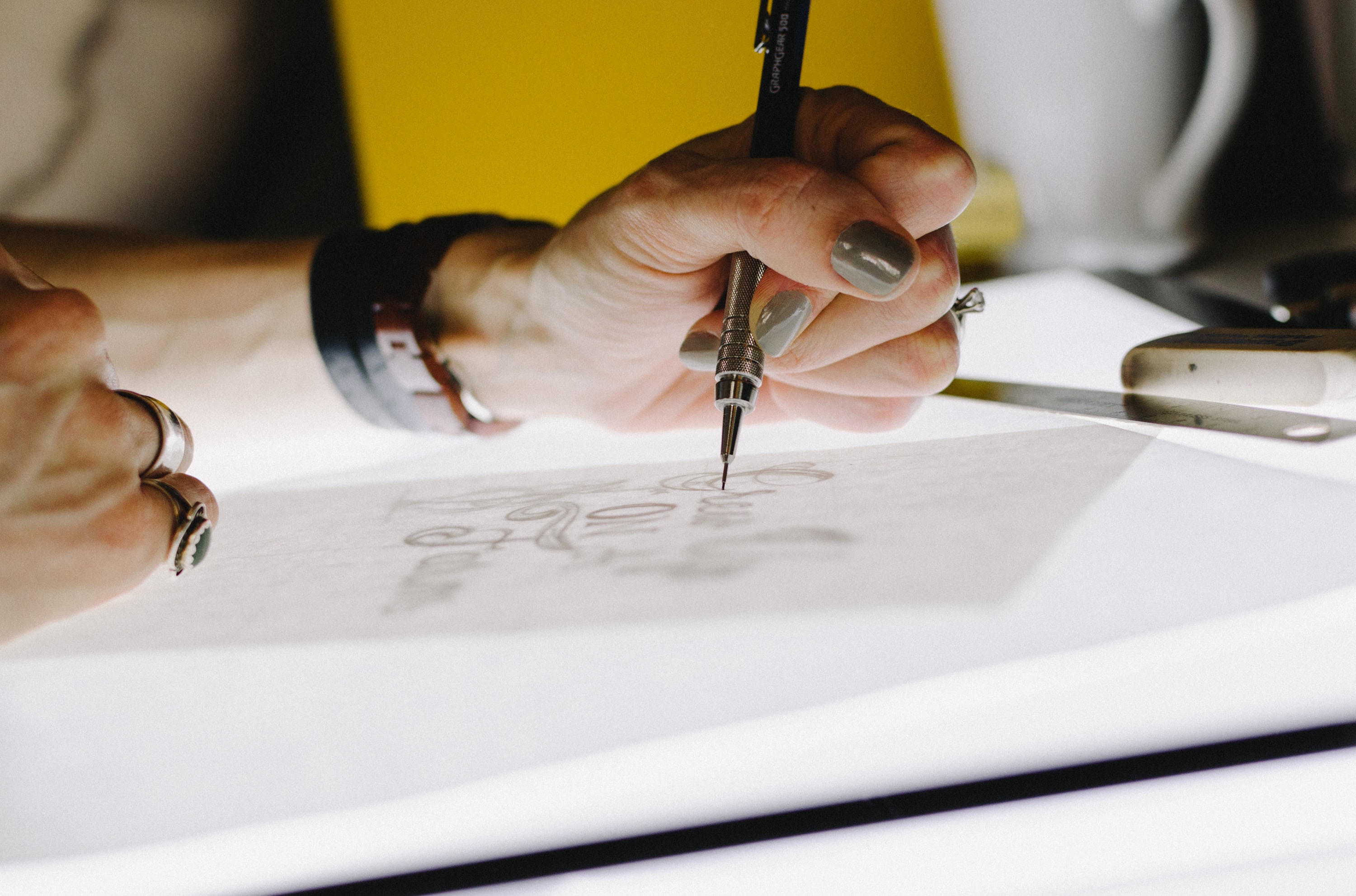
I drew pictures of what shame felt like. I drew pictures to capture my feelings of anger, loneliness, fear. The idea that I would later share those pictures would have horrified me at the time.
Why have I shared them now? I want readers to know that feeling severely depressed isn't normal, exactly, but it is a very long way from being uncommon. I was also shocked by how many people in those groups had been admitted after trying to end their lives, and want to draw attention to the possibility that awful feelings can pass.
Alongside the groups, I was put in touch with a one-to-one therapist. She was forceful - not "nice" but sometimes fiercely challenging - and that turned out to be fine. I worked with her for a long time. Then a spell with no therapy, followed by a period working with a man I had first met in hospital running some of the groups; he was very helpful too. Then another spell without. Then, when I needed help again, I began work with a third man, also someone I had first met on the ward.
He'd asked me a question in that first group session in hospital that sent me back to the drawing board - literally - inspiring a lot of the creative work that now appears in the book.
Over the weeks in hospital, and the difficult months that followed, I made nearly 300 pictures: the nurses, the patients, the visitors, the food, the view from the window. When I wasn't allowed outside unaccompanied, I drew myself doing yoga. I wrote, too, in something like the same deadpan tone I used for years as a journalist.
After coming out of hospital I met someone who heard my story and asked me to talk about my experience in her workplace. I did, and used some of the pictures. I could see they had a powerful effect.
The book is my way of continuing that work in public. It is not a recovery manual and it is not an inspirational story. It is what happened, told with the same attention I would have given any assignment as a journalist, and illustrated on almost every page by the man who was there. It is for anyone who has wondered what it is actually like inside, and why it is hard to come out.
Years later, I realised that making those drawings had been a huge turning point - I had always wanted to make pictures, as well as write, and having a breakdown gave me, weirdly, a licence to do that. Some of the pictures I made at that time are funny, some are charming (am I allowed to say that?), but many are raw. I hate to look at them because they take me back to a time that was difficult.
Rather than leave them unused in my notebooks, I decided this year to publish them, which wasn't always easy. I have published seven books before now, with proper publishers, but I didn't want to send this one out and wait for someone I don't know to tell me if it was any good. So I made it myself, as a limited edition of 250 hand-stitched, numbered copies.
I included a few new pictures, of people who were important to my story, including friends who visited me in hospital. I drew them rather than use photos, and shared the drawings with them before publishing.
When it was ready, I showed the manuscript to Harriet. If she hadn't liked it, I would have abandoned it. But she approved.
Back when I was unwell, a man I trusted said that when something feels shameful I should let some sunlight on it. I took him at his word. That's partly why I started doing those talks. And it's why I continue to talk about my breakdown. If my book can help even one person, that's good enough for me.
Picture:
Doing yoga on the ward, when I wasn't allowed outside unaccompanied. Some pages in the book carry the pink of the Financial Times, where I worked for years.