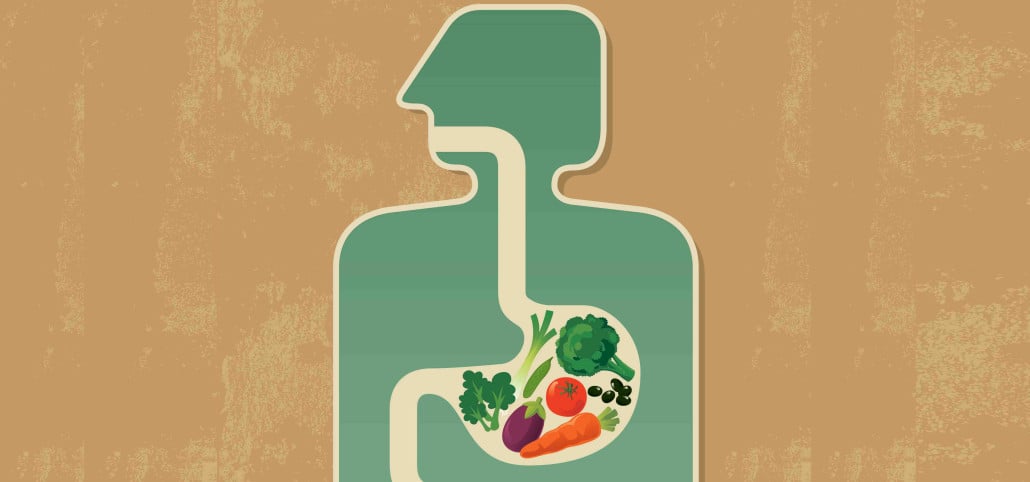
Most people begin weight loss medication expecting two things: for the weight to shift, and for life to feel better. The first often happens; the second could be more complicated.
If you’re a few weeks or months into Mounjaro, Wegovy, or a similar medication and something unexpected has surfaced — a flatness, a low-level unease, a restlessness you cant quite name — it doesn’t mean you’re doing it wrong. What’s happening makes complete sense when you understand what the medication is actually changing; it’s just something that prescribing clinics rarely have time to explore.
Food was doing more than you realised
The term ‘food noise’ has become shorthand for the constant mental chatter about eating that many people experience: the planning, the anticipating, the negotiating. When weight loss medication quietens that noise, the relief can be genuinely profound.
But the relief can obscure that for many of us, food was doing a great deal more than fuelling the body. It was the soft landing after a difficult day. The comfort in moments of loneliness. The reliable, immediate way to feel okay, even briefly. Not because of weakness or lack of discipline; because the brain’s relationship with food and mood is deeply, genuinely complex, and food is one of the most reliable ways most of us have of feeling okay.
When the medication removes that mechanism, the feelings that food was managing don't disappear with it, they surface. And for many people, that surfacing feels a lot like loss.
Why your nervous system doesn’t distinguish between good change and unsettling change
A useful way to understand what’s happening comes from Professor Paul Gilbert, a psychologist whose work I draw on a great deal: he describes three distinct systems our brains use to manage how we feel, each with its own job.
The Soothe system is our rest-and-digest mode: the state of feeling safe, content, and connected. For many people on weight loss medication, food was a primary way of activating this system. When that pathway is removed, the Soothe system can feel offline, which is often why people describe themselves as feeling emotionally ‘exposed’ or oddly flat, even as everything on the outside looks like success.
The Threat system exists to protect us. It monitors for danger, activates anxiety, and powers the inner critic. When the Soothe system is quiet or unavailable, the Threat system tends to step in loudly: a nagging worry that the weight will come back, a harsh internal voice questioning whether you deserved the medication, a watchfulness that's hard to switch off. This is the system that’s often behind the question: why do I feel more unsettled now, not less?
The Drive system is what propels us toward goals: the dopamine of progress, the motivation of achievement. In the early stages of a weight loss journey, the Drive system is often energised by each visible change. But when progress naturally plateaus, or when the goal that felt so significant starts to feel ordinary, the Drive system can crash; leaving behind a sense of flatness or disconnection that many people find deeply confusing. I’ve done the thing I wanted to do. Why don’t I feel anything?
These three systems interact constantly, so when one is disrupted (as the Soothe system almost always is when food is removed as a coping mechanism) the other two tend to overcompensate.
The identity challenges nobody prepares you for
There’s a further piece worth exploring, because it’s the one clients often find hardest to articulate: the identity shift that comes with rapid physical change.
Your sense of self is tied to how you’ve moved through the world in your body. When that changes quickly, even in ways you wanted, your nervous system can register it as disorienting. Some people find themselves waiting to feel like the version of themselves they expected to arrive. If that version doesn’t materialise, or the world responds differently than imagined, it feels unsettling.
Relationships shift too. Comments meant as compliments land strangely. The dynamic with people who shared your relationship with food changes in ways that are hard to name. These experiences are real, they’re common, and they deserve proper attention.
What actually helps
The goal of therapy in this space isn’t to recapture the relationship with food or to push through the discomfort by willpower. It’s to understand what food was doing, find other ways to meet those needs, and build a Soothe system that doesn’t depend on eating to function.
In practice, that might look like: learning to recognise which system is activated in a given moment and why; developing new ways of signalling safety to your nervous system (like movement, connection or sensory grounding) that don’t revolve around food; and working through the identity questions that arise when your body changes faster than your sense of self can keep pace.
CBT is well-suited to this work because it focuses on the specific thinking patterns that feed the Threat system — the ‘it won’t last’ narrative, the body-image lag, the waiting for the other shoe to drop — and helps build an inner foundation that makes change feel like yours, not just the medication’s.
You don’t have to navigate this alone
If any of this sounds familiar — even just a little — it might be worth having a conversation with someone who understands this particular kind of change. The inner side of weight loss medication is just as real as the physical side; it simply tends to get less airtime. And of course, if you have concerns about your medication, dosage, or health, please speak to your prescriber or GP.