Countless volumes have been penned on the transformative potential of the soul's journey when we experience significant life challenges. Yet, in my experience, when we travel through the darkest of nights, we have scant energy to sift through thousands of words in search of solace and understanding. Intellectualism, processing, and rationalisation, while valuable in their own right, often fall short in the shadowy realms of the soul. As Thomas Moore, author of Dark Nights of the Soul, aptly puts it, they are but "daytime biases."
What we truly need are our nocturnal senses, those innate capacities to navigate the darkened corridors of our inner world. Unfortunately, many of us find these faculties underdeveloped due to our collective aversion to solitude, the ability to be at ease in our own company and when necessary, to use the time to abide with the darkness, be still and sit in both silence and reverence with our fears and vulnerabilities.
Discovering beauty in the darkness
It has been my own experience (and perhaps you have found the same, too) that navigating the darkness is a multifaceted journey, one that can paradoxically be both complex and surprisingly simple, beautiful and serene if we allow it to be. However, embracing the darkness can be challenging. Forgotten are the sacred memories of our time cocooned within our mothers' wombs, where darkness nurtured us. From a young age, we're taught to fear the dark.
How many of us only felt safe enough to sleep with the light on, believing in our innocence that the light warded off the monsters that lurked in our dreams or under our beds? For how many of us did these monsters (real or imagined) stay with us well into adulthood? For how many of us has it taken a strange and unexpected turn of events for us to have the courage to finally face the dark and learn not to be afraid but instead to discover that an invitation awaits. An invitation to accept the wonders and secrets that it holds.
It’s almost as though we need to be reminded that darkness, just as Mother Nature demonstrates, can be a harbinger of new life and a season of rest and renewal. If only we could allow ourselves to be still long enough and let nature/life take its course.
Letting go of the familiar
Yet amidst the cacophony of daily life, our fears, worries and self-doubt can obscure the sacred nature of any night journey we might find ourselves on. We can so easily miss the signs, fail to notice the glimmers of light in the darkness, and cling to what feels safe and familiar, unaware that these old habits only serve to keep us stuck. To truly navigate the darkness, we must release these familiar moorings and embrace new ways of being.
Embracing uncertainty
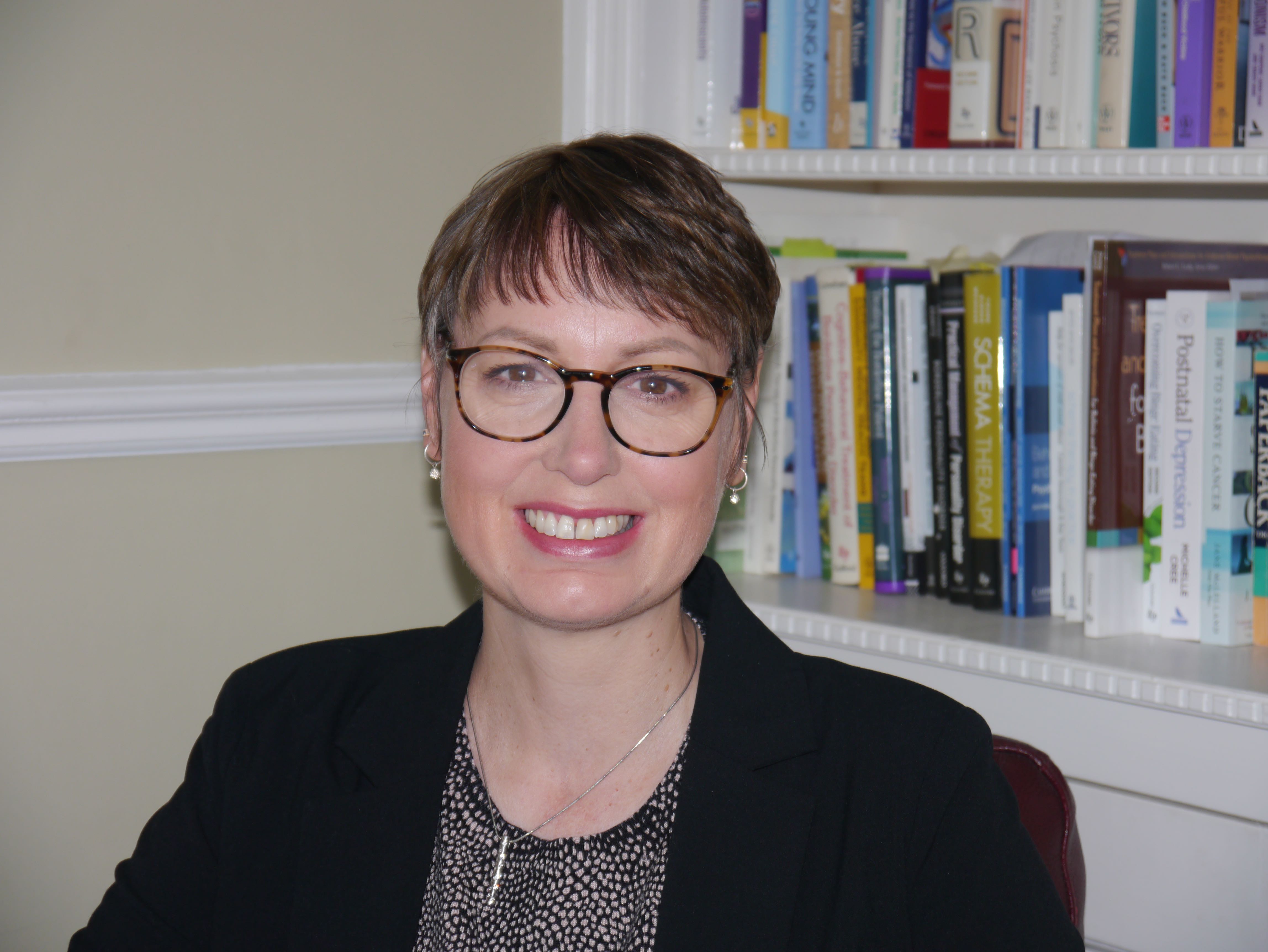
It was my own journey with cancer that taught me at a much deeper level how to walk in the dark, how to sit with uncertainty and allow a more profound wisdom to emerge. As a seasoned coach, I have often journeyed alongside others going through their own ‘dark night of the soul’. Having been through a fair few dark nights of my own, I felt that I had the capacity, empathy and wherewithal to help my clients find the proverbial light at the end of the tunnel. However, with my cancer diagnosis, there was a fundamental shift in my comprehension of the process of individuation. I was taken to depths within my own being that I had never encountered before and truth be known, the experience rocked me to my core.
However, as the shadows began to recede and I found myself more at home in the dark, I began to understand more fully the words of Quaker author and social activist Parker J Palmer. Palmer says; “By choosing integrity, I become more whole, But wholeness does not mean perfection. It means becoming more real by acknowledging the whole of who I am. It means embracing brokenness as an integral part of life. Knowing this gives me hope that human wholeness Mine, yours, ours – need not be a utopian dream If we can use devastation as a seedbed for new life.”
These words spoke volumes to me then. Following my cancer diagnosis, their meaning and significance for my life became even more pronounced.
A great complexity of emotion
When I received my diagnosis, I felt like I was living someone else's life, half-expecting a call to tell me they'd confused my patient records. However, as one doctor's appointment led to another, followed by referrals and visits to the Royal Marsden (the leading cancer hospital in London), the reality set in. No mistake had been made; it was indeed me, Viv Grant, who had Uterine Serous Carcinoma (A rare cancer, predominate in women of colour), and it was I who needed a hysterectomy and possibly additional treatment to prevent a recurrence.
The late Irish Poet and Philosopher John O’Donohue said that when we stand at a threshold, "A great complexity of emotion comes alive." This was indeed true for me. I experienced sadness, confusion, fear, and a whole range of other emotions in between. As I gradually came to terms with the truth of my situation, I knew that the question I needed to grapple with upon encountering this unexpected threshold was not just "What do I need to do?" Yes, research and seeking information about my specific cancer were necessary. Still, an equally, if not more crucial, question emerged – a question I've often posed to clients facing crises: "Who do I need to be?"
Finding an answer
Once again, the writings of John O’Donohue helped me find an answer to this question. In his Blessing "For a Friend, on the Arrival of Illness”, he writes. “May you find in yourself A courageous hospitality Towards what is difficult, Painful and unknown.” “How do I summon a courageous hospitality towards a cancer diagnosis? How do I extend a courageous hospitality to a body now marked by major surgery? How do I offer such hospitality to the wounds, hurts, and confusion that envelop me on almost every level?”
For a while, these questions circled around in my head. My instinctive response was to rely on my intellect to accumulate knowledge about my diagnosis and take action. However, something on the fringes of my awareness whispered, "Viv, thinking, reading, and researching alone won't carry you through this." I now recognise that whisper, that gentle nudge at the edge of my consciousness, as the voice of my soul.
It wasn't until I quieted the voice of my ego – the fear, the worries, the "what ifs" – that I formed a deeper connection with myself and found answers through silence and a huge amount of self-compassion. I needed to let go, if only momentarily, of my role as Viv Grant, Director of Integrity Coaching. I needed to cry, or rather, to sob! I needed to withdraw from the world. I needed to embrace the winter of my life and explore the elemental nature of my being. I needed to embrace vulnerability and confront the darkness and its accompanying shadows.
Finding light in the dark
In the darkness, I found solace in painting. A true gift of my own dark night of the soul. Painting was not something that I had ever done before. Not even as a hobby or an interest when I was at school. I could admire art and the work of others, but not for one moment had I ever considered myself an ‘artist’. Yet, it was when I was most fearful and found no comfort from the protestations of my ego, through the sheer exhaustion of trying to keep my worry at bay, that I was forced to be still. To fall into the deep, luminous space of my inner being and listen to the soft whispers from within.
Each of us possesses our own unique soul language, which becomes especially important during times of struggle and challenge. It is this sacred language that we must learn to understand and appreciate if we are to navigate the dark with grace and resilience. My paintings appeared to depict my inner world, what was occurring deep within me as my rational mind stepped down from its usual position of dominance and allowed my soul, my deep inner intuition, to take centre stage.
Most of my paintings were of trees, roots buried deep within the earth. I felt they were symbolic of the deep alchemical work that happens hidden out of sight in winter. A time when the cold and often bleak and barren landscape can lead us to believe that everything has died. The trees look forlorn, no longer resplendent in the colours of the preceding seasons. But if you look closely, as I learned during this time, the trees are, in fact, alive with the promise of spring. Even in the midst of winter, buds are already beginning to appear! So, my paintings became expressions of hope, reminders to trust in the wisdom of my soul and the perennial lessons that nature’s rhythms and cycles provide us. It was clear: I was not to be afraid of the dark.