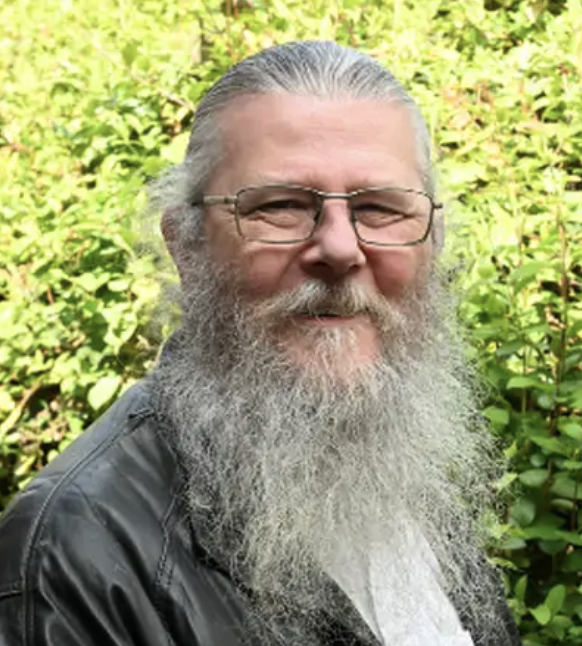
Jon Bowen is a therapist in Banbury
What attracted you to become a therapist?
I’ve always been interested in science, I’ve always loved theatre, and I’ve always wanted to work with people. Psychodrama psychotherapy seemed like the perfect combination of these interests.
Where did you train?
I did my original degree at the University of Cambridge, and my experimental psychological doctorate at the University of Sheffield, completed in 1990.
My psychotherapy training (still one year to completion) is taking place at The London Centre for Psychodrama. Currently it’s the only psychodrama training school in England.
Can you tell us about the type of therapy you practise?
I practise psychodrama, also known as “Action Therapy”. The big downside is that the name “psychodrama” puts people off. The very mention of the word “drama” makes people feel self-conscious and brings back childhood trauma from school plays.
However, if people can get over the negative connotations they’ll discover that it’s a therapy which offers deep connection between people, brings profound insights, and builds self-compassion, leading to change in the here-and-now.
The reason I chose psychodrama was that I have sampled many weekend ‘alternative’ or ‘complementary therapy’ or ‘psychotherapy’ healing workshops over the years, and I’ve noticed that some methods the facilitators use just work. I started getting curious about where these methods originated – did they originate with Jung, or Freud, maybe through gestalt or psychosynthesis, etc.? I found that all the most effective methods originated from Jacob Moreno and psychodrama.
How does psychodrama help with symptoms of depression, anxiety, trauma and many other difficulties?
Psychodrama is very solution-focused. What was your problem this week? Did your low mood mean you didn’t do any work? Did your anxiety mean you didn’t leave the house all week? Did your traumatic memories get in the way of your relationship with your children? Let’s explore that: Let’s have somebody take the role of your low mood and speak to you. Let’s have somebody take the role of your anxiety and tell you what it wants.
Once we have the problem laid out for you to see (we use the word “concretised”) we can reflect on what’s happening, and start to explore where the difficult dynamic started – usually some time during childhood, but sometimes later in life – and how, in an ideal world, things might have happened differently.
This brings insight that what happened to you is not what happened to everybody – it was just a bad situation, adverse luck. Most of all, whatever happened to you as a child, it wasn’t your fault. This is liberating, enabling people to build self-compassion and to start thinking outside of the box.
The final phase of psychodrama is a rehearsal: Let’s go back to the original problem scene. How could you have played your part differently? Could you have found a way to negotiate with your low mood and get some work done? Could you have found a way to soothe your anxiety and get to the shops? Could you have found compassion for the traumatic memories, and path to self-care, and thence a way to care for your children instead of neglecting them?
This is how psychodrama works. It can be intense, but is always insightful and helpful.
What sort of people do you usually see?
I see people from the age of 16 upwards. I don’t work with couples or families (yet), but I see people either in a group or individually. Introducing people into a group usually requires a period of individual preparatory meetings.
In my NHS and prison roles I work with people who are a danger to themselves and others.
However, in my private practice I work with people who are more successful in life, often highly successful, but who are still fundamentally unhappy and don’t know what to do about it.
I don’t work with those who have life-threatening eating disorders, or people who are actively suicidal or psychotic, or individuals with a history of serious offending: such clients need a whole team in an institutional setting, and that I cannot provide.
Have you noticed any recent mental health trends or wider changes in attitude?
We are currently in a national mental (and physical) health crisis, stemming from the Covid pandemic. People’s anxiety levels are through the roof, workforce participation is rock-bottom, and the political will to rebuild our NHS mental health provision to even basic levels is (despite election pledges) conspicuous by its absence.
Sadly, people in need are reaching less and less for professional help, partly due to a loss of trust in professionals and experts, partly salacious tabloid headlines of abuses perpetrated by caring professionals, partly because of continued stigma about mental health issues – stigma that should be addressed in PSHE class at school, but isn’t.
As a nation, we are in a perfect mental-health storm.
What do you like about being a therapist?
All the same things I enjoyed about being a teacher, a manager and a parent: the deep satisfaction of supporting somebody to become what they really want to become.
But what makes being a therapist so special is that I can use my own insights from my own life struggles to help others who are struggling.
That doesn’t mean I share my own life story in the therapy room – far from it. What it means is that wherever you are, however much you’re suffering, I’ve either seen it before in people I love, or been through it myself. I can bring you acceptance, encouragement, insight and hope where others might be out of their depth.
What is less pleasant?
I’d love to spend more time travelling, experiencing other cultures and exploring their ways of dealing with mental health, but the commitment to my clients of being there every week except for short holidays restricts my opportunities.
How long have you been with Welldoing and what you think of us?
I’ve only been with Welldoing since July. They seem supportive and proactive, but time will tell. I’m always ready to let anybody show me their best.
What books have been important to you in terms of your professional and personal development? Do you ever recommend books to clients?
I had an interest in psychology and psychotherapy for 40 years before I embarked on my training, so I’ve read an awful lot of books that I have found very inspiring and helpful – it’s hard to single out a few that have had a special impact, but here are some of the ones I’ve found especially inspiring:
Man and His Symbols, Memories, Dream, Reflections, and Reflections on Psychotherapy by Carl Jung: Inspiring musings on the human condition – recommend to clients.
Black Elk Speaks by John G. Neihardt: Inspiring ethnograph on shamanic ritual and healing – recommend to clients
Man's Search for Meaning by Viktor E. Frankl: Inspiring treatise on finding meaning in a meaningless world – recommend to clients
Staring at the Sun by Irvin D. Yalom: Another inspiring treatise on finding meaning in a meaningless world – recommend to clients
Group Therapy by Irvin D. Yalom: Fascinating treatise on group therapy by one of the world’s most humane, and renowned, psychotherapists – recommend to those interested in therapy theory.
Ritual by Catherine Bell: This is a rather dense sociological text, but helped me put psychotherapy, especially psychodrama, into the context of tens of thousands of years of ritual healing. Recommend to those with an academic interest in the ritual healing aspects of psychotherapy.
Psychosynthesis by Roberto Assagioli: A pioneer of treating people as collections of parts, and of encouraging people to do their own psychotherapy at home.
Gestalt Psychotherapy and Eye Witness to Therapy by Fritz Perls: Also treated people as collections of parts, but a different take from Assagioli.
Attachment, Separation: Anxiety and Anger, and Loss by John Bowlby: These books are rather academic but for those with a deeper interest in psychology they contain fascinating details of human attachment behaviour, experiments and observational studies, and important critiques of psychoanalysis.
Books specifically about psychodrama:
Focus on Psychodrama by Peter Kellerman
The Inner World Outside: Object Relations Theory and Psychodrama by Paul Holmes: Recommend to clients with more than a passing interest in psychological theory. I find Melanie Klein’s theory of “Object Relations” quite a helpful metaphor in understand human behaviour and emotions, but she was a terrible writer. Also, the theory has several shortcomings and limitations. This book re-works Klein’s ideas for psychodrama in a really insightful way.
What you do for your own mental health?
Top of the list: Long walks in nature either alone, with a dog, or with friends.
Second on the list: Look after my physical health – there’s a very strong connection between the physical and the mental.
Third on the list: Spend time with those I love, doing what we love.
Fourth on the list: A selection of relaxation and rebalancing meditations and visualisations.
You are a therapist in the West Midlands. What can you share with us about seeing clients in these areas?
The West Midlands is an economically deprived area with poor mental health provision. My clients in this region are more likely to be depressed and anxious, and are more likely to be dealing with a history of childhood physical, emotional or sexual abuse.
What’s your consultation room like?
I run a weekly group in The Mill arts centre in Banbury, in one of their rehearsal rooms.
I see individual clients either in my own art studio (I’m an artist alongside being a psychologist) or in a large but shabby-chic consultation room over a crystals shop.
What do you wish people knew about therapy?
These are my red flags when looking for a therapist:
- Testimonials from previous clients
My own professional standards body, the UKCP, lists testimonials from clients as a breach of ethics because of the temptation to run therapy to get a spectacular testimonial rather than do proper therapy.
Some other professional standards bodies, including the BACP, don’t seem worried by this.
Personally, I place more trust in testimonials from other professionals.
- Too many hugs and too close, especially from a therapist of opposite gender
Except for specific situations in body-based therapies such as Reichian therapy or some body psychotherapy, physical contact is generally not part of psychotherapy. There may be exceptions to this when contact is requested by the client, for example, at the end of a period of work together.
- A reputation for having had an affair with a previous client
The power dynamic in the therapy room is huge, and therapists with unresolved sexual or relationship issues of their own can easily find themselves drawn into seducing their clients.
Clients may go along with this, believing that their therapist might at last be “the one”, or is in some way “super-special”. This is never the case.
Extremely famous and powerful psychotherapists including Sigmund Freud, Carl Jung and Donald Meltzer had affairs with their clients. This doesn't make it OK.
- Talking too much about themselves
While some self-revelation by the therapist can be helpful to establish that the therapist is a human being too, the over-sharing of life stories is counter-productive.
If it gets to: “Oh, that’s amazing, the same thing happened to me once, let me tell you all about it …” it means you are now the therapist and you’re paying for the privilege.
- Mixing the social with therapy
“Oh, I drive past your home every day, I could help you move house next week”
"Hey, I saw you in the pub the other day, we should have a drink some time."
"It turns out I know your best mate, we should all get together one evening."
- Not seeing a clinical supervisor regularly
I can’t think of any sound reason for a psychotherapist not to have a clinical supervisor.
What did you learn about yourself in therapy?
I’ve learned so much about myself in therapy, it helped me to turn my life around when all seemed lost; but the biggest thing I’ve learned is that there is hope, even in the deepest depression and the most alienating anxiety.
It may take time, and patience is important in this line of work, but there is healing, and there is always the possibility of redemption if we choose it.