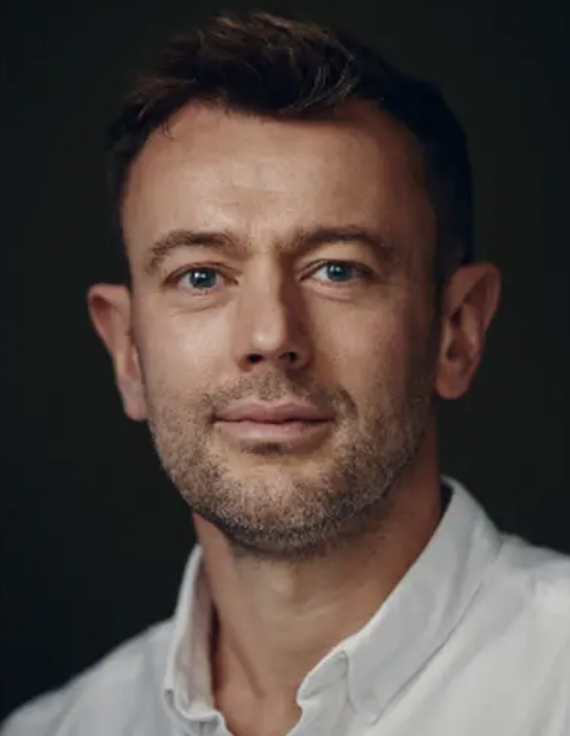
Jamie Stevenson is a therapist in Brighton and London
What attracted you to become a therapist?
I have spent my career in the commercial and charity sectors and, over time, came to realise that it was always people and relationships which I valued most in my work.
Embarking with my own personal therapy, I came to see how valuable and rich an experience it can be and that work as a therapist felt like a great fit with my interests and strengths.
That said, it still felt like a leap of faith (as I think it often can for clients who are thinking about trying therapy for the first time), but one which has paid off and been incredibly rewarding.
Where did you train?
I trained at the Metanoia Institute in London, qualifying under their Integrative Psychotherapy programme.
A crucial component of my training was the requirement to be in my own therapy and undertake a placement, which I did for 2.5 years at a fantastic low-cost therapy service in East Croydon.
Can you tell us about the type of therapy you practise?
I believe, that for clients coming to therapy for the first time, we can often overcomplicate terminology and theoretical concepts. Many friends have told me over the years that they seek a therapist out but are met with what feels like a different language!
So, to break my training down, integrative training refers to an approach where I use different techniques and ideas from a broad range of therapeutic schools to address a client's unique needs and integrate them into a framework that works for that particular client. In other words, I start with the client’s needs and then consider which theories and psychological concepts might best suit these, rather than being fixed on a single approach.
While it is crucial that I use theory to drive my work, I also have a core belief in the placing of the relationship between myself and a client at the centre of the work. In practice this means that sometimes we will be exploring the past and how it may be impacting a client in the present, and others we will see the here-and-now relationship between myself and the client as being more important to explore.
How does integrative therapy help with symptoms of anxiety or depression?
An integrative approach allows me to be flexible. As we are all bombarded with more and more ‘quick fixes’ for anxiety or depression, largely through social media, I place a lot of value in being able to be able to work at emotional depth and explore how events in a client’s past may be impacting them now.
That said, I think clients sometimes don’t want that depth on a given day, and need me to be able to explore something more immediate, and perhaps even pragmatic like tools they can apply day-to-day. Approaching my work with an Integrative lens allows me to be flexible and work with a client struggling with anxiety or depression in a way that fits where they are that day.
What sort of people do you usually see?
I work with individual adults (18+), and have experience working across a broad range of clients and helping them with issues including anxiety, depression, relationship issues, low self-esteem, stress and bereavement.
Linked to my own history of moving around the world and working in other countries, I have specific experience working with clients living and/or working in a cross-cultural context; be that expats, NGO / charity workers, third culture kids, and more.
Have you noticed any recent mental health trends or wider changes in attitude?
As with any moment in time, I think there are healthier and unhealthier changes happening in the mental health space. As a man, I think the discourse around men and mental health has shifted in a positive direction and am very keen to make therapy more accessible to those who perhaps still see a stigma around it.
That said, I am worried by some of the trends that can take complicated and very personal stories and try to distil them down into simplified, and at times even harmful, messages. I fear for what this does to our appetite and capacity for individual needs and uniqueness.
Finally, AI obviously presents some interesting challenges to our sector, as it does for everyone! While I think there may be interesting use cases for AI in therapy and that to resist it entirely is dangerous, I hold a firm belief that the human connection afforded by therapy will continue to be important for clients.
What do you like about being a therapist?
It is a genuine privilege to be trusted by clients to be alongside them and given insight into their lives. I believe that relationships are crucial to how we function and thrive as human beings and my work as a therapist allows me to really put this idea into practice.
What is less pleasant?
Conversely, and unlike other roles I have had in my career, there are times that this can be a lonely profession. The structure of an office, colleagues, regular meetings etc helps avoid this elsewhere, but often therapists are on their own with their work. It has therefore been really important to me that I create some of these things around me; for example, peer supervision, check ins with fellow therapists, regular supervision, using communities like Welldoing etc.
How long have you been with Welldoing and what you think of us?
I have joined Welldoing relatively recently and was really drawn to the focus on building a community of therapists and offering regular events or opportunities like this one. So far, I have found the site very easy to use!
What books have been important to you in terms of your professional and personal development? Do you ever recommend books to clients?
My training involved a lot of books and articles and it is hard to name just a few! From a theoretical perspective, I find the work of Eric Berne (e.g. Games People Play) to be very insightful. For his innate humanness and ability to show why therapy can be so powerful, have always loved the work of Irvin Yalom (Love’s Executioner is a great place to start).
I have, on occasion, recommended books to clients but I am also aware of the power dynamic that often exists between therapist and client. In recommending a single book or perspective, there is a risk that the client takes this to be the way forward whereas I often see my role as needing to expand or open up thinking, rather than prescribe a particular view.
What you do for your own mental health?
I continue to be in my own therapy and also have regular supervision, which helps me process what is happening in my work. I am also a big believer in connecting with nature and being outdoors, so you will often find me on my bicycle, running or at the gym.
Another crucial part of maintaining my own mental health is everything that exists outside of the therapy world too. While it is a big part of who I am, I also continue to work for a charity alongside my work as a therapist and enjoy spending time with family and friends.
You are a therapist in Central London. What can you share with us about seeing clients in this area?
I practise in London as I am passionate about working with a diverse set of clients. Informed by my own history moving between different countries, I am enlivened by working with people from different backgrounds (geographic, economic, social), of different genders, and with varied world views. I think this is what defines my client base.
What’s your consultation room like?
I think a consultation room is such an important part of in-person work. It is incredible to me (both as a therapist and client) how the smallest change in a room is immediately noticeable to clients. The room is part of the relationship, so I spent a lot of time choosing my rooms in the Farringdon / Old Street area. They are bright, calm and comfortable and they immediately felt right to me!
What do you wish people knew about therapy?
That it doesn’t just have to be for times of crisis. It is natural that times of difficulty or distress are when most people start therapy, but I have heard many people share that they don’t think things are ‘bad enough’, or even that ‘other people have it worse’. I wish people knew that their story is just as important as other peoples’ and that therapy is here for them at all times.
What did you learn about yourself in therapy?
I have learned a lot about how I relate to people and where that comes from. It is an ongoing and ever-evolving process but it gets me closer to a version of myself I want to be.