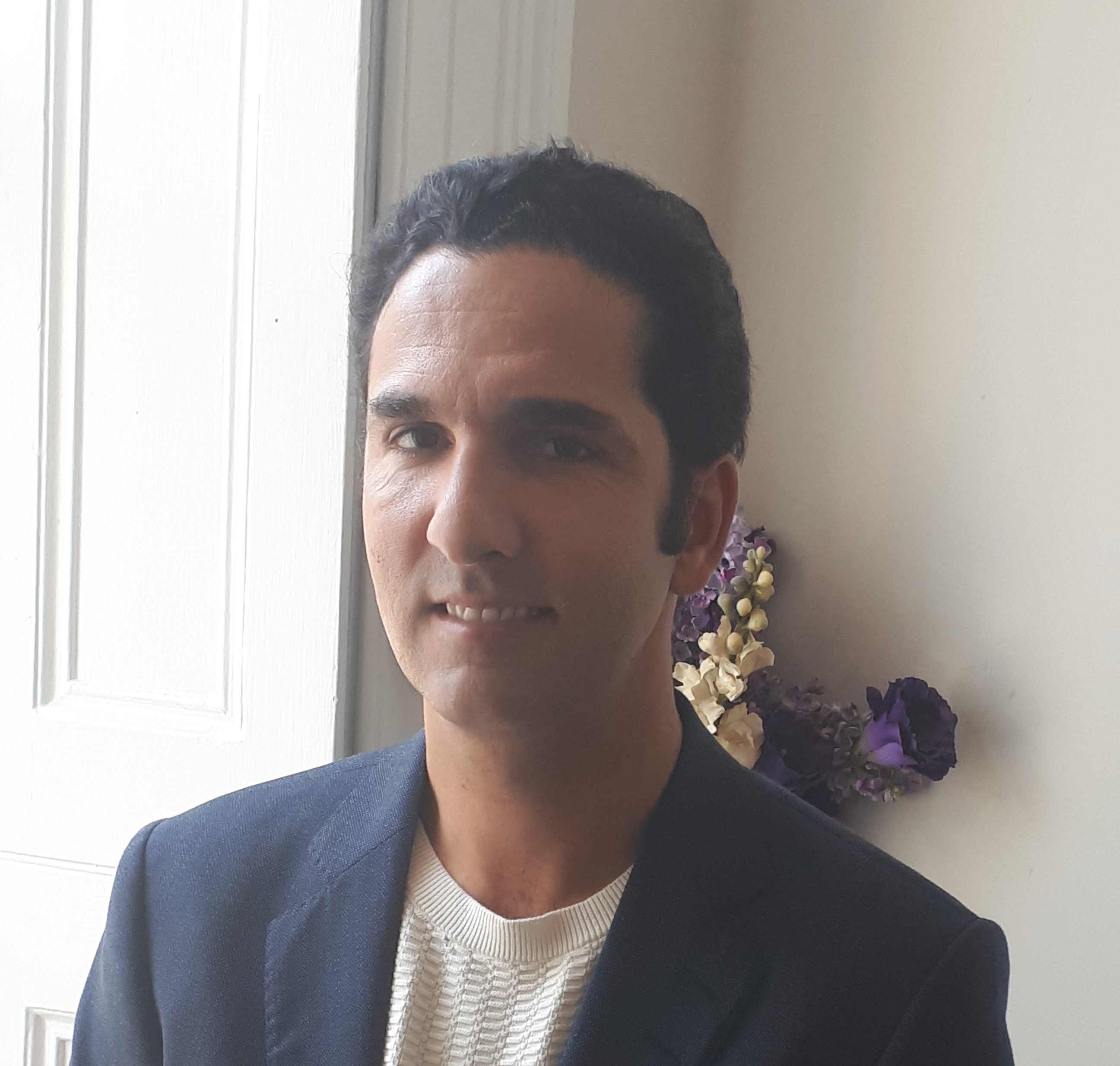
Carlos Monteiro is a therapist in London and online
What attracted you to become a therapist?
Since a very young age, I have been interested in emotions and in understanding how people deal with them. I remember reading books about emotions and often having conversations with close friends where I found myself especially tuned into the moments when they spoke about something deeply meaningful to them. I was drawn more to those deeper conversations than to the superficial aspects of life.
Where did you train as a therapist?
I trained at the College of Cognitive Behavioral Therapies in London. I also trained as an Alexander Technique teacher and, more recently, I have been exploring the work of Formative Psychology through ongoing study and professional development.
Can you tell us about the type of therapy you practise?
I combine somatic work with cognitive work. My main interest is understanding not only what a person is going through cognitively and emotionally in their life, but also what their body is expressing and how the body reacts to those experiences.
I do not believe we can separate one from the other. Mind and body need to be explored together in the therapy room so that clients can experience change and resolution not only cognitively, but also somatically.
How does your type of therapy help with symptoms of anxiety?
Clients often come to therapy describing feelings of anxiety. Anxiety is one of the most common ways people express emotional distress, and it is often accompanied by depression, shame, anger, or feelings of being stuck.
My first approach is always to understand what is truly bringing the client to therapy. From there, we can begin an open exploration of the thoughts, emotions, and bodily reactions connected to those deeper difficulties.
What sort of people do you usually see?
I often work with young professionals who struggle with confidence and feel uncomfortable in certain situations, either professionally or personally.
I also work with people who find themselves unable to communicate their frustrations about living demanding lives. More recently, I have noticed an increasing number of people experiencing loneliness, routine-driven lives, and a lack of purpose or direction.
Have you noticed any recent mental health trends or wider changes in attitude?
People seem increasingly lonely and have less quality time to share their difficulties with others. Modern life is extremely busy, and many people feel pressured to constantly keep up with its demands.
As a result, people often become more irritated, disconnected, and dissatisfied with the pace of life. Many only seek therapy when they have reached their emotional limits, which is unfortunate because by then they may already feel deeply isolated.
What do you like about being a therapist?
Being able to connect with others at a deeper level. I also believe that, in many ways, this work helps me become a better person.
What is less pleasant?
Sometimes it can be challenging to sit with the uncertainty of not knowing exactly what to say or do and simply allowing space for something meaningful to emerge for the client.
I would not describe it as unpleasant, but it certainly requires patience and trust in the process.
How long have you been with Welldoing and what you think of us?
I think Welldoing is very responsive and open to different approaches within psychotherapy. I see that as a very positive quality because nowadays there are many different therapeutic approaches that can genuinely help people.
Having openness towards different ways of working feels both integrative and respectful to the diversity of clients and therapists alike.
What books have been important to you in terms of your professional and personal development? Do you ever recommend books to clients?
I do recommend books to clients if they enjoy reading and feel open to it.
From a cognitive and behavioural perspective, I find the work of Albert Ellis particularly interesting. One book that stands out for me is How to Stubbornly Refuse to Make Yourself Miserable About Anything—Yes, Anything!.
From a somatic perspective, I find the work of Stanley Keleman deeply interesting. One of the first books I read by him was Your Body Speaks Its Mind, which I found very valuable.
What you do for your own mental health?
I continue exploring different approaches, both somatically and cognitively. I am naturally curious and interested in understanding what works for me and what does not.
I tend to navigate many of my own difficulties by exploring different perspectives and approaches related to mental and bodily wellbeing.
You are a therapist in North West London. What can you share with us about seeing clients in this area?
I work in North West London, close to St John’s Wood, Camden, Kilburn, and West Hampstead.
What I appreciate about the area is the diversity of people and backgrounds. There is a mixture of cultures, experiences, and ways of living, which creates a very rich and interesting environment to work in.
What’s your consultation room like?
The rooms are quiet, comfortable, and well located. I believe that meeting in person offers a unique therapeutic experience compared to working online.
The possibility of being face to face, present both physically and emotionally, creates a different quality of connection that can be very valuable for the kind of work I offer.
What do you wish people knew about therapy?
Therapy is like having a conversation with someone who is there for you, without expecting anything from you.
You can be as much yourself as possible. There are no demands, obligations, fake smiles, or pressures to please others. You simply come as you are and see whether the process feels right for you.
What did you learn about yourself in therapy?
I learned that many of my fears are far more common than I once believed.
We are all, in some way, sharing the experience of imperfection and moments of not knowing what to do with our lives. And that is completely human.