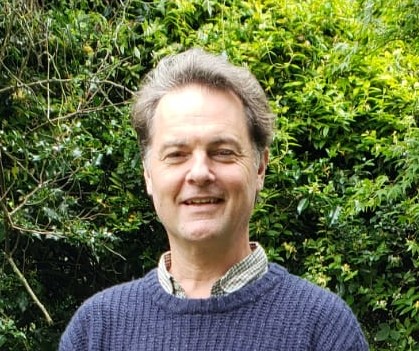
Jonathan Hayward is a counsellor in Seaford and online
What attracted you to become a therapist?
I was - still am - working as a musician with a group of creative arts therapists (music therapy/ dance-movement psychotherapists) and really liked their way of working, the way they respected and genuinely wanted to help the people we were working with. At the same time I read Eric Berne’s book ‘What Do You Say After You Say Hello?’. Again, his approach to human happiness (TA - transactional analysis) really chimed with me, and I wanted to help people in that way; his theories are very user-friendly and were personally very powerful for me.
Where did you train as a therapist?
A place called ‘the link centre’ in Sussex - then based in TA - had started up only a short bicycle ride away.
Can you tell us about the type of therapy you practise?
People have a basic sanity of wanting to be happy and well, they also have a good heart and a lot of wisdom, even if they don’t arrive feeling that that’s true. My job as a therapist is to connect people to these qualities that they already possess, and help them to manifest. This is what usually solves the problem they have arrived with.
If I hold that understanding and keep a client pointing towards it, it can be very quick and transformative.
To make that happen, relationship is the key; therapist and client have to genuinely like, trust and respect each other! But it can take a little while to check each other out. If we sit down with a reflection of our best selves, the bits of ourselves we find difficult (or even hate and are ashamed of) tend to be more easily understood, forgiven, and made friends with.
How does your therapy help with symptoms of anxiety around life transitions?
Life can already be messy and complicated, full of regrets and compromises; and then a big change looms, and a state of fearful paralysis ensues. Talking therapy, with someone who has, in some way, been there, helps patiently comb out those messy strands to reveal what’s really at the heart of the matter, and a way forward. That change of perspective can bring a huge relief in itself.
What sort of people do you usually see?
I often see individuals in their late twenties or late forties/early fifties. Often people getting set-up professionally can have a crisis of ‘is this the adult life I have been working towards?’ and ‘is it what I really want?’
Similarly, those questions arise when someone’s children grow up, parents start needing care, or a long-term relationship stops working.
Have you noticed any recent mental health trends or wider changes in attitude?
People know a lot of hugely helpful psychology from the internet that it used to take years of detective work to find offline. However, the discernment about what to choose - and what not to - and how to apply it is more of an art. In the meantime that all-you-can-eat buffet of knowledge can provoke a lot of anxiety and a sense of not measuring up.
What do you like about being a therapist?
It’s very stimulating and satisfying to help someone figure out what’s bugging them and help them change. At the same time all my clients teach me a great deal about myself and the world, it’s a privilege.
What is less pleasant?
That’s my problem! If I don’t like something, figuring out why is the same process that my clients go through, so I can be grateful for that. That said, working mainly online can feel a bit isolated.
How long have you been with Welldoing and what you think of us?
It’s early days, but I really appreciate Welldoing’s efforts to make a community, with CPD, peer support, and good recommendations.
What books have been important to you in terms of your professional and personal development? Do you ever recommend books to clients?
Clients are often recommending me books, it can really stimulate reflection for both of us, and of course YouTube is a massive resource (caveat mentioned). Meditation and body work are a huge influence so I will recommend Tsoknyi Rinpoche’s ‘Open Heart, Open Mind’ here; it’s about connecting with what he calls our ‘essence love’. Similarly, I’m always going back to ‘The Tibetan book of Living and Dying’ as it restores my sense of perspective. And Gabor Mate is usually on the money….
What you do for your own mental health?
Meditation in a group (and alone) is really powerful, I’m also in a men’s group (celebrating our 10th anniversary) which has been a huge resource, we just sit around a fire in the woods and share our experiences. Being outside as much as possible!
You are a therapist in Seaford. What can you share with us about seeing clients in this area?
I’m geographically in Seaford, which is a surprisingly diverse, accepting place (it looks like a seaside town at the end of a branch line, but certainly isn’t just that) but do a lot of online work with English-speaking clients in Switzerland/Germany.
What’s your consultation room like?
Quite homely, not corporate...comfortable…some musical instruments, a wall-hanging and pictures by artists I know.
What do you wish people knew about therapy?
Ram Dass said ‘We’re all just walking each other home’. Your therapist probably isn’t trying to trap you or make you feel worse, they’re made of exactly the same stuff as you are.
What did you learn about yourself in therapy?
That I am a process, not a thing; constantly changing.