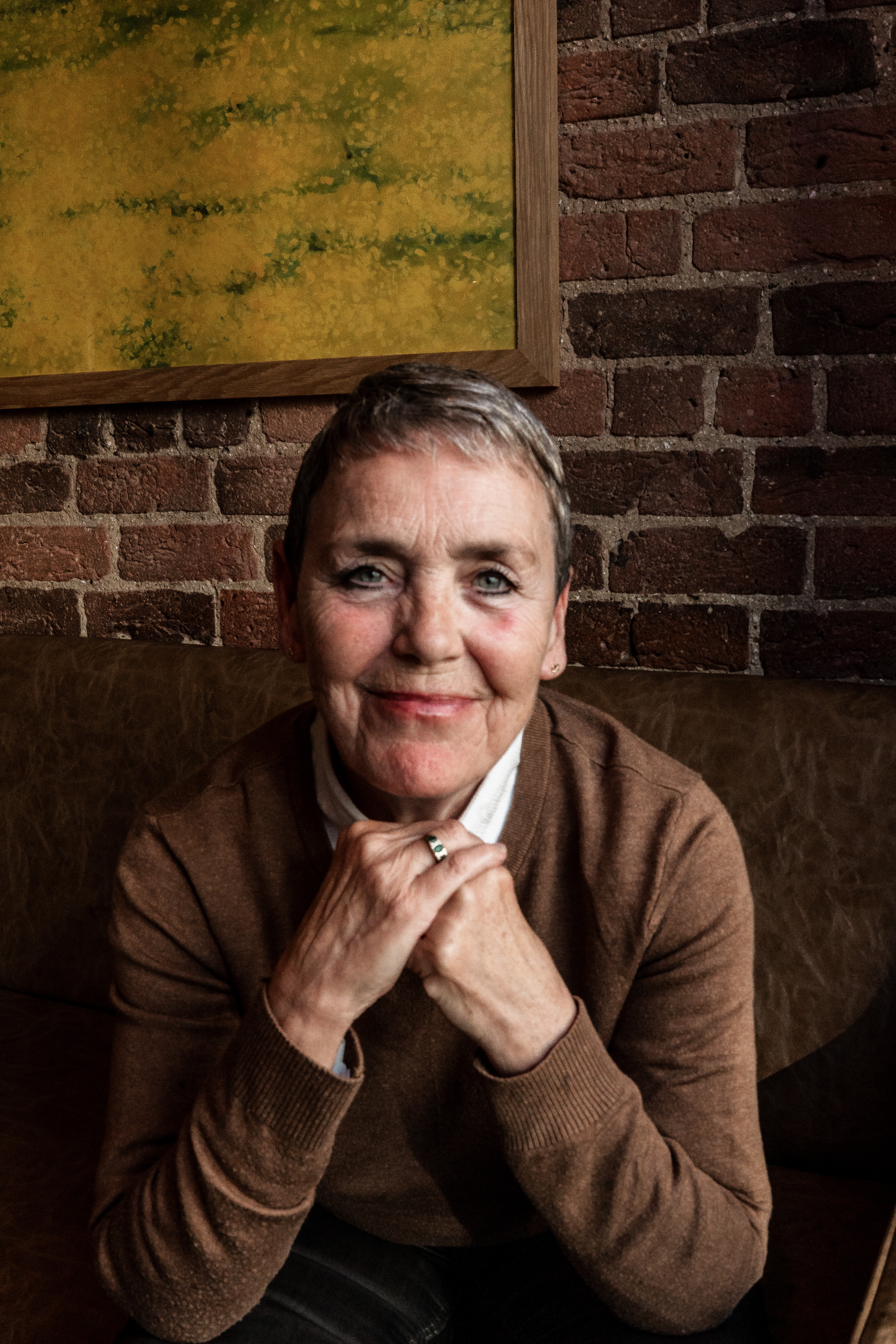
Debra Kurs is a therapist in Liverpool and online
What attracted you to become a therapist?
In my 40 years of work in youth and community work, I have always used listening skills. As I entered my 60s with some hidden disabilities, I became hearing-impaired and decided to retrain. I was compelled to continue being of service and in a professional field where I could work one-on-one. I believe in the power of talk therapy and our ability to change when we have confidential, supportive listening.
Where did you train as a therapist?
I trained with Chrysalis at Hope University, Liverpool, Merseyside, UK.
Can you tell us about the type of therapy you practise?
I am a qualified hypnotherapist and pluralistic psychotherapeutic counsellor. Recognising the uniqueness of each client, I believe that not all clients are one size fits all, so I chose pluralistic counselling.
I use a person-centred approach to establish my therapeutic relationship with clients. With their agreement, we can collaborate to develop a plan to meet their therapy goals. There may be an agreement to use a psychodynamic approach, providing necessary insight into early childhood experiences. I may introduce some Gestalt exercises to help the client process the here and now. We may work with journalling, chair work, or I may use some CBT exercises. All of which would be agreed with the client
How does type of therapy support clients?
In my therapy room, I use a pluralistic approach, respecting that every client has a unique voice and social reality. For example, a trans woman may come seeking a safe and respectful space. I will work collaboratively with her, openly discussing her goals and the most supportive approaches. I would aim to consider the following:
Building trust takes time: Using a person-centred approach, I would follow her lead, move at her pace, and allow her to control the agenda for each session.
Choice and flexibility: On some days, she may want practical tools to manage anxiety. On other days, she may prefer to explore her emotions, share her anger about political transphobic developments, or reflect on questions around identity. I make space for all of this.
Adaptability: I draw on different approaches. Sometimes, this means exploring stories that have shaped who she is, and other times, I focus on techniques to calm her body and ease distress.
Exploring safety: Together, we could examine what safety means for her, both emotionally and physically and socially, and how she can feel more secure in her daily life.
Affirmation of identity: Respecting and celebrating LGBTQ+ identities, ensuring that she can be fully herself in therapy without fear of judgment.
Regular reviews: I check in to see how the process is assisting her and modify my approach if she wishes to try something new.
For me, therapy is about honouring her story at her own pace, offering a safe space where she feels heard, valued, and supported, and ultimately validating her social reality.
What sort of people do you usually see?
To date, I see an eclectic mix of clients, women exploring undiagnosed ADHD, clients with Autism, relationship ruptures, clients with adverse childhood experiences, and I am also working with adult teenagers. As a practitioner with lived experience, I like to work with LGBTQI+ clients.
Have you noticed any recent mental health trends or wider changes in attitude?
I see a rising number of women presenting with concerns of ADHD and trans clients who are exposed to acute transphobia.
What do you like about being a therapist?
I love helping clients navigate their way out of emotional uncertainty and find positive routes to self-acceptance.
What is less pleasant?
Listening to some of the clients' traumatising experiences, of course; however, this is part of the counselling experience – clinical supervision is a safe space for me to discuss any vicarious trauma.
What books have been important to you regarding your professional and personal development? Do you ever recommend books to clients?
Yes, I do signpost clients to reading if I think they are interested in reading. Books I have found invaluable include John Bradshaw’s Homecoming, Melodie Beatie’s Co-Dependent No More, Gabor Maté’s Scattered Minds, and Bessel van der Kolk's The Body Keeps the Score. Relationally Queer, edited by Silva Neves, Dominic Davies et al., is also invaluable.
What do you do for your own mental health?
Of course, clinical supervision is a must. I engage with peer group supervision and I write; as a newly published author, I am developing this wonderful outlet for expression. I journal and, to relax in the evenings, I binge-watch a great TV series or two!
For physical health, I practise yoga and swim several times a week. I choose to work part-time and dedicate a lot of walking time to my dog.
You are a therapist in Liverpool, Merseyside. What can you share with us about seeing clients in this area?
I see Merseyside-based clients at The Liverpool Therapy Rooms in Castle Street, advertise on Pink Therapy, and see some LGBTQI+ clients online. I receive clients online from around the country.
What’s your consultation room like?
The room I use can be seen on the Liverpool Therapy Rooms, Castle Street website. By arrangement, I can arrange face-to-face therapy in two other women's centres at opposite ends of the city.
What do you wish people knew about therapy?
I believe that talking therapy is powerful. I receive therapy myself.
Therapy offers a secure setting for conversation, where one can talk freely without worrying about criticism. Being heard alone can be incredibly relieving at times. Those little adjustments make a big difference. That one doesn’t have to make significant changes all at once. Long-lasting change can be achieved with even modest actions, such as naming emotions or establishing boundaries.
When we look for help, it isn’t about being "broken.” Counselling isn't just for times when life is too difficult. It can also be about learning better coping mechanisms, self-discovery, and personal development. The most potent aspect of the process is frequently feeling that the therapist genuinely understands and supports you without judgment.
Therapy can provide tools for daily living, and one can gain useful skills from therapy that can be used long after sessions are over, such as improved communication, self-compassion, and techniques for mental relaxation.
Breaking free from old patterns, without realising it, many of us continue to hold onto old habits or beliefs. Therapy can help clients see these clearly and make new decisions with the help of treatment. Further, it can offer hope and possibility, resulting in increased emotional strength, direction, and the belief that change is possible, even when things seem hopeless. Therapy is not about "fixing" people. It's about helping clients find their strength, overcoming pain, and moving forward more easily and clearly.
What did you learn about yourself in therapy?
I have learned about my own attachment style, and I have gained insight into my ACEs. I have also recognised that I am neurodivergent and recently sought a diagnosis, which was granted! I have also effectively strengthened my personal boundaries.
In terms of what I have learned from therapy sessions with clients, I have learned about resilience and courage through the experiences that clients have shared with me. Each client brings a unique perspective, which helps me grow as a practitioner