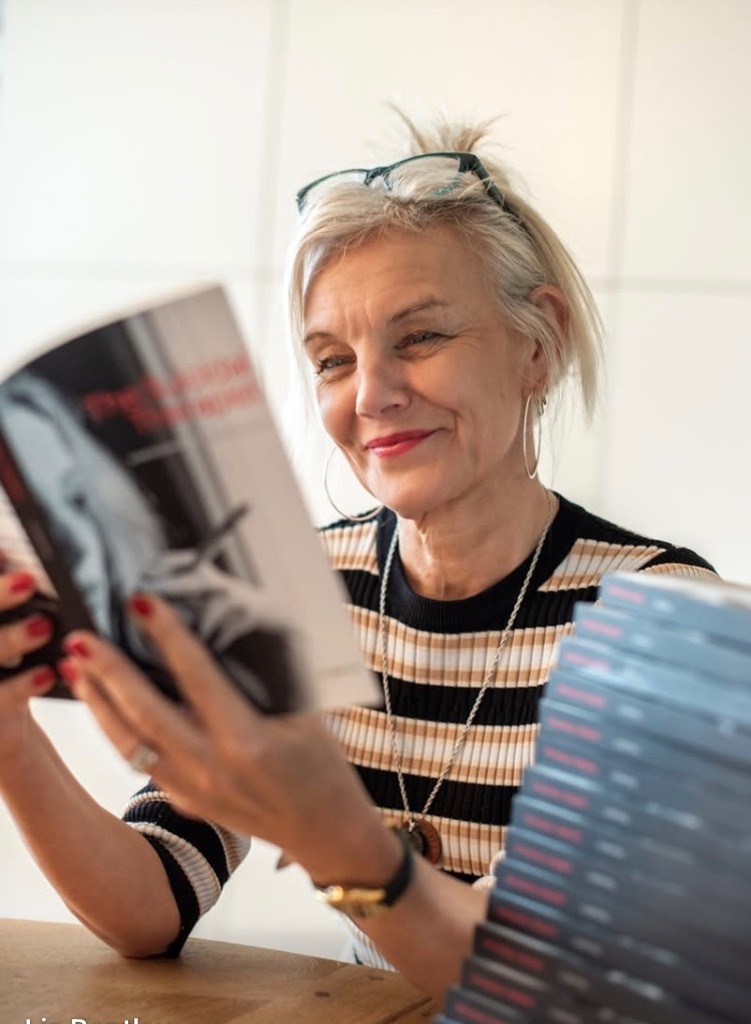
A Dance of Mirrors is my first novel.
I have written and published several non-fiction psychotherapy related books, but had never seen myself as the potential author of a novel. So when I started writing about my mother, I did this for very personal reasons. Writing a novel to be published and read by strangers was definitely not on my mind.
My mother had died during the pandemic after having disappeared into dementia for years before her death. Her death felt strangely unreal and I felt the need to pay attention to her, mark who she had been. As it happened there was a particular period in her life that offered itself as an interesting and puzzling story with considerable relevance for my own life: my mother is German and the period I am describing concerns her life as a young woman in her early twenties in post war Germany. She is trying to come to terms with the horror of the Nazi years and the war and has to make some far reaching decisions which will affect the rest of her life. There is a love triangle at the center of this story, but I felt it needed to be told against the backdrop of post-war Germany.
Gradually my writing took on a life of its own. I began to become aware of the parallels between writing about my mother, looking at her closely and trying to figure out what may have been going on in head and the kind of attention I pay to my clients in the consulting room: a second “mirroring” plot developed around a narrator/psychotherapist which was now clearly moving over into fiction. I vividly remember the advice I was given at an early stage: you need to decide whether you want to write a biographical or autobiographical piece or whether you want to write a novel. If this is fiction, then you are not the protagonist, the patients (who had found their way into the manuscript) are not your patients and your mother is not your mother. They are all ultimately characters in your book and you can make them do whatever you like. That changed everything. Ok, I thought, let them play, and I found myself writing a novel. Only later did I learn that what I was doing is called autofiction.
However writing autofiction creates a tension, particularly for a psychotherapist, a tension that never entirely went away: there are after all real people described here and events that happened.
Interestingly people who know me and have read the book often ask the same question: I know this part refers to real events, and this part is clearly fiction, but what about…? Is that real? A bit real?
While this is not an uninteresting tension, it also poses problems with particular groups of readers.
This is a story about my family, and my sisters and my brother would inevitably be affected by my telling of this story. I decided to initially ignore this and just write, but knew I would have to come back to this question when I had a viable draft. Would I need their permission before seeking publication? Would I have shelved the project had they objected? Luckily they were without exception interested and supportive, but what would I have done if they hadn’t been? Not so much a question of permission, rather of being mindful and considerate of the feelings of people who matter more to me than a book.
Then there was the question regarding the second plot line, the story of the narrator/psychotherapist. This is the nearly completely fictional part of the book, and I took care to make that clear in the disclaimer. However, while the therapy narrative was created to mirror and comment on the story of the mother and not based on any real events, this does not entirely solve my dilemma as an author who is also a practising psychotherapist. For a start writing a book like this creates a potential conflict with rules around self-disclosure. Patients who read this book will not only know more biographical facts about me but will also “hear me think” as a psychotherapist, even if the story line itself is fictitious. Beyond that I know some patients will read this book and inevitably insert themselves in places or at least wonder about the reality of it. There is no question that some of the protagonist’s observations and reflections have grown out of my work in the consulting room. That is after all why I made one of my characters a psychotherapist, because I understand and know that world well. Patients in the story are not based on any particular people, they are composite figures, but one way or the other I have come across situations as described in the book.
Questions of confidentiality are central to any writing in psychotherapy. There are very clear rules about gaining permission to use material and about ways of anonymising it when using case studies for clinical and academic purposes. I have experience of that and that has been helpful for approaching this issue for the writing of fiction. If in doubt, even if it was just the question of using a particular phrase or dream fragment which felt like it fitted my fictional story, I have approached patients for permission, making it clear at the same time that there was otherwise no connection between them and the fictional character in question. I am in no doubt though that there will be a lot of work waiting for me once the book is out and patients have read it. I may live to regret it!