Dear Therapist,
I am in my late 50s with a husband and two grown children. We live close to my parents, my children and my four siblings. My husband’s family is also nearby. In many ways, ours is a loving family but I don’t understand why my feelings don’t seem to matter as much as everyone else’s. I am always there to lend a hand when any of the group needs anything but the same isn’t true in reverse. I end up overextended and exhausted, and I never have time to attend to my own interests. I also notice this pattern with friends and colleagues. It keeps coming back to the idea that I just don’t matter to others which fills me with enormous sadness, particularly considering how hard I work to be a considerate, helpful person to them.
Signed,
Forgotten
Dear Forgotten,
Core beliefs are the deep, often unconscious convictions we hold about ourselves, others and the world. It sounds like there is a core negative belief in operation here: ‘I don’t matter,’ which is a very common one typically arising from caretaking roles or emotional suppression in childhood.
When we are very young, we absorb the information around us rather than think it through logically. Faced with instability, inconsistency or the absence of a secure environment, children will often develop the belief that they are the problem and/or that they need to ‘fix’ the situation. Sometimes even a single painful event or ongoing subtle emotional neglect can crystallise into a belief about one’s worth or safety.
Once a belief is installed, our mind starts filtering reality to confirm it while overlooking or discrediting contradictory information (a cognitive distortion commonly known as confirmation bias). We can also unconsciously attract situations that reinforce the belief. In your case this might look like minimising your own needs or not leaving space for others to step in and offer support?
You are concerned that others don’t consider you. I would recommend you start valuing your own feelings and needs – that you extend some of your caretaking inward. You say you are ‘always willing to lend a hand’ but that this leaves you feeling ‘overextended and exhausted’ and crowds out any time for yourself. (Here I can’t help but wonder about the presence of another belief, ‘I need to work to earn love,’ or something similar that keeps the over-giving in place.) When you neglect yourself, exhaustion, resentment, and burnout follow. You also model to others that it is okay to neglect you too.
I don’t matter. So I need to work really hard to earn love. I would invite you to notice whenever these beliefs might be driving your frantic caretaking of others. And instead of staying in motion, offering ever more care to ‘win’ love and consideration, please pause and get quiet. Feel the emotion associated with the beliefs move through you without needing to believe the story attached. An example might be a tightness in your stomach or pain in your chest. Breathe into any sensations and invite them to relax and release on every exhalation. And to consider what it would feel like if the beliefs weren’t true, again anchoring on the sensations, and how the body eases with this possibility. Because the beliefs never were true, even if they feel very real. ‘Real but not true,’ is a phrase you can borrow from psychologist/teacher Tara Brach.
Even a couple of minutes like this can offer you the space to choose other actions, like saying ‘no’ to yet another request of your time or allowing yourself the ‘indulgence’ of engaging in a favourite hobby of yours. I won’t pretend this will be easy. Everything in you might be screaming to stay in caretaker mode. But remind yourself you deserve some of that care too. Ask yourself, ‘What would a woman who knows she matters do here?’ and act accordingly. Repeatedly.
Yours,
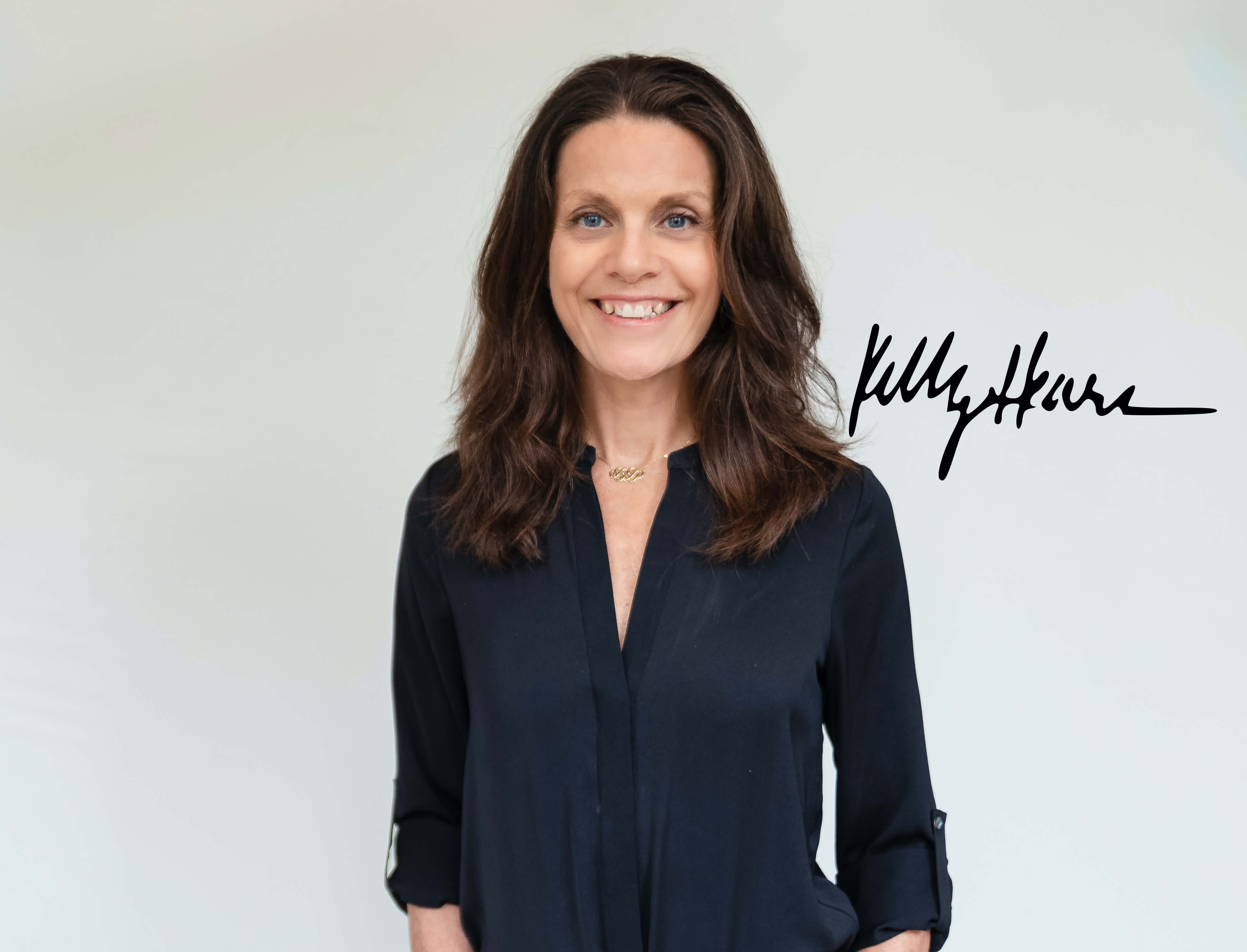
Kelly Hearn