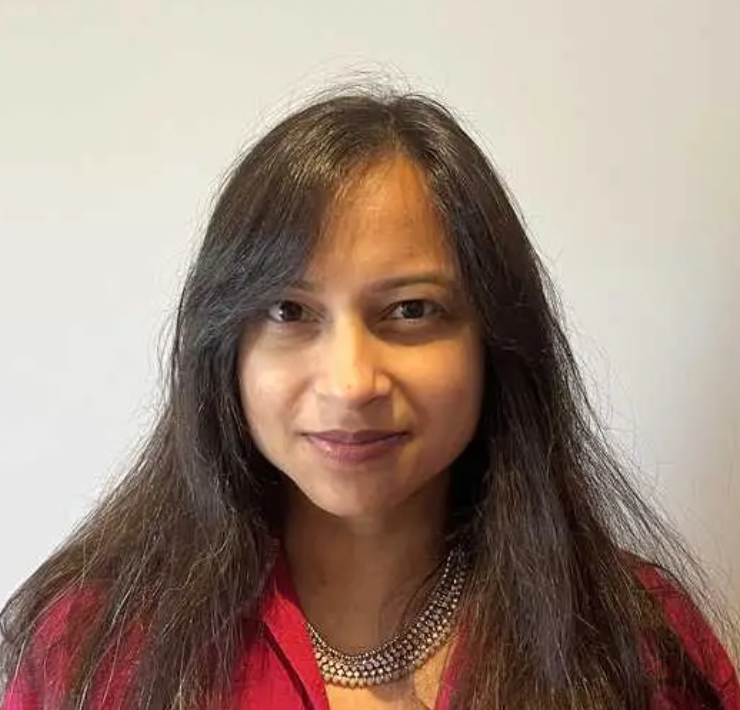
Sandhya Bhattacharya is a therapist in Harrow
What attracted you to become a therapist?
I used to work as a journalist and loved listening to stories people would tell, while I interviewed them. I enjoyed asking questions, being curious and listening deeply to these experiences.
A few years later, I accessed therapy and found it a deeply enriching experience – here was someone listening to me with the same curiosity about my life! I wanted to learn more, to work like this person, to listen and bear witness to stories like they did to mine.
Where did you train?
My initial training was a master’s in Relationship Therapy at the Relate Institute, University of Hull. Since then, I have had additional training at Tavistock Relationships and Royal Holloway, where I did a Postgraduate Diploma in Behavioural Couple Therapy.
I have also trained as a clinical supervisor and work with individuals and groups, in supervision. Recently, I’ve begun teaching and training therapists working with couples, where one person presents with depression.
Can you tell us about the type of therapy you practise?
My primary approach is psychodynamic, where we look at what lies beneath one’s awareness. I find that most clients come to therapy with some understanding of what troubles them. Our work together helps them understand, so we can accept and work through these problems.
My approach is also flexible in that it is tailored to the specific needs of the people with whom I am working. I am also trained in CBT and systemic approaches, which allows me to specifically address needs of people in relationships.
While working with couples and families, the work focuses on the interaction between people. We think about what communication looks like, how it is created in the interaction between members of a couple or family. We also work on listening and understanding so we can build empathic connection and reduce conflict.
What are some of your areas of specialism?
I help people experiencing difficulties with mental health (depression, anxiety, relationship trauma and conflict). Out initial sessions might be exploratory. By providing a space where you can think about yourself and what happens in relationships, we work through what feels emotionally ‘stuck’ and difficult.
Most clients have experienced some relief from symptoms after the initial stages of therapy. We work together in developing new patterns of thinking and behaviour in order to help sustain change.
What sort of people do you usually see?
I work with adult individuals, couples, polycules, and families. I also work with young people (age 11 and above). Since I work with relationships, the age of people I see, can vary. I have worked with families where children are as young as eight or nine; I also work with elderly couples, who want to think about their lives, post-retirement. I work with individuals and people in relationships.
An area I think about often is managing conflict. This might be a conflict within oneself or with someone else. Many times, this conflict emerges during a period of change. We work on understanding and managing the conflict in order to build a stronger understanding of ourselves and with others.
Have you noticed any recent mental health trends or wider changes in attitude?
I love that there is more conversation about our relationship with our mental health. There is a lot more engagement and curiosity about mental health. I also like that we are working towards accepting and acknowledging differences.
Acknowledging that we are different, or experiencing something troubling, is very helpful in creating openness and transparency. It also allows us to understand the problem better, and begin to think about change.
What do you like about being a therapist?
I love listening and truly being curious about peoples’ experiences. It is a privilege to witness to these stories of the human condition and build trusting relationships. I love the understanding and compassion that develops in therapeutic relationships. When clients arrive at a point of change, it can be exciting to think together about their empowerment.
What is less pleasant?
I recognise that coming to therapy can feel difficult to start. For some, it can also be a difficult process with which to engage. I’d encourage people considering therapy, to trust the process. It takes time to build a relationship with your therapist and trust each other enough to explore difficult thoughts. That said, if a therapeutic relationship is not working, it is important to acknowledge that and think about it, so you can make a decision that best suits your needs.
How long have you been with Welldoing and what you think of us?
I joined Welldoing a few months ago. I enjoy looking through the recommended books and articles by other practitioners. I would like to enrol in some CPD courses, particularly on affairs and blended families, since these are particular areas of interest for me.
What books have been important to you in terms of your professional and personal development? Do you ever recommend books to clients?
A few books (and a film) I have enjoyed are:
Lori Gottleib, Maybe You Should Talk to Someone. It’s a helpful (and real) portrayal of therapy in action.
Bessel van der Kolk, The Body Keeps the Score. A book that helps understand psycho-somatic responses to trauma.
Philippa Perry, The Book You Wish Your Parents Had Read. An insight into how our early relationships shape the choices we make, as adults.
The film Inside Out. I love the personifications of emotions. The film beautifully illustrates the importance of understanding and accepting ourselves.
What you do for your own mental health?
Exercise and good friends are crucial to my mental health.
You are a therapist in Harrow. What can you share with us about seeing clients in this area?
I work in Harrow, Northwest London. I enjoy seeing a range of client presentations. I love the diversity that this city offers. Additionally, as someone who speaks Hindi, Urdu and Tamil, I find that the therapeutic experience is different when working in another language.
What’s your consultation room like?
I work with a hybrid model, working in-person and via Zoom. My consulting room is close to Harrow on the Hill station. It is a space for individuals, couples and families too.
What do you wish people knew about therapy?
It is a relationship unlike any other. It can be a deeply fulfilling (and sometimes challenging) process. I would love for people to know that therapeutic change takes time.
What did you learn about yourself in therapy?
I am constantly developing my curiosity about the therapeutic process, which can be enlightening for both the therapist and the client. I’ve learnt that therapy is an incredibly rewarding experience – it helps us accept ourselves in entirety and remember who we were, before we lost ourselves.