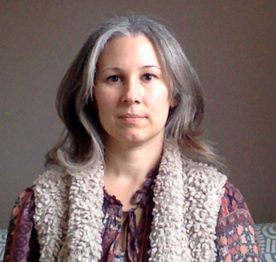
Helen Santa Maria is a therapist in Reading
What attracted you to become a therapist?
I have always been curious about why we think, feel and act the way we do. Ever since reading Freud whilst studying for an MA in Children’s Literature, I have had a strong interest in how our unconscious processes affect our relationships and behaviour.
I wanted to work in a field that allows time and space for unravelling the painful complexities that make up many people’s experience of the world.
Where did you train?
At the Association of Group and Individual Psychotherapists (AGIP). I also have a PhD in English from the University of Reading.
Can you tell us about the type of therapy you practise?
I practise psychoanalytic psychotherapy which is a mode of therapy that takes into consideration a person’s unconscious as well as their conscious thoughts and feelings. Sometimes we simply don’t understand why we feel the way we feel or act the way we act.
Working psychoanalytically can help people explore feelings, thoughts and actions at a deeper level and it gives space for things that might seem impossible to think or speak about. It is well suited to those who are not looking for a quick, “easy fix” but are interested in the detailed, and sometimes difficult, work of understanding themselves.
Psychoanalytic therapy doesn’t require you to present with a clearly defined “issue” or “goal”, though something like this may emerge through the course of the therapy.
How does psychoanalysis help?
Working psychoanalytically takes into account all aspects of a person, not just their symptoms or diagnosis in isolation. It gives a place for people to explore parts of themselves that they may not consciously be aware of.
This in turn can help to facilitate a new kind of self-awareness that opens up different and creative ways of being in the world.
What sort of people do you usually see?
I see adults with a wide range of issues including anxiety, relationship issues, trauma, physical symptoms, depression, health anxiety, loss of meaning in life.
Often people have had previous counselling or therapy which has been time-limited and they wish to have a more open-ended setting to explore their internal world.
Have you noticed any recent mental health trends or wider changes in attitude?
I have noticed that deep self-reflection over a long period of time is out of fashion. Short-term “goal-oriented” work is often the focus which doesn’t allow for deeper, more unpredictable and evolved insights to develop.
What do you like about being a therapist?
It is a very special thing to hear and hold someone’s story. I enjoy having the opportunity to deeply explore material that my clients bring to sessions and offer a unique kind of conversation that isn’t possible for them to have anywhere else.
What is less pleasant?
Knowing that, sadly, this kind of therapy is not widely accessible and is out of reach of many people who might benefit from it.
How long have you been with Welldoing and what you think of us?
I have been with Welldoing for around six months and have yet to take part in any CPD. There seems to be quite a lot on offer and I hope to explore it further.
What books have been important to you in terms of your professional and personal development? Do you ever recommend books to clients?
I don’t make book recommendations to my clients, though they often tell me about books they are reading which is often significant to the work.
Freud’s Introductory Lectures on Psychoanalysis was the first psychoanalytic book I read and started my interest in psychotherapy, so that feels like an important text.
During my PhD I read The Case of Peter Pan or the Impossibility of Children’s Fiction by Jacqueline Rose, which was essential in helping me think about literature, language and constructions of identity. One of my current go-to texts is On Learning From the Patient by Patrick Casement.
For anyone interested in psychoanalysis I might recommend books by Darian Leader or Adam Phillips. I have recently finished a book on anger called All the Rage: Why Anger Drives the World by Josh Cohen which I enjoyed.
What you do for your own mental health?
I love to garden.
You are a therapist in Reading. What can you share with us about seeing clients in this area?
I see clients from Reading and further afield. Reading has good transport links, including the Elizabeth line, so it’s very accessible.
What’s your consultation room like?
It’s cosy, comfortable and private.
What do you wish people knew about therapy?
I wish people knew that you don’t need a clearly defined 'issue', or to be at crisis point to come to therapy. It’s enough to be curious about yourself and your own inner world.
I think it’s helpful to understand that undertaking therapy doesn’t mean that you will instantly feel better. Part of the process is coming into contact with difficult feelings and it’s normal to feel unsettled at times.
A therapist will have the time and patience that is required to make sense and meaning from what might seem impossible and confusing. It takes time and commitment to allow the process to work, but deep, meaningful shifts are possible.
What did you learn about yourself in therapy?
I gained a deeper understanding of why I wanted to become a therapist in the first place. Therapy helps me have an understanding of my own “blind spots” and means I can be as mentally available as possible to my clients.