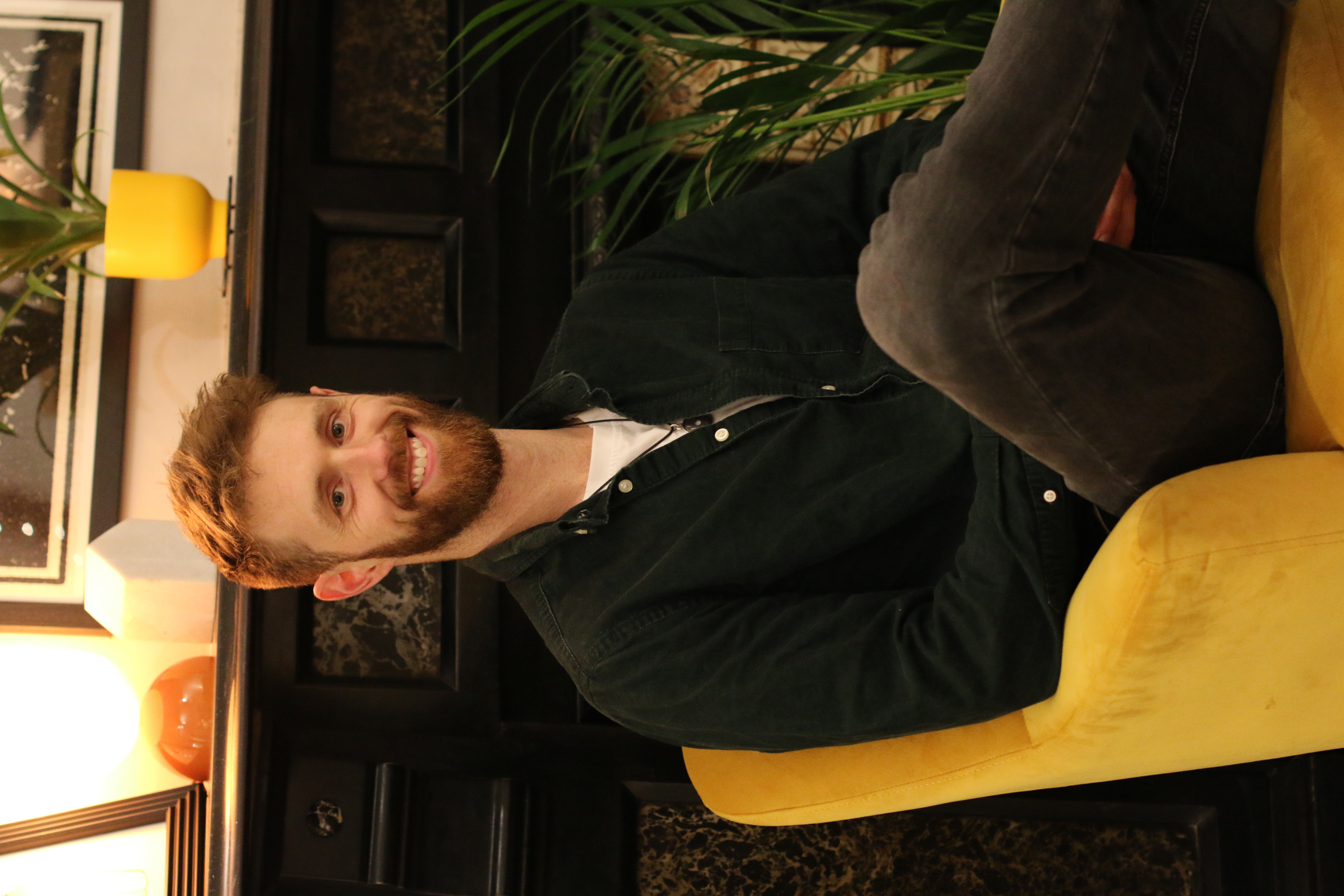
David O'Hara is a therapist in High Peak and online
What attracted you to become a therapist?
I've had a longstanding interest in psychology and have kept that alive academically for over ten years. Alongside that, I had a natural inclination for this kind of work long before I had the training to go with it. People tended to talk to me about the difficult stuff, and I found I could get on their level. I was drawn to those conversations rather than away from them. Training gave me a way to bring that interest in psychology, my personal temperament, and the professional skills together in a way that feels both authentic to who I am and grounded in the rigour the work deserves.
Where did you train as a therapist?
I trained at the University of Salford, completing a PGDip in Counselling and Psychotherapy, which I graduated from with distinction. My placement was at Gaddum, working with NHS-referred clients in Manchester. I also trained in teaching mindfulness-based approaches at Bangor University, which informs how I integrate mindfulness into my work where it's useful.
Can you tell us about the type of therapy you practise?
I work from a person-centred approach. In practice, that means therapy is a conversation rather than an assessment, fixed programme, or a set of techniques. You set the direction, and we work at a pace that suits you. If a particular concept, exercise, or theory might be useful, we can bring it in, but the focus stays on your experience and what feels important to you. It's about creating the conditions where you can think more clearly.
How does your therapy help with anxiety?
I often start by helping people understand what anxiety is doing, so it feels less like something to fight against. It's there for a reason, even if it doesn't feel helpful in the moment.
From there, we find opportunities to practise sitting with discomfort at a level that feels challenging but not overwhelming. Then we can look at what's driving it underneath. That might include pressure, expectations, or patterns that have built up over time. As those become clearer, there's usually more room to respond differently, rather than feeling caught in the same loop.
What sort of people do you usually see?
I work mainly with adults dealing with anxiety, burnout, or a sense of being stuck. Often life looks fine from the outside, but doesn't feel that way underneath. I also work with a lot of men who have been trying to manage things on their own for a long time before reaching out. Some come with something specific, others just know they need space to think things through properly.
Have you noticed any recent mental health trends or wider changes in attitude?
The main thing I notice is our relationship with technology and how it affects our ability to focus and concentrate, and how it is changing the way we connect with each other. There seems to be a broader shift in awareness too, people are more willing to name what they are experiencing and to seek help than they were even a few years ago, which feels significant. At the same time, a lot of people seem to be under constant pressure even when there's no obvious crisis. There's a sense of needing to keep going, to hold things together, without much space to stop and ask how things actually are.
What do you like about being a therapist?
I want people to leave sessions feeling hope, and a sense of relief that they've found somewhere they can actually work on things. I also particularly enjoy the moments when the psychological theory, the client's story, and what's happening between us in the room all come together at once. When that happens, it tends to be when things really shift.
What is less pleasant?
The marketing side of private practice. I just want to be in the room talking to people. Everyone says you should have a niche, but honestly I just like hanging out with people who want to make a change in their life. Having to sell yourself, package yourself, figure out your brand, none of that is why I became a therapist.
How long have you been with Welldoing and what do you think of us?
About a year, mainly drawn by the matching. The fit between therapist and client matters a lot in good therapy, which is exactly why I offer a free introductory call before anyone commits to anything. It's all about fit and feel, and Welldoing seemed to understand that. The CPD sessions are something I've found genuinely useful too, particularly as someone working independently where that kind of community can be easy to lose.
What books have been important to you?
Four that have stayed with me. Nietzsche's line, which Viktor Frankl quotes in Man's Search for Meaning: "He who has a why to live for can bear almost any how." Jon Kabat-Zinn's Full Catastrophe Living, which is about how we can use the small challenges in our lives to prepare for bigger ones, and how to be present for the full range of our experience, the ups and the downs. Anything by Alan Watts, who got me into eastern philosophy. And Michael Schur's How to Be Perfect, a genuinely funny and accessible way into western philosophy, written by the person who created The Good Place. I do occasionally recommend books to clients, though I tend to be selective about it. If something feels like it might genuinely resonate with where someone is, I'll mention it, but I'd rather the work happen in the room than in homework.
What do you do for your own mental health?
I walk my dog twice a day in the Peaks. That is partly why I got him, to make sure I actually get outside. I'm not always in the mood, but I never regret it. Quality time with friends, making dinners, playing board games. And I meditate between sessions to let go of what just happened and clear the space before the next person comes in.
You are a therapist in the High Peak. What can you share about working there?
I see clients in Whaley Bridge at the Riverside Wellbeing Centre, online, and for walk-and-talk sessions in the Sett Valley. The area attracts a lot of people who have moved out of Manchester or Sheffield in search of something different, managing demanding careers while trying to live in a way that feels more meaningful. That tension, between ambition and wanting a slower, more grounded life, shows up in the work quite regularly. Most of us spend a lot of time sitting down and staring at screens. Getting outside and moving can be exactly the change of pace and environment that helps things feel a bit different, and sometimes a different perspective is what the work needs.
What is your consultation room like?
The room is quiet, comfortable, and not overly formal. It has recently been redecorated, so it feels fresh and welcoming. Somewhere you can settle into fairly quickly. Online sessions offer something slightly different, people are often more at ease in their own space, which can help the work in a different way.
What do you wish people knew about therapy?
That it doesn't have to be clinical or awkward. At its heart, it's a conversation. You don't need to have everything figured out before you come, and you don't need to explain things perfectly. Part of the work is figuring that out as you go.
What did you learn about yourself in therapy?
I became more aware of how much I had been shaped by other people's expectations, often without realising it. In social situations I would take the easier route to keep things smooth rather than say what I actually felt. Part of the work I have done over the years was learning to say no, and to be more direct, even when that felt uncomfortable. I worried that doing so might push people away, but I found the opposite. The more I have been able to be honest and put myself forward, the more stable and genuine my relationships have become.