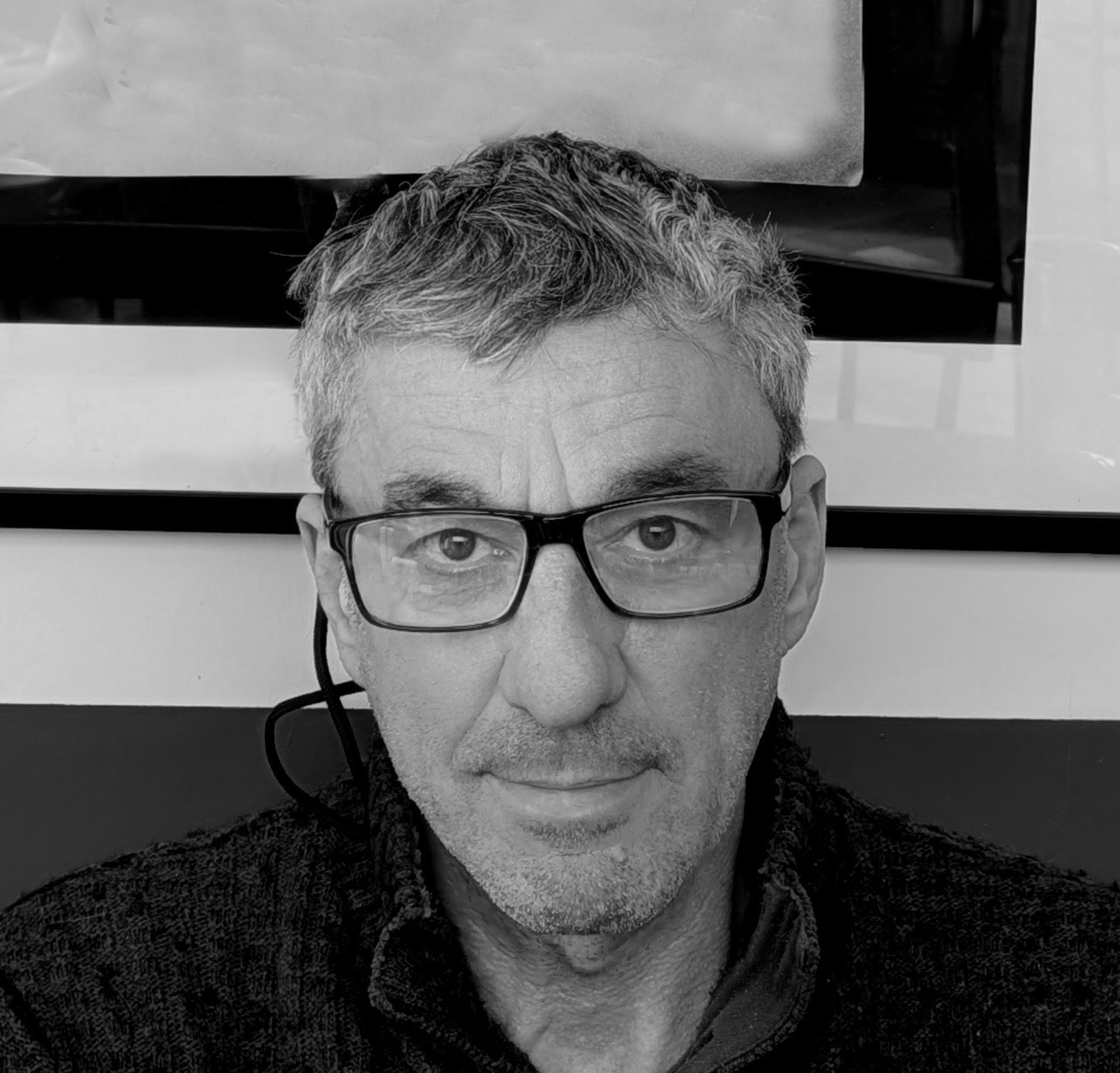
Anthony Trewhitt is a therapist in North Yorkshire and online
What attracted you to become a therapist?
Like most counsellors I know, I think I've always been drawn to helping others if I am able. I have in the past worked as a volunteer young person's mentor with Barnardo’s and trained and volunteered as a community mediator.
My journey to becoming a professional counsellor started with the Covid pandemic. One of my clients, a successful counsellor themselves, suggested that it was something I should consider doing professionally.
I like hearing people's stories and the thought of supporting them to work things out and make their world a better place has always been something I have enjoyed.
Where did you train?
I trained at Leeds Beckett University, and the University of Life.
Can you tell us about the type of therapy you practise?
I am a person-centred counsellor at my core. I also draw on humanistic and behavioural theories including existentialism, transactional analysis, and attachment theory.
I work with many clients who are struggling with, or have suffered from, addiction, and those affected by the addiction of others. I find these therapy practices most useful for this work.
Person-centred counselling enables someone to be really listened to and to have their feelings understood and validated. This can be transformative in the world of addiction and trauma.
It is the non-directional element of person-centred therapy that I like, especially when working with people who have spent much of their lives being told what, why and how they should feel and behave within themselves and toward others.
Exploring attachment styles with my clients can also be really useful to foster an understanding of how our present is deeply rooted in our past. I often combine this with transactional analysis lifescript patterns which often helps when exploring repeated behavioural patterns.
I also like to introduce and encourage creativity with my clients. I often find that clients have hidden talents that they may enjoyed in their younger years and that have since been forgotten. Tapping into those creative talents often brings huge rewards and insights for the client.
How does your way of working help with symptoms of addiction?
Addiction is a lonely world, not only for the addict but also those closest to them. The sense of shame and guilt often leads people to suffer on their own for years before seeking help.
By utilising the person-centred approach of unconditional respect, being genuine, and showing empathy, my clients are able to explore their feelings and achieve personal growth and self-actualisation.
Most addicts have never been listened to, or have not been allowed to express their feelings and emotions. Giving them the space to do so, combined with exploring creative avenues, I find a very powerful means for them to make positive changes. Creativity alleviates boredom also, another powerful aspect of addictive behaviour.
In my experience, most of the people I have known and worked with throughout my life suffering from addiction have been highly intelligent and motivated people who have lost their way. Once they have sought the right help and support they are remarkably motivated and productive in their lives.
Addiction is also a great leveller, there are no class, gender, age, or other barriers. All of the above can however affect how people seek and are able to access the help they need.
What sort of people do you usually see?
I see a wide variety of people. Though I do not specifically specialise in working with addiction and trauma, I do a lot of work in this area and they are more often than not related.
I have a strong sense of social justice and that leads me to working with those who are in a less fortunate position in society when I am able to do so.
I have worked with people in prison, people who are homeless, and people who are incredibly financially successful and on the surface have everything society suggests we aspire to.
Have you noticed any recent mental health trends or wider changes in attitude?
Apart from the obvious surge in the use of synthetic drugs amongst the younger generation and the growth of social media affecting young minds, I think the growing despair of social inequality and the difficulty in managing financially on a day-to-day basis is having a huge effect on people's mental health. Lack of job security and the cost of housing in particular. People are looking for an escape, often leading to gambling, drugs, and debt.
What do you like about being a therapist?
That’s very easy to answer. I love that moment that comes when working together with a client – a little chink of light comes across their face and the realisation for them that change is starting to take place.
That point where rather than everything spilling out in one big flurry, specific points and feelings start to emerge.
I also like the continual learning curve that I am on and find out about myself all the time as I work with my clients and continue with my professional development and studying.
What is less pleasant?
It can be difficult when a client thinks you are there to fix them, that you have all the answers to their problems, and the exacerbated anger they may feel when they realise you cannot do that for them.
How long have you been with Welldoing and what you think of us?
Welldoing has a great bank of material available for personal and professional development.
What books have been important to you in terms of your professional and personal development? Do you ever recommend books to clients? (if so, it would be great to have some examples included here)
I think the stand out books for me have been ‘On Becoming a Therapist’ by Carl Rogers, ‘The Body Keeps the Score’ by Bessel Van Der Volk, ‘Why Love Matters’ by Sue Gerhardt, ‘People Play Games’ by Eric Berne, and ‘Love’s Executioner’ by Irving Yalom.
I often recommend books to my clients if they show an interest in a particular area. I am drawn personally to the growth of recognition in neuro-science and the social environment we grow up in.
What you do for your own mental health?
I keep physically fit by walking, kite flying, fishing. I like to travel and explore different cultures when I am able.
I also like to create and build furniture and small building projects as I used to do before I started my professional career as a counsellor, it keeps me grounded and gives me a great sense of achievement and satisfaction when I finish a project.
I see my own counsellor regularly for both professional and personal development, and I like to do yoga, or let’s say my version of yoga.
You are a therapist in North Yorkshire. What can you share with us about seeing clients in this area?
My practice is based in North Yorkshire, I also work online so there really isn’t a geographical boundary for me or my clients.
North Yorkshire is largely rural and that can bring its own issues in terms of people being able to access face-to-face sessions. That is why I love online counselling – it enables people more choice and better access to counselling.
People have a view of the countryside as this idyllic pastoral place to be, where everything is rosy. It can be, but it is not easy for many people. Lack of employment, cost of living, etc are factors that are driving younger people to the towns and cities.
What’s your consultation room like?
My consultation room is actually a very large (I mean large) and spacious converted removal van! It has the feel of a wood cabin, lots of light with large patio doors and views of the countryside. It is very private and comfortable. It is literally two minutes walk from a wildlife sanctuary, so if my clients prefer to do a walk and talk session it is ideal.
What do you wish people knew about therapy?
That therapy isn’t an examination of their failings, but a springboard for their growth and healing.
What did you learn about yourself in therapy?
Oh, that is a big question. I learnt to forgive myself and others. I learnt not to let things out of my control affect me so much. I learnt the importance of self-care. The list is huge and I am still learning.