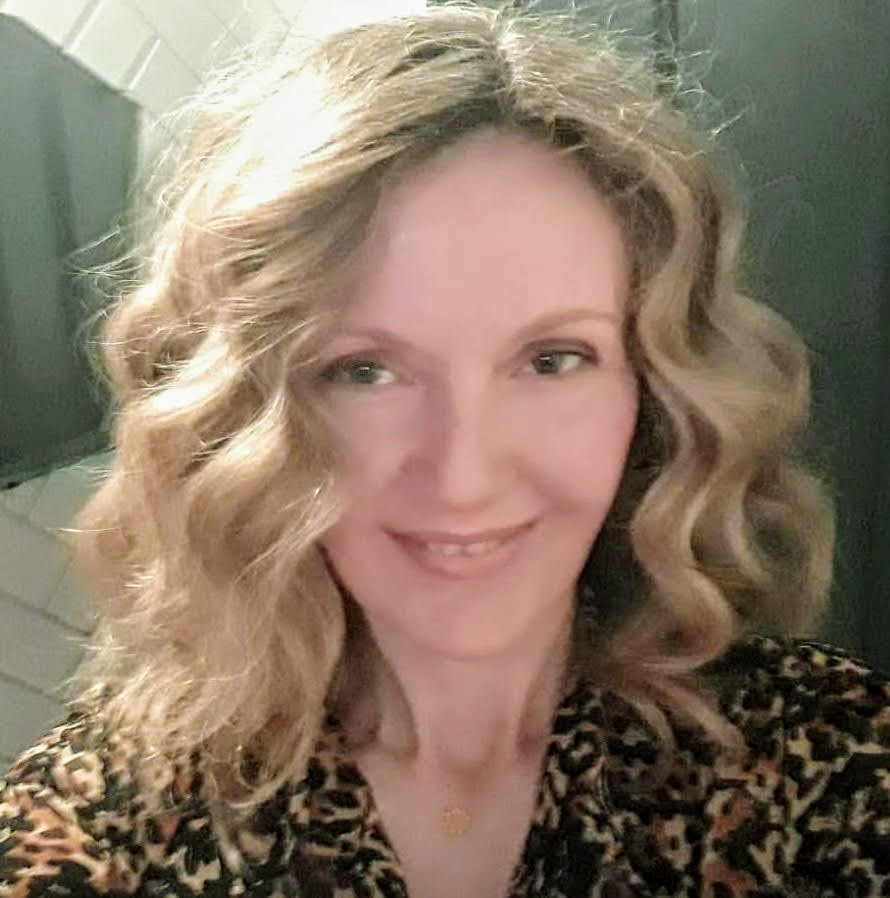
Lila Despotovic is a therapist in Central and South East London
What attracted you to become a therapist?
What initially attracted me to psychology and psychotherapy was my curiosity and interest in human stories, wanting to make sense of our human nature, and how to navigate life.
Part of this certainly stems from my own experiences, which included going through my personal insecurities, illness, complex relationships, war and loss, and trying to manage and cope through difficult life experiences, but also to understand myself better.
Over time, this transpired into the desire to use what I’ve learned and experienced to support and help others, and apply it in a professional capacity as a therapist.
Where did you train?
For me, it was a gradual process. Initially, I completed my Diploma in Psychodynamic Counselling at WAES Further Education College. In addition to this, I trained quite extensively to work with eating disorders, both with the National Centre for Eating Disorders, and with Prof Julia Buckroyd. I also attended postgraduate training in CBT approaches at Lambeth College, and several training events with Prof Christine Padesky.
Finally, I went on to complete my MA in Integrative Psychotherapy with The Minster Centre, which was fantastic, and really important for my personal and professional development in terms of consolidating, updating, and bringing together different strands of my training and therapeutic theories into a cohesive whole.
Can you tell us about the type of therapy you practise?
I practice integrative psychotherapy. This means that I use different psychotherapy modalities and relate them to what occurs in the therapy room. I am in particular influenced by psychodynamic and relational approaches and attachment theory, but at times I also use some elements from mindfulness, CBT, and art therapies.
The integration also relates to the process of therapy, as we would be making sense of, and linking, the past with the present and future, thoughts with feelings and embodied responses, and sometimes different parts of ourselves too, some of which may be hidden or disavowed. I pay equal attention to what is happening in the present moment in the room, as well as what might be yet unconscious. Integrative therapy allows me to have a more holistic approach and to adapt to the client's needs.
For me, it's also important to create an environment and therapy relationship which feels safe and empathetic, so that we would be able to explore anything that the client wants.
I work both short-term and long-term. The positive effects of therapy sometimes do happen after 10-16 sessions, however, my preference is to work longer-term, when we can work on a deeper level and achieve more lasting changes.
How does integrative psychotherapy help with symptoms related to eating disorders?
Among my particular professional interests is work with clients with eating disorders and various forms of disordered eating. I’m interested in the meaning that the eating disorder has for the client, in how it developed, and in what keeps it going.
The treatment is holistic and it would be geared to the client and their specific presentation and history, but often there would be several underlying factors that would need to be addressed, such as the client’s difficulties with emotional regulation and relationship issues, their self-esteem and body-image.
When it comes to body image, for example, achieving a positive body image is often very difficult for a client with an eating disorder, and in that case we would work towards body neutrality. The aim here would be to shift client’s preoccupation with their weight and appearance, towards overall health and wellbeing, so that they would notice more how they feel, rather than how they look.
Often, some psychoeducation about the nutritional aspects would also be needed, and in more severe cases, I would need to involve a team of other professionals, such as a dietician and a GP. At times, there may be other mental health issues that coincide with the eating disorder, such as anxiety, depression or trauma, and these would need to be worked on too.
What sort of people do you usually see?
I’ve been lucky to work with a wide range of clients, both male and female, from teenagers to the elderly. Most of my clients now are aged between 21 and 60.
Among common presenting issues that clients bring are relationship and family issues, lack of self-worth, depression, anxiety, disordered eating, weight issues, life transitions, coping with illness, work difficulties, bereavement, loss, and trauma.
Have you noticed any recent mental health trends or wider changes in attitude?
There seems to be some increase in anxiety, as well as self-esteem issues, especially among younger clients. I wonder to what extent young clients' fears, insecurities and uncertainties are related to current wider happenings in the culture, society and the world, and constant interference of technology into our lives, which for some seems to coincide with a decrease in meaningful and real connections, often replaced by superficial connection and unrealistic role models in social media.
On a more positive note, there seems to be more openness and willingness to work on mental health difficulties in therapy among the same generation, but also among men in general, some of whom would previously consider that to be a sign of weakness.
Another positive seems to be an increased awareness and understanding, both in society and within therapeutic settings, about people with different types of neurodiversity.
What do you like about being a therapist?
I like being able to help people and feel lucky to be able to do my work. It is a privilege to hear clients’ stories and be able to walk side by side with them and support them some of the way on their life journey. I am excited when through therapy I witness positive change, growth and healing. It is very rewarding.
What is less pleasant?
Hearing a really sad or disturbing story from a client’s life and witnessing someone’s suffering.
How long have you been with Welldoing and what you think of us?
I’ve been with Welldoing for about a year. What I particularly like is that they are not just an anonymous therapists’ directory, but seem to really put a lot of effort in communicating well and supporting therapists. I have also enjoyed their CPD sessions, which have been very informative and had some really interesting expert guests.
What books have been important to you in terms of your professional and personal development? Do you ever recommend books to clients?
I particularly like books by Yalom, as well as Van der Kolk’s The Body Keeps the Score. I also found some spiritual and mindfulness books useful, such as those by Eckhart Tolle and Jon Kabat-Zin.
I do sometimes recommend books to clients, and I’ve on occasion also used poems in sessions when I thought that they might resonate with a particular client.
I’m quite interested in bibliotherapy, and hoping to integrate it more into my work in the future.
What do you do for your own mental health?
I enjoy all kinds of art, and I sometimes use it in my therapy sessions. I like music, and I’m currently learning to play a guitar, which is fun. I like reading and writing, spending time with loved ones, long walks in nature and learning and experiencing new things. I also do yoga, and I sometimes meditate.
You are a therapist in Central and South East London. What can you share with us about seeing clients in these areas?
I currently work in two locations, and this gives me an opportunity to work with both the local community and professionals working in the city. The SE14 location is within a popular community centre and it generally attracts people living locally. It is however easily accessible from other parts of London, due to convenient bus and Overground connections. Many of the clients have been young people, students, and people working in creative industries.
The EC3 location is within a City area, which is convenient for busy professional people working near Bank, Liverpool Street, the rest of Central London, but also those coming from East London.
What’s your consultation room like?
The room in the Telegraph Hill Centre is bright and yet cosy. It is simply but comfortably furnished, in a building at the back of the beautiful local church, and it has some original futures and character.
The room in the City is located within a beautiful Victorian building that features a grand staircase. The room itself is beautifully arranged with everything that is needed – one client described it as a mini apartment.
What do you wish people knew about therapy?
Therapy is not only for the times of crisis, although this is often what brings people to therapy. Therapy is there to help with the relief from our difficulties and symptoms, but also for personal growth and support in maintaining and increasing our wellbeing and quality of life.
What did you learn about yourself in therapy?
I’ve learned that my upbringing and early life experiences have had a great impact on who I became as an adult, but that they don’t have to define who I am. That even difficult experiences and losses can lead to growth given the time and space to heal, process and integrate. To have more acceptance and compassion for myself.