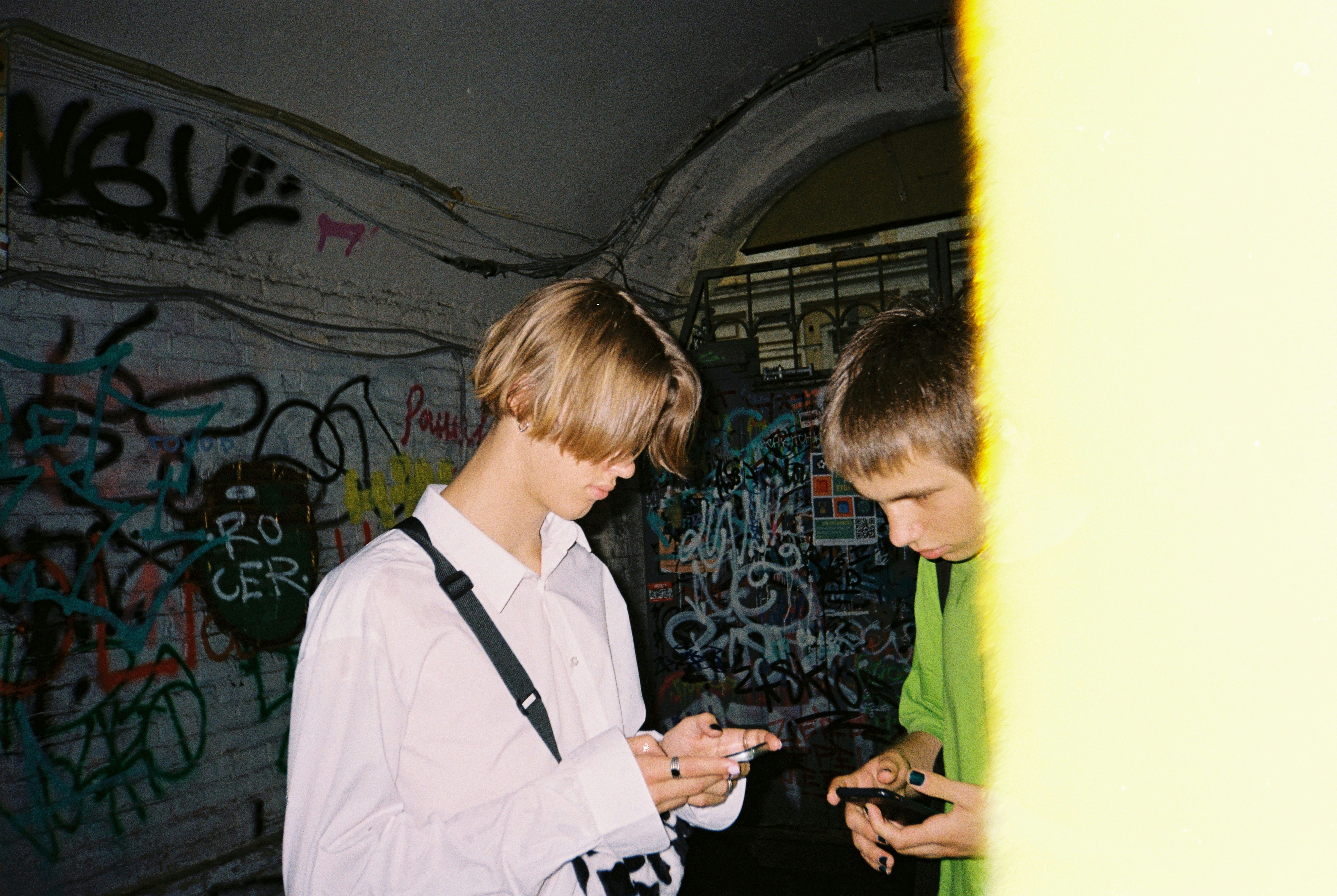
The conversation about mental health among young people is no longer confined to quiet corners. It is unfolding everywhere — in classrooms, families, workplaces, and the digital spaces where so many young lives now unfold. Yet beneath this openness lies a deeper truth: awareness alone does not dissolve the complexity of what young people are experiencing. In fact, in a world that moves faster and demands more, it can sometimes heighten the sense of pressure to be endlessly “well.”
For many young people, the mind has become a crowded place. The digital age, though rich in connection, often leaves us lonelier than ever. Social media promises belonging, but in its endless stream of filtered images and fleeting validation, it can quietly feed comparison and self-doubt. It is easy to feel left behind when everyone else seems to be living beautifully curated lives. Yet these images are not truth — they are mirrored fragments. The real story, as always, lies beneath the surface.
What's the impact on mental health?
What we rarely speak about is how this constant exposure shapes our inner world. The mind, overstimulated by notifications and opinions, struggles to find stillness. Sleep becomes shallow, attention frays, and the quiet space where imagination and reflection once lived grows smaller. In this sense, mental health is not only a medical or emotional issue; it is also an existential one. It is about our relationship with silence, with our Self, and with meaning.
Alongside digital noise sits another, heavier presence: uncertainty. Many young people describe living with a quiet sense of unease. This feeling that the future is precarious and that the ground beneath them is never quite stable weigh on the psyche. Climate anxiety, economic insecurity, political division, and global unrest all clamour for space and attention. For some, this leads to anxiety and low mood while for others, to a sense of numbness or detachment. It is difficult to dream boldly when your horizon feels fragile.
The dizziness of freedom
And yet, it is within these moments of uncertainty that reflection becomes most valuable. Mental distress, while painful, can also be a signal. It is a call to re-examine how we live, connect, and define ourselves. The philosopher Kierkegaard wrote that anxiety is the dizziness of freedom, a response to standing before infinite possibilities. For many young people, this may ring true. They are growing up in a time of boundless information and choice, and yet that abundance can be paralysing. For them, to move forward they need more self-understanding, not more digital noise.
Stigma, perhaps weaker than it once was, still lingers. Many young people hesitate to speak openly about their struggles, fearing misunderstanding or dismissal. Access to professional help can be limited, leaving them to turn instead to the tools at hand including AI therapy, mental health apps, and digital communities. These spaces can be supportive, yet they also risk oversimplifying the complex work of healing. Mental healing is a process that requires patience, not a quick fix. The issues and patterns we seek to change are usually deeply ingrained as they took years to develop. As a result, lasting recovery requires openness, consistency, and connection to oneself and others.
Changing our relationship to suffering
It is worth remembering, however, that suffering does not always ask to be solved (immediately). Sometimes it asks to be listened to. When we pause long enough to sit with discomfort, we may find that pain carries meaning. This is an invitation to grow, to set boundaries, or to rediscover what matters. In this way, emotional pain, like solitude, can become fertile ground for transformation.
There is a quiet revolution happening in how young people approach their wellbeing. Many are seeking grounding in mindfulness, meditation, time in nature, and creative self-expression. These practices are not about perfection but presence. They offer a way back to the Self that exists beyond the screen, a self that breathes, observes, and feels without judgement. There is wisdom in this return to simplicity, a reminder that peace is not found in escape, but in reconnection.
Identity also plays a central role in today’s mental health landscape. Young people from diverse backgrounds — LGBTQ+, neurodiverse, or ethnically marginalised — are increasingly speaking their truth and challenging systems that have long failed to understand them. In doing so, they are not only seeking healing for themselves but reshaping the language of mental health into something more inclusive, compassionate, and human.
What real growth looks like
Of course, none of this is simple. Growth and healing are not linear, and progress does not always look like confidence or happiness. Sometimes it looks like persistence and the willingness to keep showing up for oneself, even on days when that feels difficult. As anyone who has sat quietly with their own thoughts will know, the mind can be both a sanctuary and a storm. Learning to navigate that duality is perhaps one of the defining aspects of our life journey.
Mental health is not about constant positivity. It is about honesty and learning to courageously acknowledge when we are struggling. It is also about responding with care rather than criticism. For some, this may mean learning to rest, to disconnect, and to speak truthfully about what hurts. For the rest of us, it means learning to listen, to create space, and to believe that vulnerability is not weakness but wisdom in disguise.